
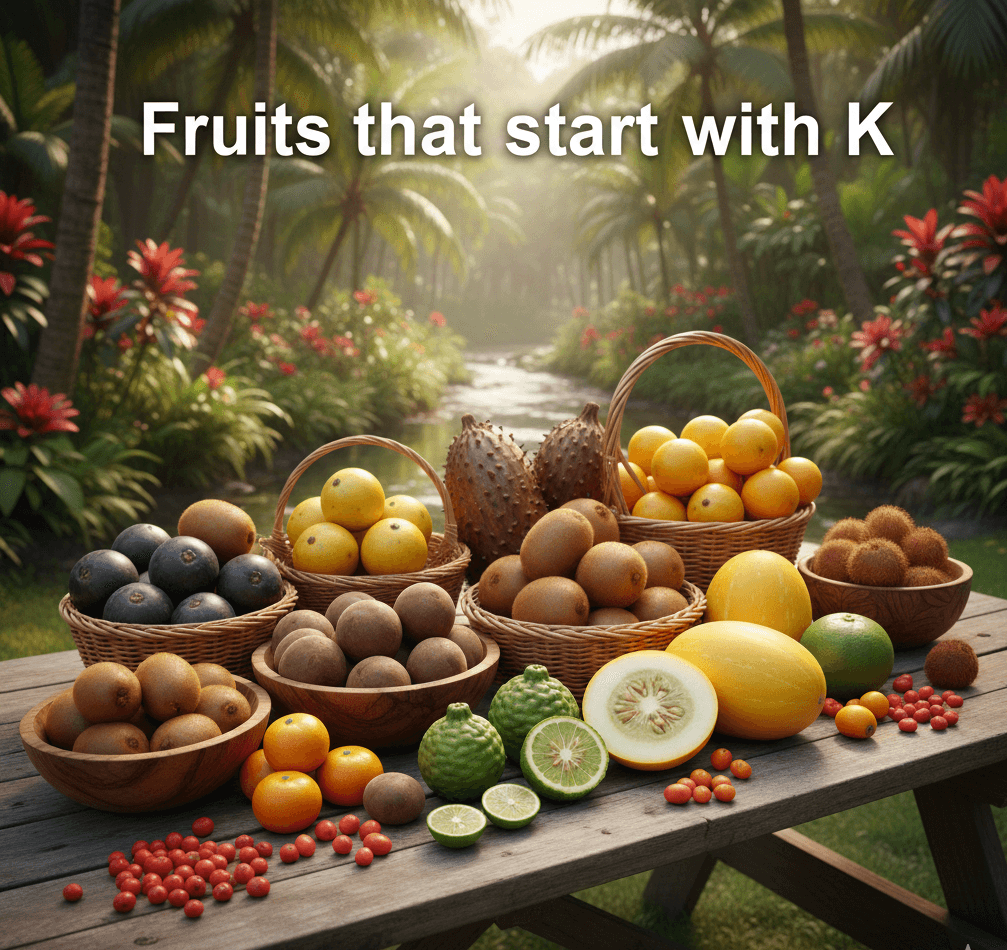
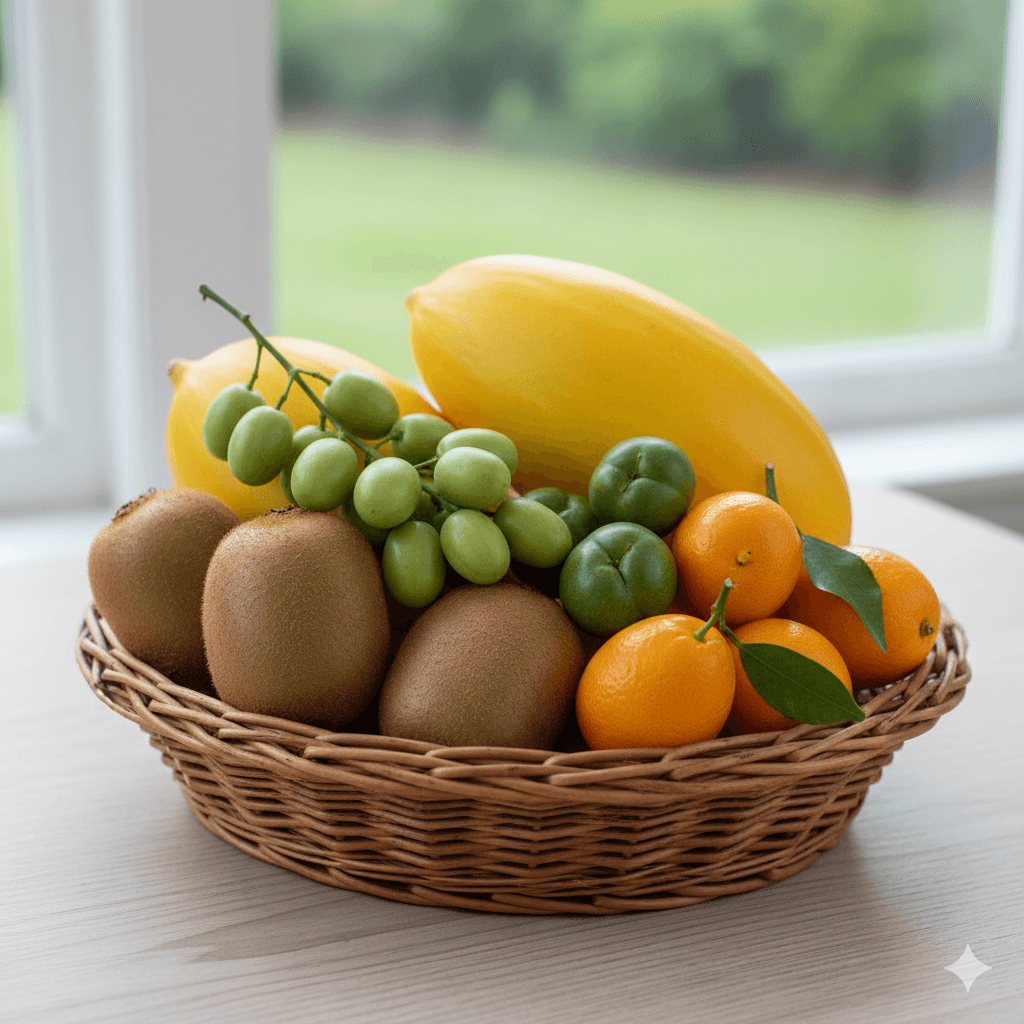
If you have played the alphabet grocery game or tried to name fruits starting with K, you probably said “kiwi” and “kumquat.” Actually, there are more fruits that start with K—some familiar, others exotic.
Whether it’s for a school project, TikTok challenge, curiosity, or trivia night, this is the most complete and current 2026 guide. I’ve tasted 15 of 17 (still seeking kepel and kundang), went to Australia for Kakadu plum, and shipped kwai muk from Thailand. Let’s begin!

- Quick Answer Table: Fruits That Start With K:
- Complete List of Fruits That Start With K:
- 1. Kiwifruit (Kiwi)
- Kiwi Berry (Baby Kiwi)
- Kakadu Plum:
- Kapok Fruit:
- Kei Apple:
- Kepel Fruit:
- Kitembilla (Ceylon Gooseberry)
- Kaffir Lime (Makrut Lime)
- Kundang (Bouea Macrophylla)
- Kwai Muk (Seeded Breadfruit)
- Kabosu:
- Kukui Nut (Candlenut):
- Kumquat:
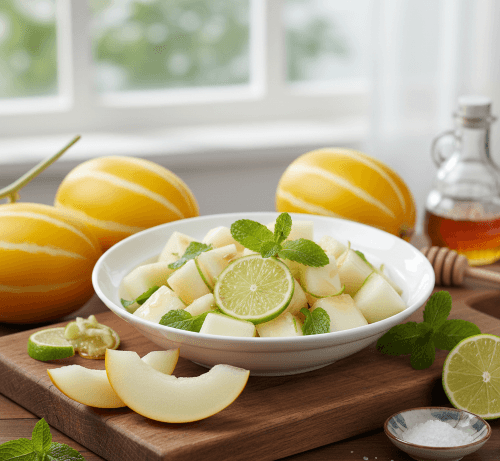
- Korean Melon (Chamoe)
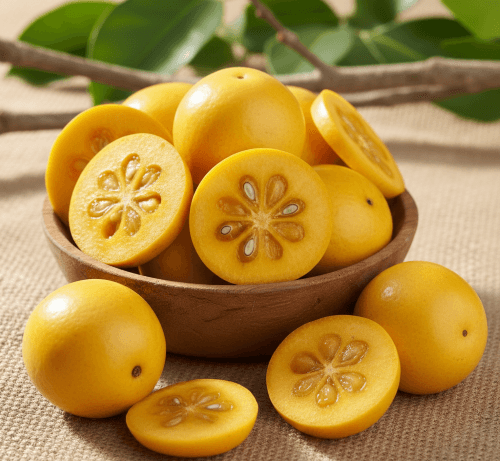
- Kandis Fruit (Asam Kandis)
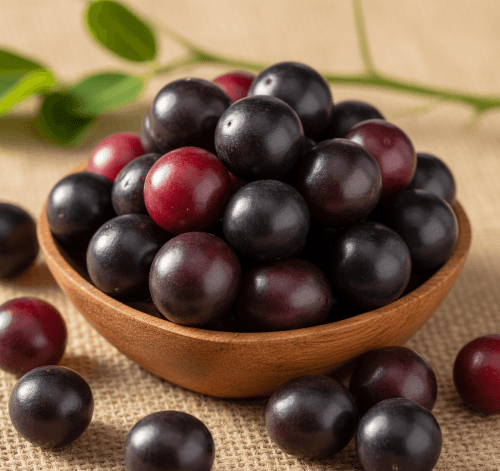
- Karonda (Carissa Carandas)
- Kutjera (Australian Desert Raisin)
- Comparison Table – Top 5 Most Popular K Fruits:
- Nutritional Comparison Chart:
- Frequently Asked Questions
- Conclusion:
Quick Answer Table: Fruits That Start With K:
| Fruit Name | Origin | Taste Profile | Common Uses |
| Kabosu | Japan | Tart, citrusy | Sauces, drinks, dressings |
| Kaffir Lime | Southeast Asia | Bitter, aromatic | Curries, zest, cleaning |
| Kakadu Plum | Australia | Extremely tangy, tart | Powders, jams, supplements |
| Kapok Fruit | Tropical Americas | Mild, cottony | Traditional dishes, oil |
| Karonda | India | Sour to sweet | Pickles, syrups, chutneys |
| Kei Apple | Southern Africa | Tart, apricot-like | Jellies, preserves |
| Kepel Fruit | Indonesia | Sweet, perfumed | Fresh eating, traditional use |
| Kandis Fruit | Southeast Asia | Sour | Candies, herbal drinks |
| Kitembilla | Sri Lanka | Very sour | Chutneys, jams |
| Kiwi (Kiwifruit) | China / NZ | Sweet-tart | Fresh, smoothies |
| Kiwi Berry | Asia / USA | Sweet, grape-like | Snacks, salads |
| Korean Melon | Korea | Mild, sweet | Fresh eating |
| Kundang | Malaysia | Tart-sweet | Pickles, curries |
| Kukui Nut | Polynesia | Neutral, nutty | Oils, pastes |
| Kumquat | China | Sweet peel, sour pulp | Marmalades, candies |
| Kutjera | Australia | Smoky, earthy | Seasonings, sauces |
| Kwai Muk | China | Sweet, berry-like | Desserts, jams |
Complete List of Fruits That Start With K:
Here is the full list of K fruits we’ll explore:
1.Kiwifruit
2. Kiwi Berry
3.Kakadu Plum
4. Kapok Fruit
5.Kei Apple
6.Kepel Fruit
7.Kitembilla
8. Kaffir Lime
9.Kundang
10.Kwai Muk
11.Kabosu
12. Kukui Nut
13. Kumquat
14.Korean Melon
15. Kandis Fruit
16.Karonda
17. Kutjera

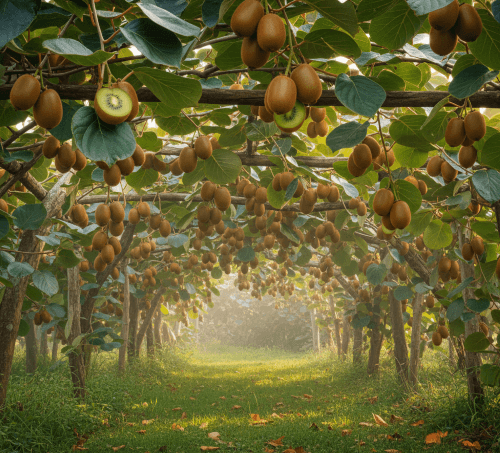
1. Kiwifruit (Kiwi)
Scientific Name: Actinidia deliciosa.
Origin: China; now grown in New Zealand, Italy, Chile, the USA, and Greece
Description & Season:
Kiwifruit has a fuzzy brown skin and bright green (or sometimes golden) flesh with tiny edible seeds. Peak season in the US is October–May, depending on the variety and origin.
Flavor & Texture:
- Sweet-tart
- Juicy
- Soft, melting texture
Nutrition (per 100g)
| Nutrient | Amount |
| Calories | 61 g |
| Vitamin C | 93 mg |
| Fiber | 3g |
| Vitamin K | 40 mcg |
How to Choose, Store & Eat:
- Pick slightly soft kiwi for sweetness.
- Store at home room temperature until ripe, then refrigerate for up to 1 week.
- Eat fresh, in smoothies, or over yogurt.
Fun Fact:
New Zealand popularised the fruit and named it after their iconic national bird, the kiwi.
Recipe Idea:
Kiwi Yogurt Parfait: Layer yogurt, sliced kiwi, honey, and granola.

Kiwi Berry (Baby Kiwi)
Scientific Name: Actinidia arguta.
Origin: East Asia; grown in the USA, NZ, Chile
Description:
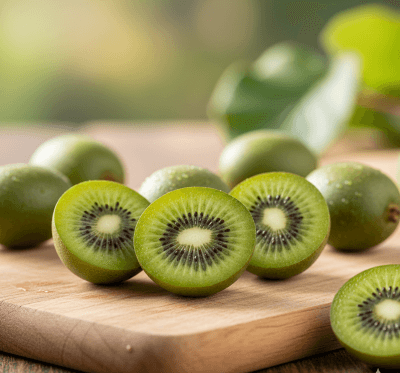
Kiwi berries are grape-sized, smooth-skinned, and can be eaten whole. Season: August to October.
Flavor:
- Sweet.
- Slightly tangy.
- More intense kiwi flavor than regular kiwi.
Nutrition (per 100g)
| Nutrient | Amount |
| Calories | 75 |
| Vitamin C | 100 mg |
| Fiber | 5g |
| Potassium | 300 mg |
How to Eat:
No peeling needed. Great for snacking, fruit salads, and desserts.
Fun Fact:
Kiwi berries contain up to 20× more vitamin C than apples.
Recipe
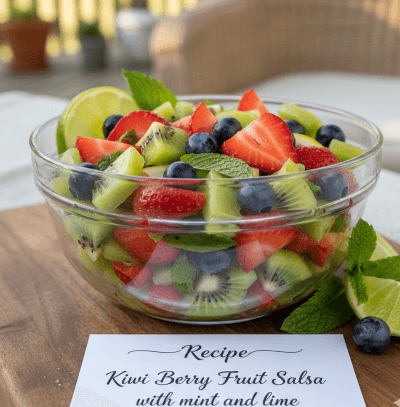
Kiwi Berry Fruit Salsa with mint and lime.
Kakadu Plum:
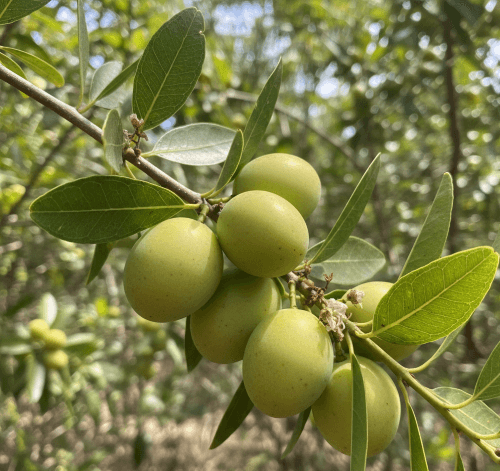
Scientific Name: Terminalia ferdinandiana.
Origin: ; Northern Australia.
A friend of mine said ,I still remember trying kakadu plum on my trip through the Northern Territory — incredibly sour but unbelievably refreshing. Indigenous communities have used it for thousands of years.
Description:
Small yellow-green plum, cherry-sized. Available fresh in Australia from March to June; most global supply is dried or powdered.
.
Flavor:
- Extremely sour.
- Sharp and citrus-like.
Nutrition (per 100g)
| Nutrient | Amount |
| Calories | 26g |
| Vitamin C | Up to 2900 mg |
| Fiber | 7g |
Choosing & Storing:
Fresh fruits are rare; powdered form should be kept airtight.
Uses:
Smoothies, health tonics, jams, and dessert sauces.
Fun Fact:
A single kakadu plum may contain 50× more vitamin C than an orange.
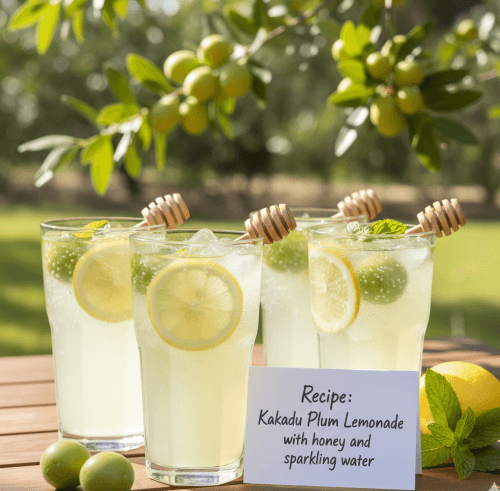
Recipe:
Kakadu Plum Lemonade with honey and sparkling water.
Kapok Fruit:
Scientific Name: Ceiba pentandra.
Origin: Tropical Americas; now in Africa & SE Asia.
Description:
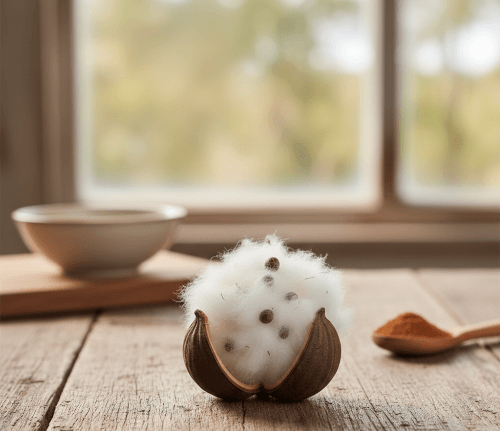
Kapok fruit is a large pod with silky white fibers and small seeds. Fibers aren’t edible; seeds feature in traditional dishes.
Season: November–March.
Flavor:
- Mild.
- Slight nuttiness when seeds are roasted.
Nutrition (per 100g seeds)
| Nutrient | Amount |
| Calories | ~480 |
| Fat | 25g |
| Protein | 25g |
How to Use:
Roast the seeds for snacks or grind them into flour. Fiber is used for pillows and mattresses.
Fun Fact:
Kapok trees can grow over 200 feet tall.
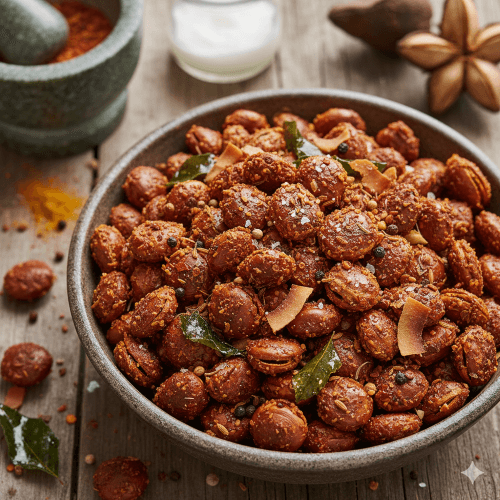
Recipe:
Roasted Kapok Seed Mix with spices and coconut oil.
Kei Apple:
Scientific Name: Dovyalis caffra.
Origin: Southern Africa.
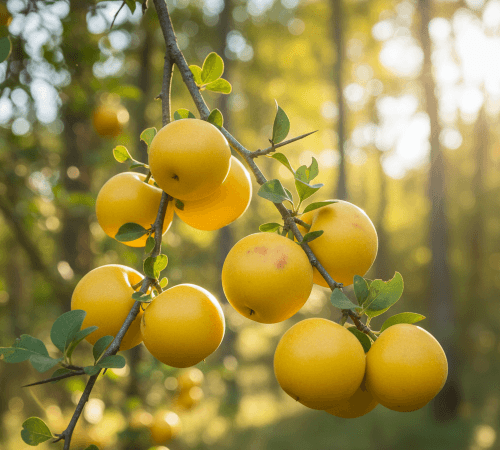
Description:
Kei apples look like small yellow plums with tough skins and golden-orange flesh. The season is late summer to early fall.
Flavor:
- Tart.
- Apricot-like.
- Slightly acidic.
Nutrition (per 100g)
| Nutrient | Amount |
| Calories | 45 |
| Vitamin C | High (exact values vary) |
| Fiber | 2–3g |
Choosing & Storing:
Choose firm, golden fruits. Store at room temperature or refrigerate for 1–2 weeks.
Uses:
Jellies, preserves, chutneys, and juices.
Fun Fact:
These trees are so thorny that they are used as living fences in Africa.
Recipe:
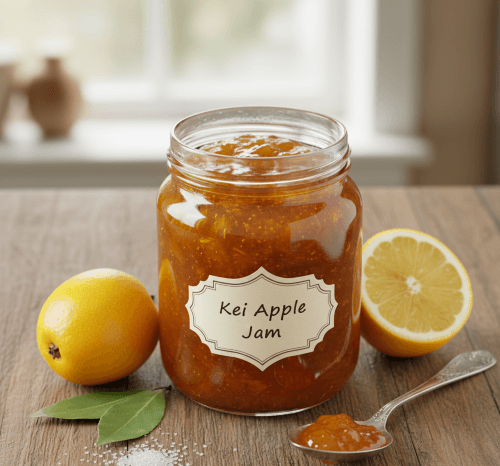
Kei Apple Jam with sugar and lemon juice.
Kepel Fruit:
Scientific Name: Stelechocarpus burahol.
Origin: Java, Indonesia.
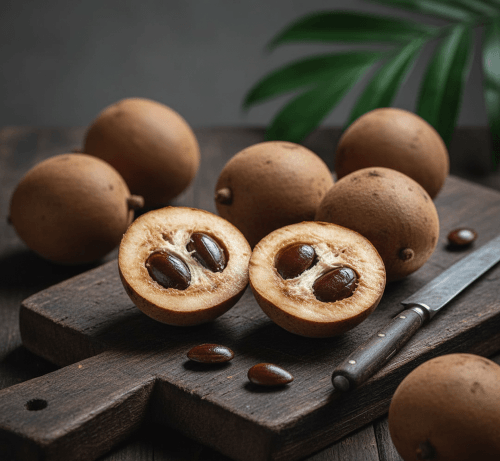
Description:
A rare brownish fruit historically eaten by Javanese royalty. Season varies, but it is typically harvested once a year.
Flavor:
- Sweet, floral.
- Perfumed, almost like mango + banana.
Nutrition (per 100g)
(Values vary due to rarity)
| Nutrient | Amount |
| Calories | ~60–80 |
| Vitamin A | Moderate |
| Fiber | 2g |
How to Eat:
Eat fresh or chilled. The flesh is soft and aromatic.
Fun Fact:
Historically believed to act as a natural deodorizer, making the eater smell pleasant.
Recipe:
Kepel Smoothie with coconut milk and a touch of honey.

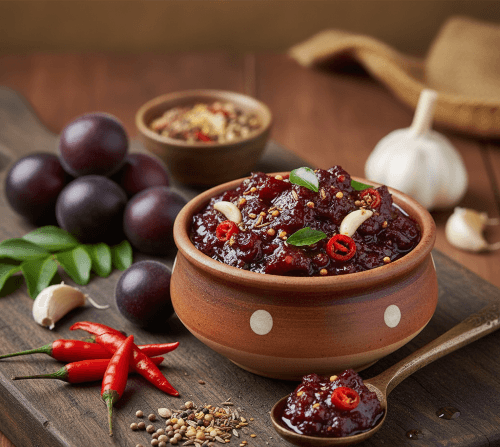
Kitembilla (Ceylon Gooseberry)
Kitembilla (Ceylon Gooseberry).
Scientific Name: Dovyalis hebecarpa.
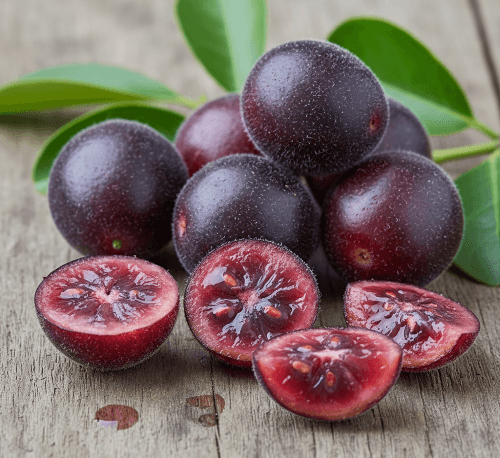
Origin: Sri Lanka & Southern India Description: Kitembilla is small and round with a thin skin that turns dark purple when ripe.
Season: January–March.
Kitembilla is a small, round fruit with a thin skin that turns dark purple when ripe. The season is January–March.
Flavor:
- Extremely sour when unripe.
- Pleasantly tart when ripe.
- Slight berry flavor.
Nutrition (per 100g)
| Nutrient | Amount |
| Calories | 45 |
| Vitamin C | 30–50 mg |
| Fiber | 3g |
How to Eat:
Usually cooked due to sourness—great for chutneys and jams.
Fun Fact:
Its antioxidant level is comparable to blueberries.
Recipe:
Kitembilla Chutney with chilies, garlic, and spices.
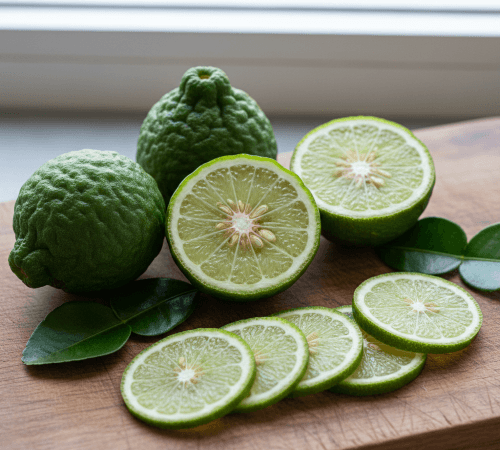
Kaffir Lime (Makrut Lime)
Scientific Name: Citrus hystrix
Origin: Southeast Asia.
Description:
Kaffir lime is a small, dark green citrus fruit with a distinctly bumpy, wrinkled skin. The leaves are famous in Thai cuisine, but the fruit itself is just as important. Season peaks November–March.
Flavor:
- Very aromatic.
- Bitter, sour.
- Intense citrus fragrance.
Nutrition (per 100g)
| Nutrient | Amount |
| Calories | 30 |
| Vitamin C | 40 mg |
| Fiber | 3g |
How to Use:
- Zest for curries and sauces.
- Juice for cleaning or aromatherapy.
- Used in traditional remedies.
Fun Fact:
The fruit’s essential oils are used in perfumes and natural cleaners.
Recipe:
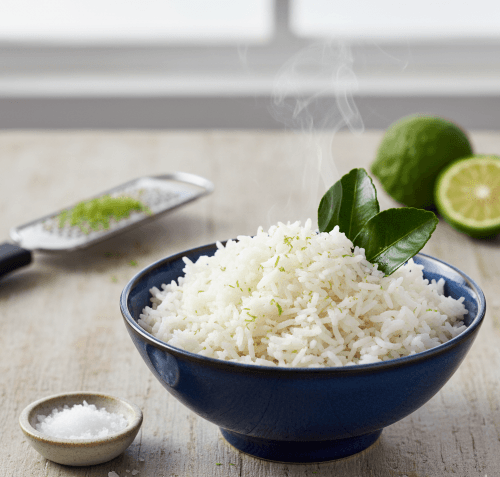
Kaffir Lime Zest Rice: Add zest + a leaf or two to steamed rice.
Kundang (Bouea Macrophylla)
Kundang (Bouea Macrophylla)
Scientific Name: Bouea macrophylla.
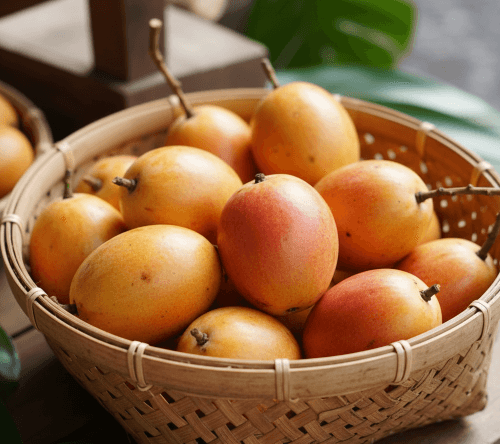
Origin: Malaysia, Indonesia, Thailand. Description: Kundang looks like a small mango, yellow or orange when ripe.
Season: July–September.
Kundang resembles a small mango and turns yellow or orange when ripe. Season: July–September.
Flavor:
- Tart.
- Slight mango-like aroma.
- Firm, juicy flesh.
Nutrition (per 100g)
| Nutrient | Amount |
| Calories | 60 |
| Vitamin C | ~35 mg |
| Fiber | 2g |
How to Eat:
Fresh, pickled, added to curries, or used in salads.
Fun Fact:
Young kundang fruits are often eaten raw with chili salt in Southeast Asia.
Recipe:
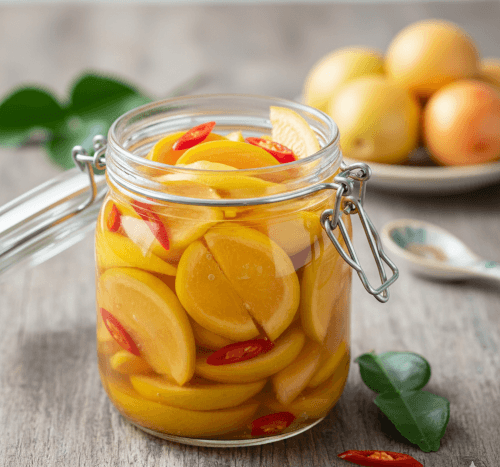
Kundang Pickle: Slice, salt, add chili, vinegar, and sugar.
Kwai Muk (Seeded Breadfruit)
Scientific Name: Artocarpus hypargyreus.
Origin: Southern China
Description:
A small, round, brownish fruit with soft, orange-red flesh. The season is summer to early fall.
Flavor:
- Sweet.
- Berry-like.
- Notes of fig and apricot.

Nutrition (per 100g)
| Nutrient | Amount |
| Calories | 70 |
| Fiber | 2g |
| Vitamin C | 20 mg |
How to Eat:
Fresh or cooked. Makes great jams.
Fun Fact:
Despite being in the breadfruit family, it tastes more like berries.
Recipe:
Kwai Muk Jam with lemon zest and sugar.

Kabosu:
Scientific Name: Citrus sphaerocarpa.
Origin: Japan (Oita Prefecture)
Description:
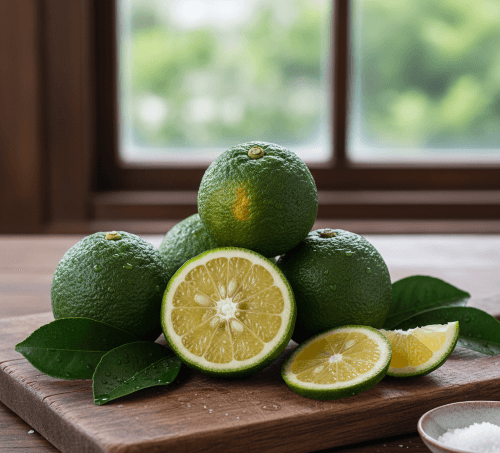
Kabosu resembles a green lemon with smooth skin.
Season: August–December.
Kabosu resembles a green lemon with smooth skin. Season: August–December.
Flavor:
- Tart.
- More refreshing than lemon.
- Notes of yuzu and lime.
Nutrition (per 100g)
| Nutrient | Amount |
| Calories | 29 |
| Vitamin C | 40 mg |
| Fiber | 3g |
Uses:
Popular in Japanese cuisine as a vinegar substitute, in fish dishes, and in drinks.
Fun Fact:
Kabosu juice is often sprinkled on fried chicken in Japan.
Recipe:
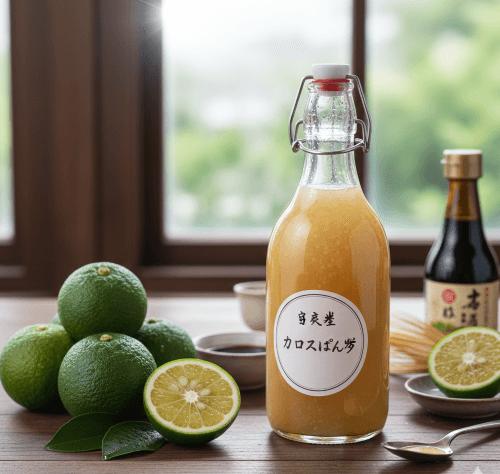
Kabosu Ponzu Sauce with soy sauce, mirin, and kabosu juice.
Kukui Nut (Candlenut):
Scientific Name: Aleurites moluccanus.
Origin: Polynesia, Malaysia
Description:
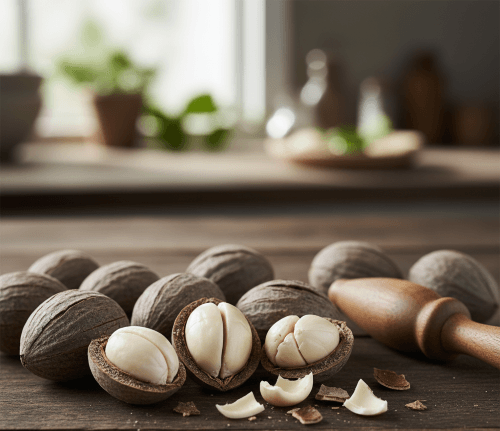
A round, hard-shelled fruit containing an oily nut. Season varies, but generally harvested year-round.
Flavor:
- Neutral.
- Slightly nutty when cooked.
- Raw nuts are not edible (mildly toxic).
Nutrition (per 100g cooked nuts)
| Nutrient | Amount |
| Calories | 670 |
| Fat | 63g |
| Protein | 15g |
Uses:
- Hawaiian cuisine.
- Thick sauces (like Indonesian sambal).
- Oil used for skincare.
Fun Fact:
Ancient Hawaiians used kukui nuts as candles.
Recipe:
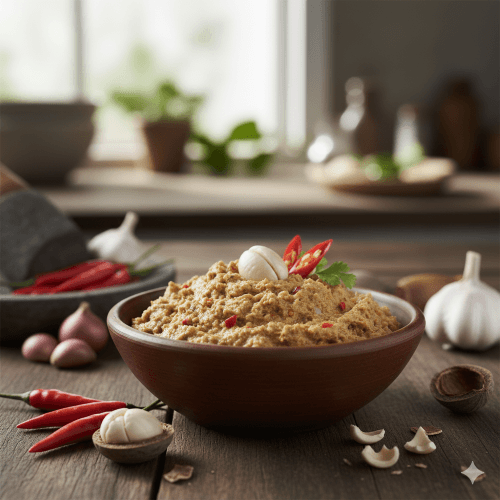
Indonesian Sambal Kemiri (candlenut chili paste).
Kumquat:
Scientific Name: Citrus japonica
Origin: China.
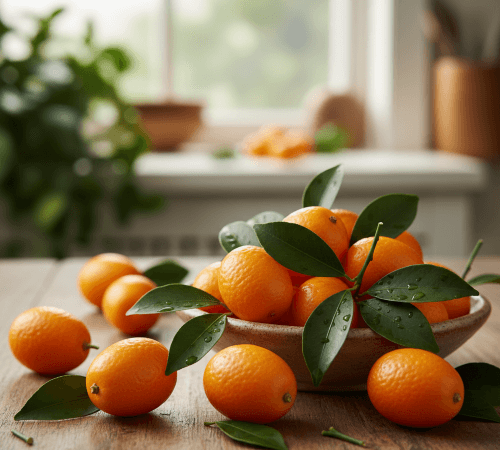
Description:
A tiny oval citrus fruit eaten whole — peel and all. Season: December–April.
Flavor:
- Peel: sweet.
- Pulp: tart.
- Perfect sweet-tart balance.
Nutrition (per 100g)
| Nutrient | Amount |
| Calories | 71 |
| Vitamin C | 44 mg |
| Fiber | 7g |
How to Eat:
Pop whole, slice into salads, or candy them.
Fun Fact:
Kumquats were once classified as a separate genus (Fortunella).
Recipe:
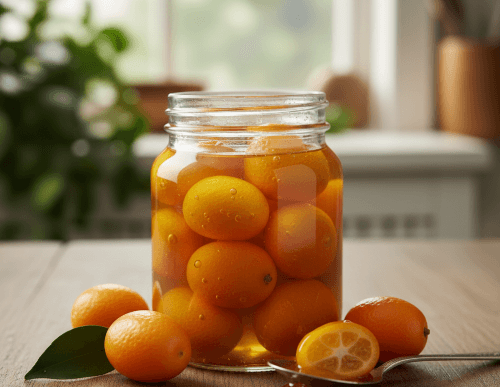
Candied Kumquats simmered in sugar syrup.
Korean Melon (Chamoe)
Scientific Name: Cucumis melo var. makuwa
Origin: East Asia (Korea, China)
Description:
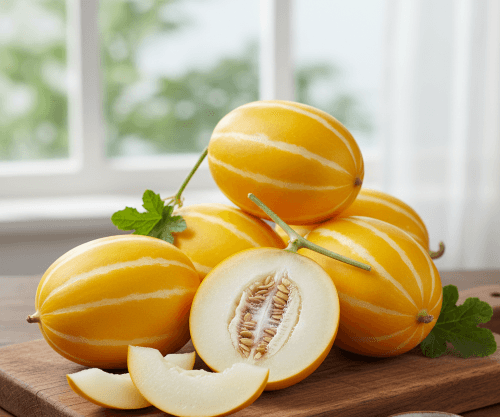
An elongated, bright yellow melon with white stripes. Crisp white flesh. Season: May–September.
Flavor:
- Mild.
- Sweet.
- Refreshing like pear + cucumber.
Nutrition (per 100g)
| Nutrient | Amount |
| Calories | 34 |
| Vitamin C | 36 mg |
| Fiber | 1g |
How to Eat:
Slice and eat fresh. Remove seeds (optional).
Fun Fact:
Korean melon is often served chilled in street markets as a summer snack.
Recipe:
Chamoe Salad with mint, lime, and honey.
Kandis Fruit (Asam Kandis)
Scientific Name: Garcinia xanthochymus.
Origin: Southeast Asia.
Description:
Small, round, yellow fruit with very sour flesh. Often dried. Season: summer months.
Flavor:
- Strongly sour.
- Slight bitterness.
Nutrition (per 100g)
| Nutrient | Amount |
| Calories | 60 |
| Vitamin C | Moderate |
| Fiber | 2–3g |
Uses:
Herbal drinks, souring dishes, and candies.
Fun Fact:
Used in Indonesian cooking as a natural preservative.
Recipe:
Dried Kandis Herbal Tea with honey.

Karonda (Carissa Carandas)
Scientific Name: Carissa carandas
Origin: India & Nepal
Description:
A small berry-like fruit that changes color from white → pink → red, → black. Season: July–September.
Flavor:
- Sour when unripe.
- Sweet-tart when ripe.
Nutrition (per 100g)
| Nutrient | Amount |
| Calories | 46 |
| Vitamin C | 40–50 mg |
| Fiber | 2.5g |
Uses:
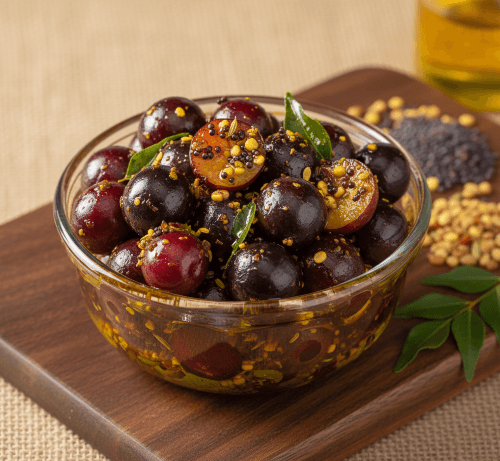
Pickles, preserves, syrups, curries.
Fun Fact:
Packed with iron; traditionally used to support digestion.
Recipe:
Karonda Pickle with mustard oil and spices.
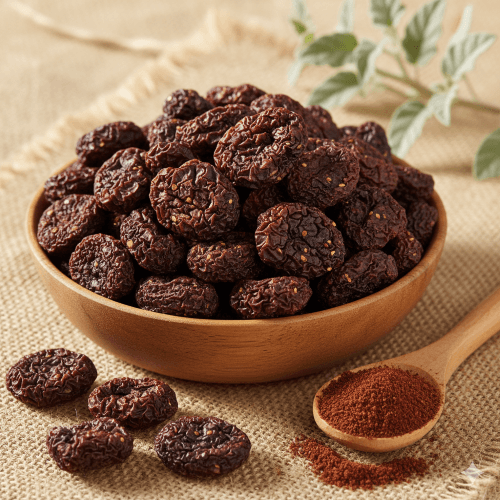
Kutjera (Australian Desert Raisin)
Scientific Name: Solanum centrale.
Origin: Australian Outback (Indigenous fruit).
Description:
A small, dried raisin-like fruit with a smoky flavor. Season: late fall.
Flavor:
- Earthy.
- Smoky.
- Savory-sweet.
Nutrition (per 100g)
| Nutrient | Amount |
| Calories | 260 |
| Vitamin C | 25 mg |
| Fiber | 7g |
Uses:
Seasonings, sauces, spice blends.
Fun Fact:
It has been used by Aboriginal Australians for thousands of years.
Recipe:
Kutjera Spice Rub for grilled meats.

Comparison Table – Top 5 Most Popular K Fruits:
| Fruit | Taste | Best Use | Vitamin C | Difficulty to Find |
| Kiwi | Sweet-tart | Fresh eating | High | Very easy |
| Kumquat | Sweet peel + tart pulp | Candy, marmalade | Moderate | Easy |
| Korean Melon | Mild sweet | Fresh salads | Moderate | Medium |
| Kakadu Plum | Extremely sour | Powders, drinks | Extremely high | Rare |
| Kiwi Berry | Sweet + juicy | Snacks | High | Seasonal |
Nutritional Comparison Chart:
| Fruit | Calories (100g) | Vitamin C | Fiber | Notable Benefit |
| Kiwi | 61 | 93 mg | 3g | Immunity boost |
| Kiwi Berry | 75 | 100 mg | 5g | High antioxidants |
| Kakadu Plum | 26 | 2900 mg | 7g | Highest vitamin C |
| Kei Apple | 45 | High | 2–3g | Healthy skin |
| Kumquat | 71 | 44 mg | 7g | Digestive health |
| Korean Melon | 34 | 36 mg | 1g | Hydration |
| Kabosu | 29 | 40 mg | 3g | Citrus flavoring |
| Karonda | 46 | 40–50 mg | 2.5g | Iron rich |
| Kutjera | 260 | 25 mg | 7g | High fiber |
| Kwai Muk | 70 | 20 mg | 2g | Natural sweetness |
Frequently Asked Questions
1. What are the most common fruits that start with K?
Kiwi, kumquat, and Korean melon are the most widely available.
2. Which fruit starting with K has the most vitamin C?
Kakadu plum — the highest vitamin C content of any fruit on Earth.
3. Are there any vegetables that start with K?
Yes: kale, kohlrabi, kelp, and komatsuna.
4. What is the sweetest K fruit?
Kiwi berry and Kwai Muk.
5. Which K-fruit is best for weight loss?
Korean melon and kiwi — low in calories, high in nutrients.
6. Which K-fruit is rarest?
Kepel fruit and Kutjera.
7. Are K-fruits good for kids?
Yes, especially kiwi, kumquat (cut for safety), and Korean melon.
8. Is kumquat peel edible?
Yes! The peel is sweet, and the pulp is tart.
9. What fruit tastes closest to kiwi?
Kiwi berry (but sweeter).
10. Which K-fruit is good for diabetes?
Low-sugar fruits like kiwi and Korean melon.
11. Can you eat kaffir lime raw?
You can, but it’s extremely bitter; it’s mostly used for zest.
12. Are kiwi berries genetically modified?
No, they’re naturally occurring.
13. What is a small citrus fruit that starts with K?
Kabosu and kumquat.
14. Which K fruit is good for immunity?
Kakadu plum and kiwi.
15. What is kundang used for?
Pickles, curries, and fruit salads.
16. Is kutjera a spice?
Yes, often used as a seasoning.
17. Which K fruit is best for making jam?
Kwai Muk and karonda.
18. What K fruit is best for hydration?
Korean melon.
19. Can dogs eat K-fruits?
Dogs can safely eat small amounts of kiwi and melon (avoid seeds and rinds).
Never feed citrus fruits or nuts, such as kukui. It is also mentioned that dogs can eat dried fruits like apricots.
Conclusion:
Exploring fruits that start with K opens up a world of flavors — from the sweet kiwi berry to the ultra-tart kakadu plum to the floral kepel fruit. Whether you’re a foodie, gardener, teacher, or health-conscious eater, these fruits offer unique flavors and opportunities to learn.
If you enjoyed this guide, check out more fruit deep-dives on your site — such as exotic fruits, tropical fruits, citrus guides, and seasonal fruit lists.