
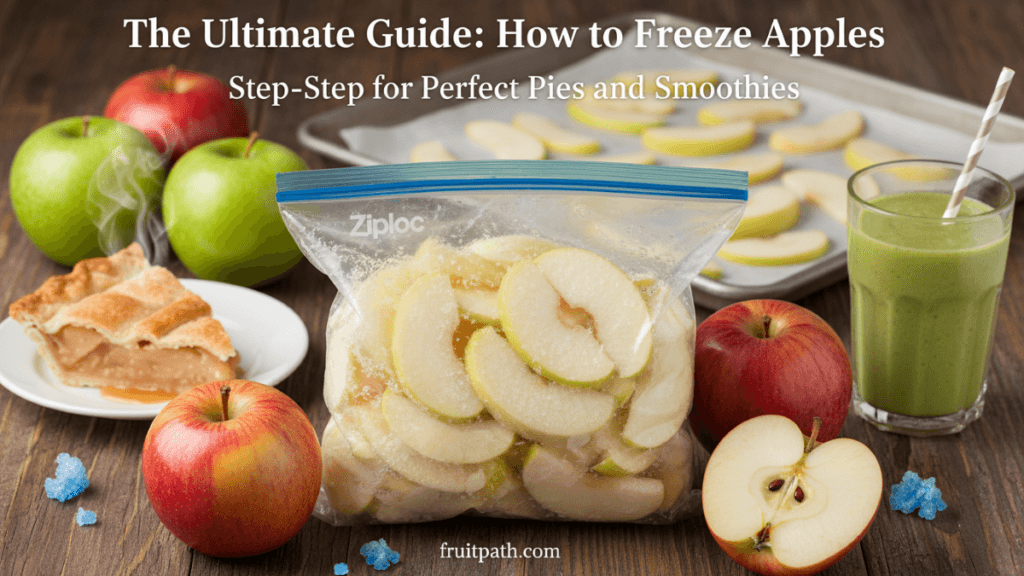
Yes, you can freeze apples — and it’s one of the smartest ways to preserve a bountiful harvest or take advantage of seasonal sales without wasting a single bite.
Freezing apples lets you lock in their fresh flavor for months, making it easy to prepare ahead for baking projects like pies, crisps, and muffins, or to toss into smoothies whenever the craving hits.
The main challenge? Apples can turn brown and lose their crisp texture if not handled properly. But don’t worry — this step-by-step guide will walk you through the best methods to freeze apples perfectly, so they come out ready for delicious pies and creamy smoothies.
We’ll cover everything from prep to storage, plus tips on varieties and usage.
Prep Work: Essential Supplies and Tips:
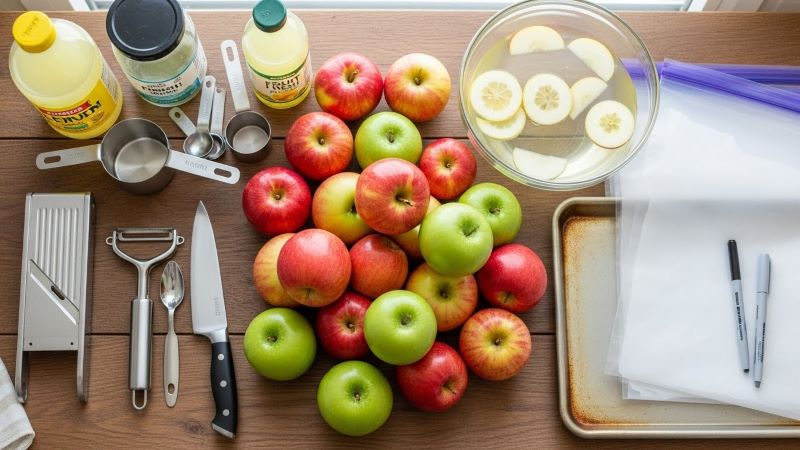
Before diving in, gather these basics for smooth sailing:
- Fresh, firm apples (more on varieties below)
- Vegetable peeler and/or apple corer
- Sharp knife or mandoline for slicing
- Large bowl for the anti-browning solution
- Measuring cups/spoons
- Lemon juice (or ascorbic acid/Fruit Fresh powder)
- Parchment paper-lined baking sheets
- Heavy-duty freezer bags or airtight containers
- Permanent marker for labeling
Safety Tip: Always use high-quality, freezer-specific bags or containers to prevent freezer burn and keep your apples tasting fresh.
The Standard Freezing Method:
This dry-pack method (with anti-browning treatment) is the most versatile and popular for pies and smoothies. It keeps slices separate and ready to use.
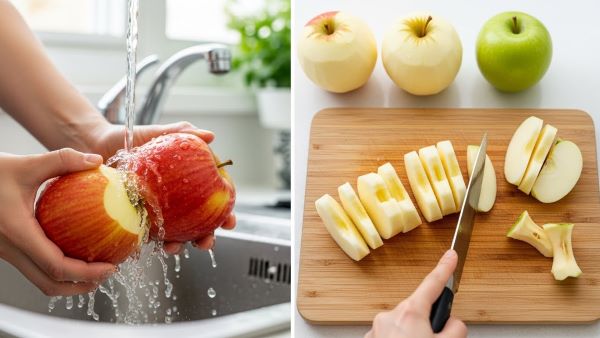
Step 1: Wash and Peel (Optional):
Start by washing apples under cool running water to remove any residue. Peeling is optional: Leave the skin on for easier prep and added nutrients (great for smoothies), or peel for smoother results in pies and sauces.
Step 2: Core and Slice:
Core the apples, then slice into even 1/4- to 1/2-inch thick wedges or slices. Uniform size ensures even freezing and cooking later.
Step 3: Prevent Browning (The Acid Bath):
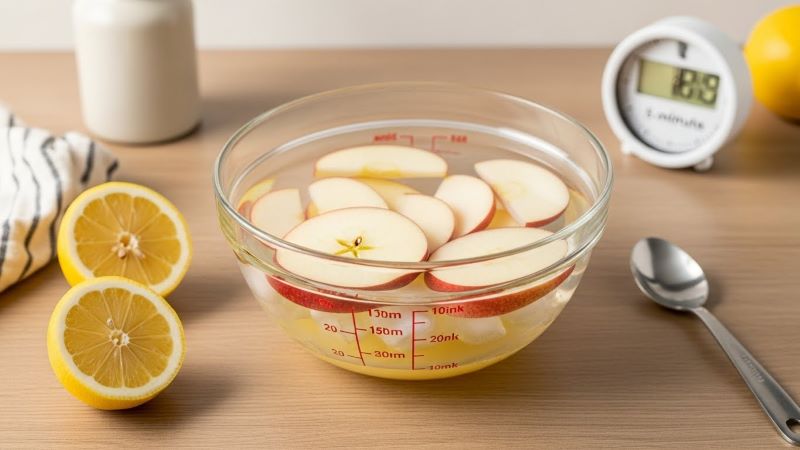
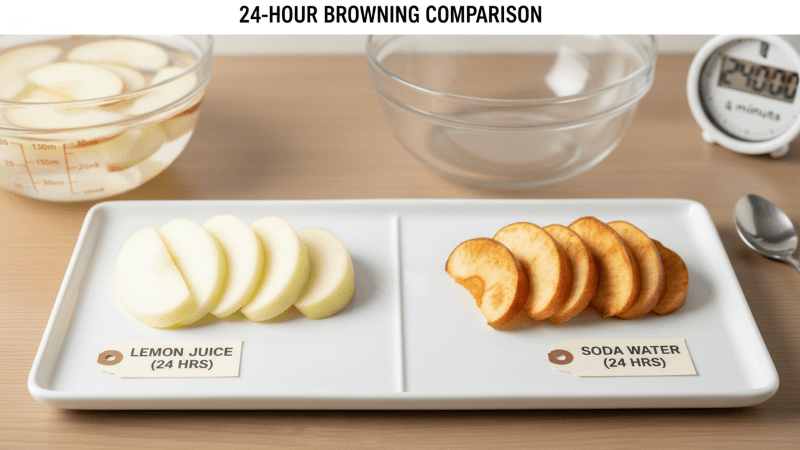
Mix a solution of 1 tablespoon lemon juice per 1 cup cold water (or follow package instructions for ascorbic acid). Soak slices for 5 minutes. This stops enzymatic browning without overpowering the apple flavor.
Step 4: Dry Thoroughly:
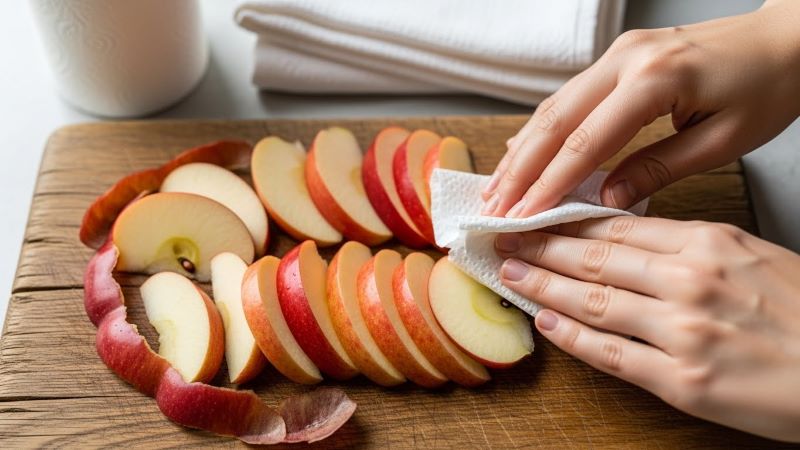
Pat slices completely dry with paper towels or a clean kitchen towel. Excess moisture leads to ice crystals and mushiness.
Step 5: Flash Freeze (Crucial):
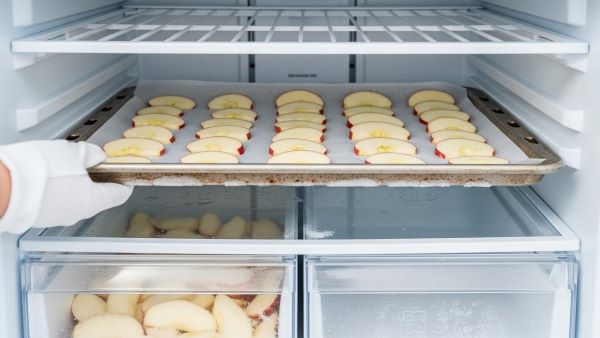
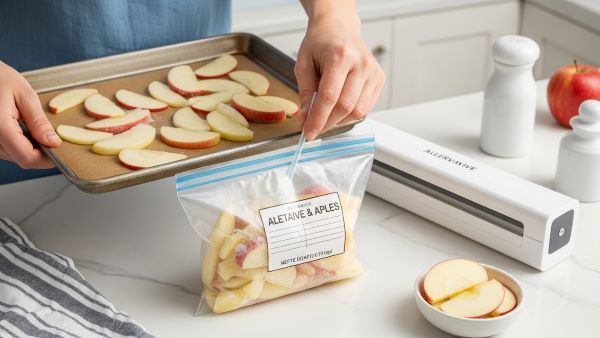
Arrange slices in a single layer on parchment-lined baking sheets. Freeze for 1-2 hours until solid. This prevents clumping so you can grab just what you need later.
Step 6: Pack and Seal:
Transfer frozen slices to freezer bags or containers. Remove as much air as possible (use a straw for bags or a vacuum sealer) to avoid freezer burn.
Step 7: Label and Store:
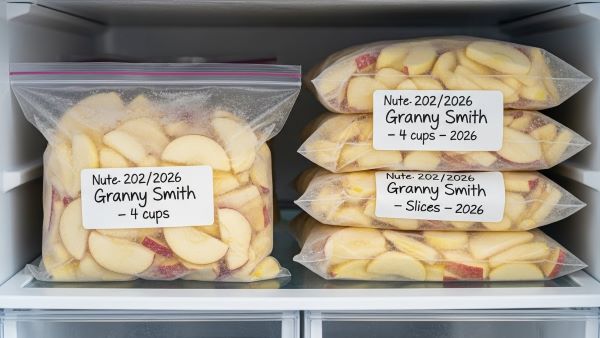
Label with the date, variety, and quantity (e.g., “Granny Smith Slices, 4 cups, Date- 2026”). Store in the freezer.
🍎 Which Apples to Use?
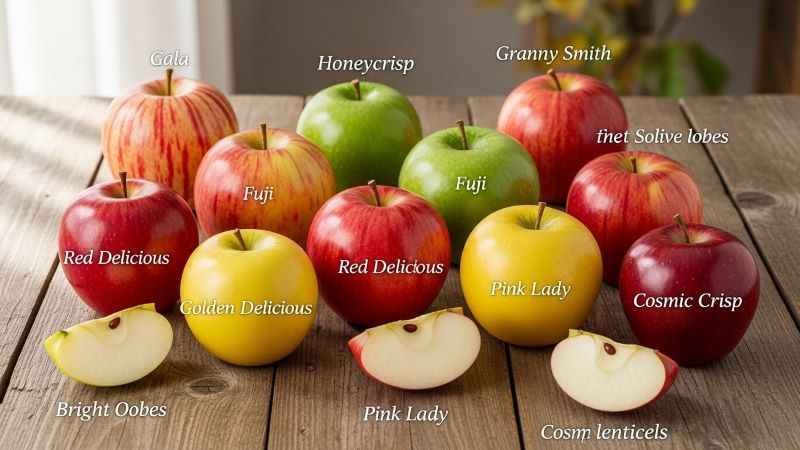
Apple variety makes a huge difference in frozen quality — firmer, crisp types hold up best, while softer ones can turn mushy.
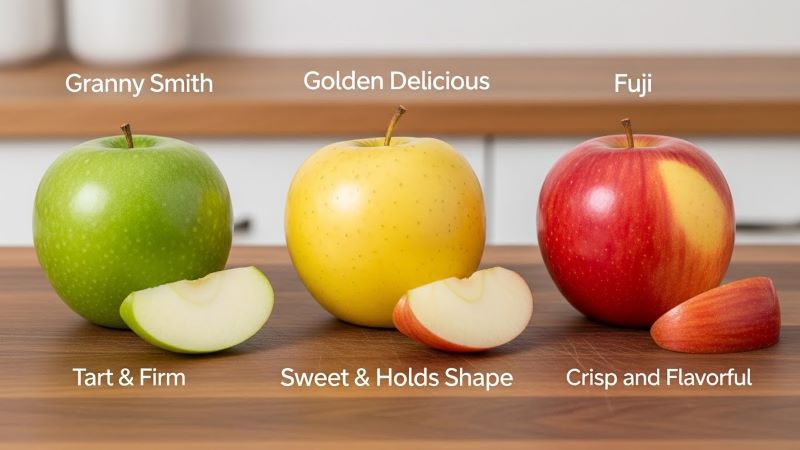
Top 3 Best for Freezing: Granny Smith (tart and firm), Golden Delicious (sweet and holds shape), Fuji (crisp and flavorful).
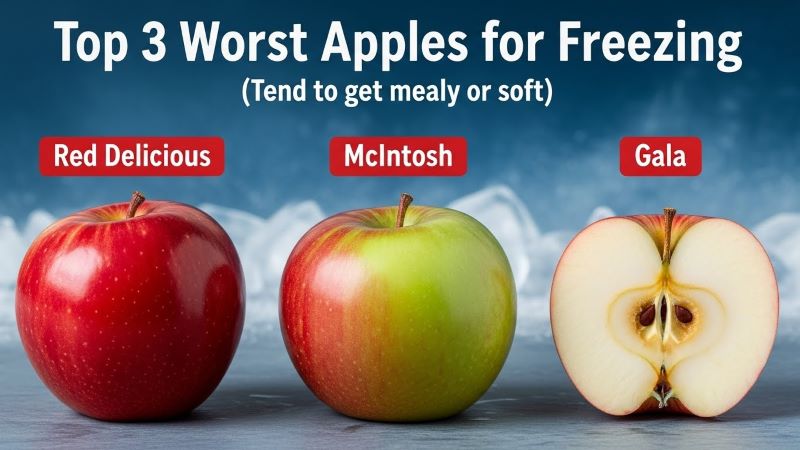
Top 3 Worst for Freezing: Red Delicious, McIntosh, Gala (tend to get mealy or soft).
➡️ Deep Dive: Read our full comparison chart in [The Freezer Apple Showdown: Which Varieties Freeze Best for Pie, Sauce, and Baking?]
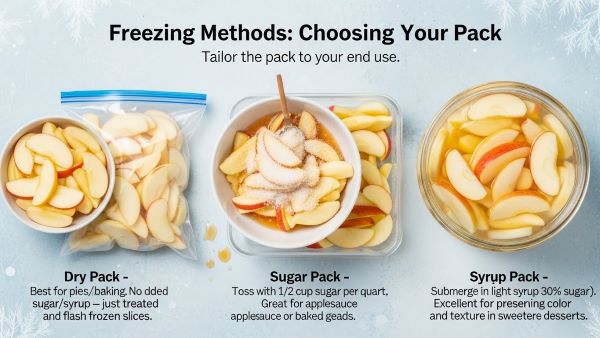
🧊 Freezing Methods: Choosing Your Pack:
Tailor the pack to your end use:
- Dry Pack: (Best for pies/baking) No added sugar/syrup — just treated and flash-frozen slices. Versatile for adding sweeteners later.
- Sugar Pack: Toss slices with 1/2 cup sugar per quart of apples. Great for applesauce or baked goods; sugar draws out juice for better flavor retention.
- Syrup Pack: Submerge in a light syrup (e.g., 30% sugar solution). Less common for apples, but excellent for preserving color and texture in sweeter desserts.
🌡️ Storage and Thawing:
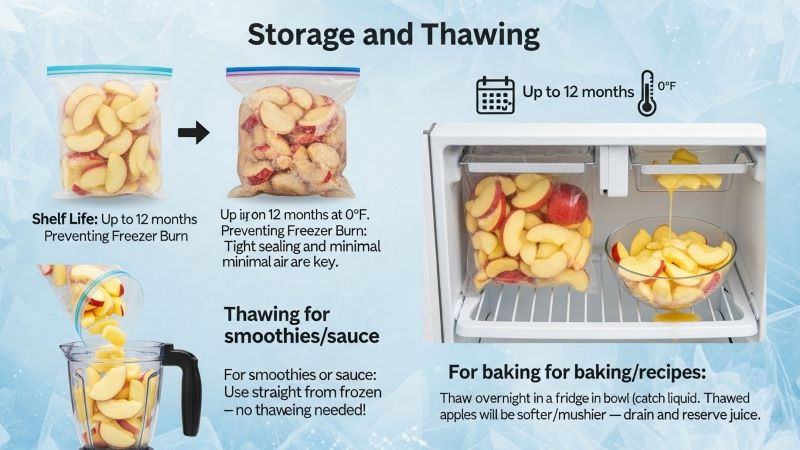
- Shelf Life: Up to 12 months at 0°F for best quality (flavor and texture peak within 10-12 months).
- Preventing Freezer Burn: Tight sealing and minimal air are key.
- Thawing Instructions:
- For smoothies or sauce: Use straight from frozen — no thawing needed!
- For baking/recipes: Thaw overnight in the fridge in a bowl (to catch liquid). Note: Thawed apples will be softer/mushier, so drain excess juice and reserve for cooked dishes.
🍽️ How to Use Frozen Apples:
Frozen apples shine in cooked or blended recipes: pies, cobblers, crisps, muffins, applesauce, and smoothies.
A common issue? Excess liquid after thawing. Solution: Drain well, or use frozen directly in baking to avoid sogginess.

➡️ Ready to Bake? Get the recipes designed for frozen fruit in [7 Genius Recipes Using Apples Straight From the Freezer (No Thawing Required!)]
🔚 Conclusion:
Freezing apples is simple when you prep well (anti-browning treatment + flash freeze), pack tightly (remove air!), and choose the right method and variety. You’ll have perfect pie filling or smoothie boosters all year long.
What’s your favorite apple variety for freezing — Granny Smith for tart pies, or something sweeter? Share in the comments below — we’d love to hear your tips!
Frequently Asked Questions About Freezing Apples:
1. Is it better to freeze apple pies before or after baking?
It is usually better to freeze apple pies before baking them. When you freeze the pie before it goes into the oven, the crust turns out more crispy and flaky. The filling also stays thicker and does not make the crust soggy. You can freeze a pie after baking, but when you reheat it, the crust may not be as crisp.
2. What kind of container is best for freezing apples?
The best way to freeze apples is to use freezer bags or freezer-safe plastic containers. Freezer bags work well because you can press the air out before sealing them. This helps stop freezer burn. Plastic containers are better if the apples are in liquid. Always close containers tightly to keep apples fresh.
3. How to freeze apples in Ziploc bags?
First, wash the apples and cut them into slices. You can peel them if you want. To stop them from turning brown, mix the slices with a little lemon juice. Spread the slices on a tray and freeze them until they are hard. Then place the frozen slices into Ziploc freezer bags, squeeze out the air, seal the bags, and store them in the freezer.
4. Will sliced apples turn brown in the freezer?
Apple slices usually do not turn brown in the freezer if they are treated first. Apples turn brown when they touch air before freezing. Using lemon juice and sealing them well helps keep their color. Once frozen, they stay the same color for a long time.
5. Should you peel apples before freeze drying?
Peeling apples before freeze drying is up to you. Apples with the peel still on have more fiber and nutrients. Peeled apples may feel softer when you use them later. Both ways work fine, so choose what you like best.