

If you think about it, sometimes in life there are things happening that you don’t want, but the brave thing is that no matter what trouble you face,whether it’s mental or physical,if you fight it, you become a stronger person.
You might be wondering why I’m saying all this. If you are living with diabetes, and occasionally, right in front of you,at some place or at a party, you see a beautiful bowl of tempting, shiny, bright red cherries appear, but even though your heart wants them, you stop yourself. Because a strange feeling comes over you: “Maybe I have diabetes, and I shouldn’t eat these.”

This is the strength I’m talking about: you control yourself and win over your desires.
The good news? Cherries are not off-limits for most diabetics. In fact, when eaten mindfully, they can be a nutritious addition to your diet. But the key lies in understanding their impact on your body.
Many people wonder, “Can diabetics eat cherries?” The answer is yes, but with caveats. Cherries have a naturally sweet taste, yet they boast a relatively low glycemic index compared to other fruits, meaning they do not cause dramatic spikes in blood sugar for most individuals.

However, factors such as portion size, cherry type, and how you prepare them play crucial roles. This article dives deep into the benefits, risks, and practical tips for incorporating cherries into a diabetes-friendly lifestyle. We will explore their nutritional profile, how they affect blood sugar levels, scientific evidence, recommended portions, comparisons with other fruits, and more.

By the end, you will have the reassurance and guidance to decide if cherries fit your meal plan. Whether you are dealing with type 2 diabetes or simply seeking low glycemic fruits for diabetes management, let’s unpack the facts to help you enjoy this seasonal delight safely.
- Nutritional Profile of Cherries (Why They Matter for Diabetes):
- Why These Nutrients Matter for Blood Sugar Control:
- How Cherries Affect Blood Sugar Levels:
- Scientific Studies on Cherries and Diabetes:
- How Many Cherries Can a Diabetic Eat? (Exact Portions):
- Sweet Cherries vs. Tart Cherries – Which Is Better for Diabetics?
- Cherries Compared to Other Fruits for Diabetics:
- When Cherries May NOT Be a Good Choice:
- FAQs About Cherries and Diabetes:
- Conclusion: Are Cherries a Good Fruit for Diabetics?
Nutritional Profile of Cherries (Why They Matter for Diabetes):
Cherries are not just a summertime treat; they are packed with nutrients that can support overall health, including blood sugar control. Understanding what’s inside these small fruits helps explain why they can be a smart choice for people with diabetes. Let’s break it down, focusing on key components that influence diabetes management.
Key Nutrients in Cherries:
Cherries come in various forms, but we will base this on fresh sweet cherries, which are the most common. Per 100 grams (about a small handful), cherries provide a modest calorie count while delivering essential vitamins and minerals.
- Carbohydrates: Around 16 grams per 100g, primarily from natural sugars like fructose and glucose. This is moderate compared to higher-carb fruits like bananas. However, not all carbs are created equal, so cherries’ carbs are balanced with other beneficial elements.
- Natural Sugars: About 12 to 13 grams, giving them their signature sweetness. Tart varieties have slightly less, around 8 to 10 grams.
- Fiber: Approximately 2.1 grams, which is respectable for a fruit. This soluble fiber, derived from pectin, supports the digestive system of the human body and satiety.
- Vitamin C: A whopping 7 to 10 mg, or about 11 to 16% of your daily needs. This antioxidant vitamin supports immune function and skin health.
- Potassium: Roughly 222 mg, aiding in blood pressure regulation, a common concern for diabetics who may face heart risks.
- Polyphenols & Anthocyanins: These are the stars of the show. Anthocyanins, the pigments giving cherries their red hue, are powerful antioxidants. Cherries contain up to 350 mg of polyphenols per 100g, depending on the variety.

Nutrition Table for cherries:
| Nutrient | Per 100g Sweet Cherries |
| Calories | 63 |
| Carbs | 16g |
| Fiber | 2.1g |
| Sugar | 12.8g |
| Vitamin C | 7mg |
| Potassium | 222mg |
Other notables include small amounts of vitamin A, calcium, magnesium, and iron. Calorie-wise, 100g clocks in at about 63 calories, making cherries a low-calorie snack option. Tart cherries (like Montmorency) often edge out sweet ones in antioxidant content, with higher levels of anthocyanins.
Why These Nutrients Matter for Blood Sugar Control:
For a person with diabetes, it’s important to consider not only which nutrients are in your food, but also how they affect your body’s glucose levels. The fiber in cherries helps slow down how quickly sugars enter your bloodstream, which can prevent sudden spikes. This matters because uncontrolled glucose absorption can lead to hyperglycemia, a common complication of diabetes.

Antioxidants such as anthocyanins help fight oxidative stress and inflammation, both of which are linked to insulin resistance in type 2 diabetes. Research shows these compounds may improve how your body uses insulin, making it easier for your cells to use glucose. Potassium also supports heart health by balancing out sodium, which can help lower the risk of high blood pressure. This is important because up to 75% of people with diabetes also have hypertension.
Because cherries have a lot of water and few calories, you can eat a good-sized serving without taking in too many calories, which helps with weight management. Keeping a healthy weight is important for people with diabetes, as even a small weight loss can improve HbA1c levels. In summary, cherries offer fiber for steady energy, antioxidants to protect your cells, and low calories for flexible portions, making them a good choice for people with diabetes when eaten in moderation.

Glycemic Index & Glycemic Load of Cherries:
For people with diabetes, a main concern is how different foods affect blood sugar. The glycemic index (GI) and glycemic load (GL) are two ways to measure this. Cherries do well in these areas, but it’s important to understand why GI alone doesn’t tell the whole story.
What Is Glycemic Index (GI)?:
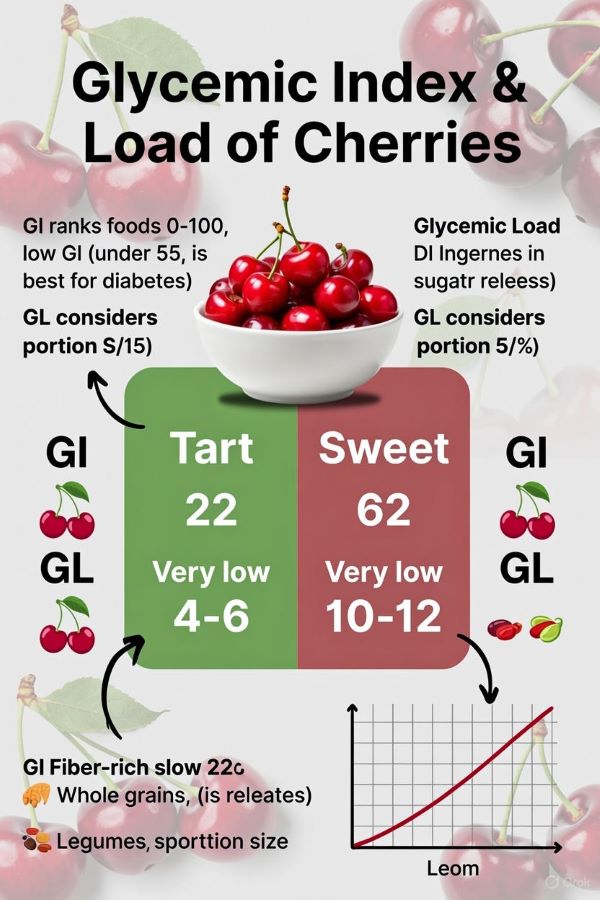
The glycemic index ranks foods with carbohydrates from 0 to 100, based on how fast they raise blood sugar after eating. Pure glucose is set at 100. Foods with a low GI (55 or less) release sugar slowly, which helps keep energy steady and is good for diabetes management. Medium (56-69) and high (70 or more) GI foods can raise blood sugar more quickly.
Things like fiber, fat, and how the food is prepared can affect GI. GI is easy to use, but it doesn’t consider portion size. That’s where glycemic load (GL) helps.
GI of Cherries Explained:
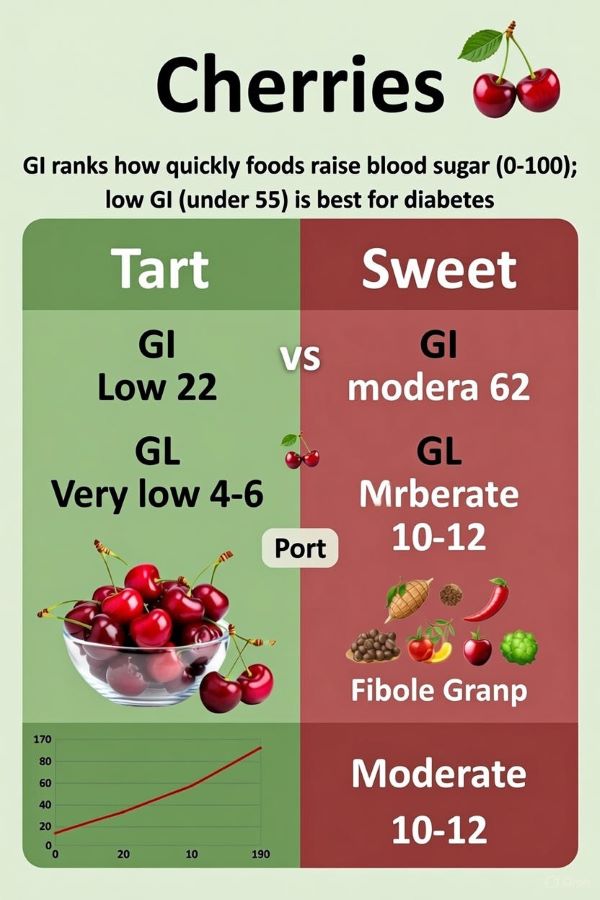
Cherries have a low to medium GI, depending on the type. Tart (sour) cherries typically score around 22, firmly in the low category. Sweet cherries, like Bing, range from 20-62, averaging low to medium. This means they generally don’t cause sharp blood sugar spikes for most people.
Why the range? Ripeness, variety, and processing play roles. Fresh, unripe cherries tend lower; sweeter, riper ones higher. GI alone isn’t enough because it tests a fixed carb amount (50g), not realistic servings. A low GI doesn’t mean unlimited eating; portion matters.
Glycemic Load of Cherries (More Important for Diabetics):
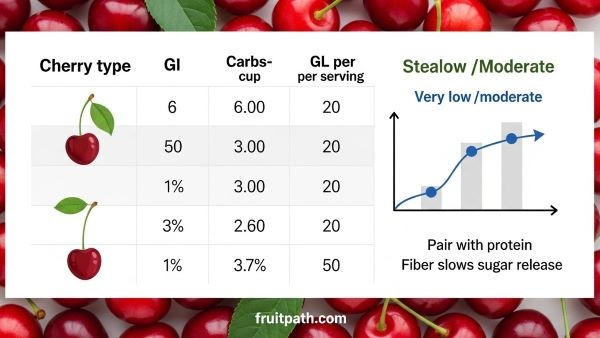
Glycemic load (GL) improves on GI by including serving size. The formula is GL = (GI x carbs per serving) divided by 100. A low GL (under 10) is good for people with diabetes. For cherries, one cup (about 140g) has around 19g of carbs. With a GI of 22, the GL is about 4 to 6, which is very low. Even if the GI is 62 for sweet cherries, the GL for a cup is still only about 10 to 12, which is moderate.
This means cherries can be a good choice for people with diabetes. Unlike snacks with a high GL, such as candy, the fiber and water in cherries help slow the release of sugar. Eating cherries with some protein can further help control blood sugar.
Comparison Table:
| Cherry Type | Glycemic Index (GI) | Carbs per Serving (1 cup ≈ 140g) | Glycemic Load (GL) per Serving | GL Category | Notes for Diabetics |
| Tart/Sour Cherries | Low (22) | ~19g | 4–6 | Very Low (<10) | Excellent choice; minimal blood sugar impact |
| Sweet Cherries | Moderate (62) | ~19–25g | 10–12 | Moderate (10–20) | Still safe in moderation; pair with protein |
| General Reference | Low: <55 Moderate: 56–69 High: >70 | – | Low: <10 Moderate: 11–19 High: >20 | – | Cherries’ fiber & water help slow sugar release |
How Cherries Affect Blood Sugar Levels:
What matters most is how cherries affect people in everyday life. Their nutrients can help many people with diabetes keep their blood sugar under control.
Do Cherries Cause Blood Sugar Spikes?
Most of the time, cherries do not cause blood sugar spikes if you eat them in moderation. The fiber in cherries (2-3g per cup) helps slow digestion, so sugar enters your blood more gradually. One study found that cherries led to a smaller rise in blood sugar after meals than sweeter fruits. However, everyone is different, and some people who struggle with blood sugar control might notice small increases in blood sugar after eating a lot of cherries.
Cherries and Insulin Sensitivity:
Anthocyanins in cherries can help your body use insulin more effectively by reducing inflammation and cell damage. Research suggests they may help your body respond better to insulin, making it easier to manage blood sugar over time. This might support long-term blood sugar control, but more research in people is still needed.

Scientific Studies on Cherries and Diabetes:
There is scientific support for cherries’ benefits, but it is important to look at the evidence honestly.
What Research Says About Cherries & Blood Glucose
A 2018 review found that eating cherries may reduce cell damage and inflammation, which can help with diabetes management. Studies in people show that tart cherry juice can lower systolic blood pressure and low-density lipoprotein cholesterol in people with diabetes. One study found improved long-term blood sugar levels with regular cherry consumption, likely due to anthocyanins. Animal studies also show that cherry extracts can increase insulin production by 50 percent.
- “A Review of the Health Benefits of Cherries” (Kelley et al., Nutrients, 2018).
- “Impact of tart cherry juice on systolic blood pressure and low-density lipoprotein cholesterol in older adults” (Chai et al., Food & Function, 2018).

What Research Does NOT Prove (Transparency)
Cherries are not a cure. The studies so far are small and often short, and they do not prove that cherries lower blood sugar for everyone. It is important to pay attention to how much you eat, as too much can reduce the benefits. Always talk to your doctor. Cherries can help, but they are not a substitute for medicine.
- Inconsistent results and more research needed: A review of cherry benefits highlighted inconsistencies across studies and stated “more research is needed to support these claims,” particularly as many used juice/concentrate rather than whole fruit, with variable outcomes. Cherries and Diabetes (Nourish review).
- No universal blood sugar lowering; individual variation: Healthline’s evidence-based overview notes that while some studies suggest benefits, “more research in people with diabetes is still needed,” and individuals should monitor personal blood sugar responses as tolerances vary. Are Cherries Good for Diabetes?.
How Many Cherries Can a Diabetic Eat? (Exact Portions):
Recommended Serving Size for Diabetics:
- Try to have ½ to 1 cup of fresh cherries, which is about 10 to 20 cherries or 70 to 140 grams. This amount gives you 10 to 19 grams of carbs.
- This serving counts as one fruit exchange in many meal plans and fits within the usual goal of 45 to 60 grams of carbs per meal.
- If you can, choose tart or sour cherries since they have fewer carbs and a lower glycemic load.
- Keep track of how cherries affect you by using a food diary, an app, or your glucose monitor.

Can Diabetics Eat Cherries Daily?
- Yes, you can eat cherries daily if you keep portions moderate and make sure they fit your meal plan and your blood sugar stays steady.
- Eating cherries every day is usually fine for most people with well-controlled type 2 diabetes.
- If your diabetes is not well controlled, or if you have type 1 diabetes or use insulin, you may need to limit cherries or adjust your insulin doses.
- Tip: Eat cherries with some protein or fat, like yogurt or nuts, to help keep your blood sugar steady. Choose fresh or frozen cherries instead of juice or dried cherries, since those have more concentrated carbs.
Always check with your doctor or dietitian, since everyone’s needs are different.

Sweet Cherries vs. Tart Cherries – Which Is Better for Diabetics?
The type of cherry you choose matters because sweet and tart cherries have different sugar levels, effects on blood sugar, and health benefits.
Sweet Cherries (such as Bing, Rainier):
- They contain more natural sugars, about 12 to 20 grams per cup.
- Their glycemic index is around 62, which is moderate, but their glycemic load stays low to moderate because of the fiber they contain.
- They are still a good choice if you eat them in moderation. They taste great and are easy to find fresh.
Tart Cherries (like Montmorency, often called sour):
- Tart cherries have less sugar, about 8 to 13 grams per cup.
- Their glycemic index is lower, around 22, which helps reduce their effect on blood sugar.
- They also have more anthocyanins, which are antioxidants that may help lower inflammation and improve insulin sensitivity.

Best Choice for Blood Sugar Control:
Tart cherries are usually the better choice for people with diabetes because they have a lower glycemic index and glycemic load, along with stronger antioxidants. Both types are safe and healthy, so you can enjoy both for variety, but try to choose tart cherries more often. Eating them fresh gives you the most benefits.
Fresh vs. Dried vs. Canned Cherries (Important Warning):
How cherries are prepared can greatly change their carbohydrate content and effect on blood sugar, so always check the labels.
Fresh Cherries (Best Option):
- Fresh cherries have the least effect on blood sugar because their fiber helps slow down sugar absorption.
- There are about 19 to 25 grams of carbohydrates in a cup, with tart cherries having a bit less than sweet ones.
- They are the best choice, especially if you eat them with the skin to get the most nutrients.

Dried Cherries (Use Caution):
- Dried cherries have concentrated sugars because the water is removed. There are about 15 to 18 grams of carbohydrates in two tablespoons of unsweetened dried cherries.
- It’s best to eat only small amounts, like one to two tablespoons, and avoid sweetened types.

Canned or Juiced Cherries (Generally Avoid):
- Canned or juiced cherries are often packed in syrup or juice with extra sugars, which can add up to 37 to 60 grams of carbohydrates per cup.
- If you need to use canned or juiced cherries, pick ones with no added sugar or those packed in water. Juice does not have fiber and can raise blood sugar more quickly.

Best Ways for Diabetics to Eat Cherries:
Include cherries in your diet in a way that is both healthy and enjoyable.
Pairing with Protein or Fat:
- Pairing cherries with protein or fat can slow down sugar absorption and help keep your blood sugar steady.
- Some ideas include adding cherries to a Greek yogurt parfait, eating them with a handful of almonds or other nuts, mixing them into chia seed pudding, or pairing them with cheese.
Best Time to Eat Cherries:
- Eat cherries with meals to help balance your total carbohydrate intake.
- You can also have cherries as a snack along with some protein or fat.
- If you are sensitive to blood sugar spikes, avoid eating large amounts of cherries on an empty stomach and keep an eye on your blood sugar levels.

Cherries Compared to Other Fruits for Diabetics:
Cherries perform well compared to many popular fruits, especially due to their low-to-moderate glycemic load (GL), the most relevant metric for blood sugar impact, as it accounts for both glycemic index (GI) and portion size. Tart cherries often have an edge with lower GI and GL.
Here’s an updated comparison table based on reliable data (per standard serving: ~1 cup or equivalent):
| Fruit | GI (Range) | GL (per serving) | Fiber (g per serving) | Natural Sugars (g per serving) | Notes for Diabetics |
| Cherries (Tart/Sour) | ~22 | 4–6 | ~3 | ~13–15 | Excellent low GL; high antioxidants |
| Cherries (Sweet) | ~62 | 10–12 | ~3 | ~18–20 | Moderate; still safe in portions |
| Apples (medium, with skin) | ~36–40 | ~6 | ~4–5 | ~19 | Good fiber slows absorption |
| Berries (mixed: strawberries, raspberries, etc.) | 25–40 | 3–5 | 4–8 | 7–10 | Lowest GL overall; top choice |
| Oranges (medium) | ~42–45 | ~5–9 | ~3 | ~12 | Vitamin C boost; low-moderate impact |
Cherries hold their own with a low GL similar to berries and apples, making them a strong option, especially tart varieties. All these fruits are diabetes-friendly in moderation, thanks to fiber that helps prevent spikes. Focus on fresh, whole forms and monitor your personal blood sugar response.
When Cherries May NOT Be a Good Choice:
Balance is important. Cherries are usually safe and healthy when eaten in moderation, but they may not be the best choice for everyone or in every situation.
People Who Should Limit or Avoid Cherries:
- People with poorly controlled or unstable blood sugar should be careful. Even moderate amounts of cherries can raise blood sugar levels if diabetes is not properly managed. Always monitor your response and adjust as needed.
- If you tend to eat large portions, be cautious. Carbohydrates can add up quickly, especially with sweeter types or processed cherries.
- If you have digestive issues like IBS or sorbitol intolerance, be aware that cherries contain sorbitol and fiber. Eating too much can cause gas, bloating, cramps, or diarrhea.
- In rare cases, people may have cherry allergies, which can cause symptoms like itching or swelling.
- If you take blood thinners like warfarin, cherries are low in vitamin K and are unlikely to cause problems. It is more important to keep your diet consistent than to avoid cherries. Meet with your doctor for advice that fits your needs.

Possible Side Effects:
- Digestive discomfort is common from the sorbitol and high fiber in cherries. You may experience gas, bloating, stomach upset, or loose stools, especially if you eat more than a cup.
- Eating too many cherries can cause blood sugar spikes, especially in dried, canned in syrup, or juiced forms that lack much fiber.
- Allergies are uncommon but possible.
How to Test Your Blood Sugar Response to Cherries:
The best way to know how cherries affect you is to test for yourself, since everyone responds differently.
Simple At-Home Blood Sugar Test Method:
- Check your fasting or pre-meal blood sugar (baseline).
- Eat a small test portion, such as half a cup of fresh cherries (about 10 to 12 cherries), either by themselves or with your usual meal.
- Check your blood sugar again 1 and 2 hours after eating.

What the Numbers Mean (per American Diabetes Association guidelines)
- Ideal post-meal target: Less than 180 mg/dL (at 1-2 hours after eating).
- If your blood sugar stays stable or rises only a little, cherries probably fit well into your diet. Enjoy them in moderation.
- If your blood sugar goes over 180 mg/dL or your personal target, try eating a smaller portion, pairing cherries with protein or fat, or eating them less often.
- Always discuss results with your doctor or dietitian for tailored goals.
Cherries can be a tasty and healthy option for most people with diabetes. Focus on eating fresh cherries in moderate amounts and keep track of your blood sugar for safety.
FAQs About Cherries and Diabetes:
- Are cherries safe for type 2 diabetes?
- Yes, if you eat a small amount, because they do not raise blood sugar quickly.
- Can people with type 1 diabetes eat cherries?
- Yes, as long as you keep track of carbs and adjust insulin as needed.
- Do cherries lower blood sugar?
- They may help keep blood sugar steady, but they will not lower it a lot.
- Are frozen cherries good for diabetics?
- Yes, they are like fresh cherries when no extra sugar is added.
- Can diabetics eat cherries at night?
- Yes, if it fits your daily carb limit, and it is better to eat them with some protein.
Conclusion: Are Cherries a Good Fruit for Diabetics?
To sum up, cherries can be a good choice for people with diabetes if eaten in moderation. They have a low glycemic index, contain fiber, and are rich in antioxidants, which may help improve insulin sensitivity and reduce inflammation. For best results, watch your portion size (about half to one cup), pick fresh or tart cherries, and try eating them with a source of protein.

Be sure to pay attention to how your body reacts and talk to your healthcare provider if you have questions. With these tips, cherries can be a tasty and healthy part of your diabetes care.