Vegan White Bean Soup
Description
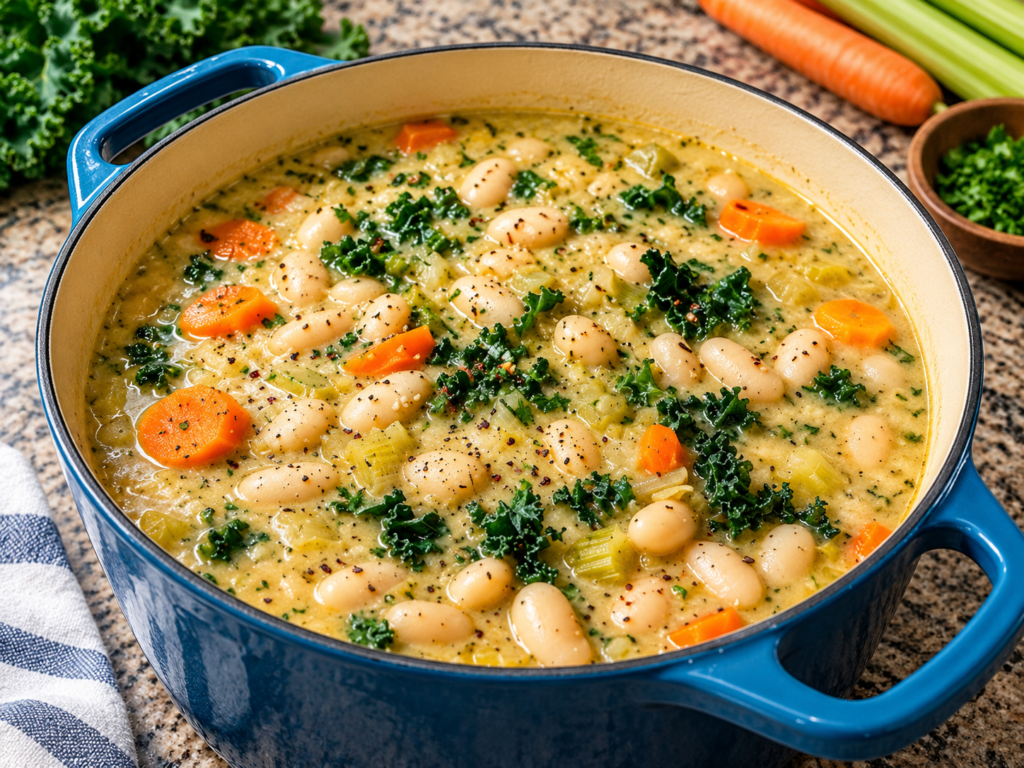
This comforting Vegan White Bean Soup is creamy, hearty, and packed with tender white beans, carrots, celery, kale, and aromatic herbs. The beans give the soup a satisfying texture and plant-based protein, while the vegetables add freshness, color, and natural flavor.
It is a cozy option for anyone looking for high-protein vegan recipes, wholesome low-carb meals, and easy plant-based dinners without relying on heavy ingredients. A simple one-pot recipe makes it especially convenient for busy weeknights.
Short Description
A creamy, hearty vegan soup made with white beans, kale, carrots, and celery.
It is rich in plant-based protein, fiber, and comforting savory flavors.
Perfect for meal prep, chilly evenings, or a nourishing easy dinner.
Can This Vegan White Bean Soup Support Weight Loss Goals?
This soup can fit into a balanced weight-management meal plan because white beans provide plant-based protein and fiber, which can make a meal more satisfying. The vegetables add volume and nutrients without requiring a large amount of added fat. Keeping the olive oil and creamy ingredients measured also helps keep the overall calorie content reasonable.
Does Vegan White Bean Soup Fit a High Protein Lifestyle?
Vegan White Bean Soup can work well in a high-protein lifestyle, although its protein comes primarily from plant-based white beans rather than concentrated protein sources. The recipe provides approximately 18g protein per serving, along with substantial fiber. Net carbs are moderate because beans naturally contain carbohydrates, so this is better suited to a high-protein eating pattern than a strict low-carb or keto diet. For even more protein, use unsweetened soy milk and add nutritional yeast as included below.
My Personal Experience
- Creamy without being heavy
Blending a small portion of the beans into the broth creates a naturally creamy texture.
It gives the soup body without needing dairy or a large amount of cream. - The beans make it satisfying
White beans add a soft, buttery texture and meaningful plant-based protein.
They also help turn a simple vegetable soup into a filling main meal. - Kale works especially well here
Adding kale near the end keeps some texture and prevents it from becoming overly soft.
Its slightly earthy flavor balances the creamy bean broth beautifully. - Great for meal prep
The flavors become even more developed after the soup rests overnight.
It reheats easily for convenient lunches or dinners during the week.
Perfect For
- High-protein vegan lunches
- Plant-based weeknight dinners
- Healthy meal-prep recipes
- Cozy winter meals
- High-protein soup recipes
- Vegetarian and vegan meal plans
- Low-carb-conscious meals when portioned appropriately
- Easy one-pot dinners
- Comfort food with plant-based ingredients
Why You’ll Love This Recipe
- One-pot convenience
Everything comes together in one Dutch oven or large soup pot.
That means less cleanup while still creating deep, developed flavor. - Creamy without dairy
Blended white beans naturally thicken the broth.
You get a rich mouthfeel while keeping the recipe completely vegan. - Packed with vegetables
Carrots, celery, onion, and kale bring color, texture, and savory freshness.
They complement the mild, creamy flavor of the white beans. - Plant-based protein source
White beans provide protein and fiber in every serving.
Nutritional yeast and unsweetened soy milk add additional plant-based protein. - Excellent for leftovers
The soup stores and reheats well, making it practical for meal preparation.
The flavors often become even better after a day in the refrigerator.
Common Mistakes to Avoid
- Adding kale too early — Overcooking it can make the greens dull and overly soft; add it during the final few minutes.
- Skipping the sauté step — Cooking the onion, carrot, and celery first develops much better flavor.
- Blending all the beans — Blending only about 1½ cups creates creaminess while leaving plenty of whole beans for texture.
- Using too much salt at the beginning — Vegetable broth and canned beans can already contain sodium, so season gradually and adjust at the end.
Required Equipment
- Large Dutch oven or soup pot — Provides enough space for the vegetables, beans, and broth to simmer evenly.
- Wooden spoon — Makes it easy to sauté vegetables and scrape flavorful bits from the bottom.
- Immersion blender — Quickly blends part of the soup directly in the pot for a creamy texture.
- Measuring cups and spoons — Keep liquids, seasonings, and nutritional ingredients consistent.
- Ladle — Makes serving the hot soup easy and mess-free.
Storage Instructions
Refrigerator: Allow the soup to cool before transferring it to airtight glass or BPA-free food containers. Refrigerate for up to 4 days.
Freezer: Portion completely cooled soup into freezer-safe containers, leaving a little room for expansion. Freeze for up to 3 months.
Reheating: Reheat gently on the stovetop over medium-low heat, stirring occasionally. Add a splash of vegetable broth or water if the soup becomes too thick.
Proper storage and gentle reheating help preserve the beans, vegetables, and plant-based protein content.
Recipe Details
- Preparation Time: 15 minutes
- Cooking Time: 30 minutes
- Total Time: 45 minutes
- Servings: 6
- Best Season: Winter, but suitable for all-season meal prep
- Total Calories: Approximately 280 calories per serving
Ingredients
- 3 cans (15 oz each) cannellini or Great Northern beans, drained and rinsed
- 1 tablespoon extra-virgin olive oil
- 1 medium yellow onion, diced
- 2 medium carrots, sliced
- 2 celery stalks, diced
- 3 cloves garlic, minced
- 4 cups low-sodium vegetable broth
- 1 cup unsweetened soy milk
- 2 cups chopped kale, stems removed
- 2 tablespoons nutritional yeast
- 1 teaspoon dried Italian seasoning
- ½ teaspoon dried thyme
- ½ teaspoon black pepper
- ½ teaspoon salt, or to taste
- 1 tablespoon fresh lemon juice
- 1 bay leaf
- ½ teaspoon smoked paprika, optional
- Fresh parsley, for garnish
- Lemon wedges, for serving
Ingredient Note: Choose low-sodium beans and vegetable broth when possible so you can control the final salt level. Unsweetened soy milk adds more protein than many other plant-based milks.
Directions
1. Prepare the vegetables
Drain and rinse the beans thoroughly. Dice the onion and celery, slice the carrots, and chop the kale.
2. Sauté the aromatics
Heat a large Dutch oven over medium heat and add the olive oil. Add onion, carrots, and celery.
Cook for 5–6 minutes, stirring occasionally, until the vegetables begin to soften.
3. Add garlic and seasonings
Add minced garlic, Italian seasoning, thyme, black pepper, and smoked paprika if using.
Cook over medium heat for 30–60 seconds, just until fragrant. Avoid browning or burning the garlic.
4. Build the soup
Add the vegetable broth, soy milk, bay leaf, and all of the rinsed beans except about 1½ cups.
Bring the mixture to a gentle boil over medium-high heat.
5. Simmer
Reduce the heat to medium-low, cover partially, and simmer for 15–20 minutes.
The carrots should be tender and the broth should become flavorful and slightly creamy.
6. Make it creamy
Remove the bay leaf. Use an immersion blender to blend a portion of the soup directly in the pot.
Blend just enough to thicken the broth while keeping plenty of whole beans and vegetables visible.
High-protein tip: Avoid replacing the beans with mostly potatoes or other starchy ingredients; keeping the beans as the main base preserves the recipe’s plant-protein contribution.
7. Add kale and remaining beans
Stir in the reserved whole beans, chopped kale, and nutritional yeast.
Cook over medium-low heat for 3–5 minutes, until the kale is tender but still has some texture.
8. Finish the soup
Turn off the heat and stir in the fresh lemon juice.
Taste and adjust salt and black pepper. The finished soup should be creamy, hearty, and thick enough to lightly coat a spoon.
9. Serve
Ladle into bowls and garnish with fresh parsley and an optional squeeze of lemon.
Serve warm.
Nutrition Facts
Per Serving — Approximate
- Calories: 280 kcal
- Fats: 7 g
- Cholesterol: 0 mg
- Sodium: 650 mg
- Potassium: 720 mg
- Total Carbohydrates: 43 g
- Fiber: 11 g
- Net Carbs: 32 g
- Sugars: 6 g
- Protein: 18 g
- Calcium: 150 mg
Nutrition values are approximate and can vary depending on the brand of beans, vegetable broth, soy milk, and other ingredients used.
Notes
- Storage: Refrigerate in airtight containers for up to 4 days or freeze for up to 3 months.
- Reheating: Warm gently over medium-low heat and add a little broth if the soup has thickened.
- Allergy note: This recipe is vegan, but check labels on vegetable broth, canned beans, and nutritional yeast for facility or ingredient warnings.
- Flavor boost: Add extra lemon juice, cracked black pepper, red pepper flakes, or a pinch of smoked paprika before serving.
- Protein boost: For a higher-protein bowl, use unsweetened soy milk and serve with a side of another plant-based protein source.
Frequently Asked Questions
1. Is Vegan White Bean Soup high in protein?
Yes, each serving provides approximately 18g of plant-based protein, primarily from white beans with additional protein from soy milk and nutritional yeast.
2. Can I use different white beans?
Yes, cannellini, Great Northern, navy, or other cooked white beans can be used.
3. Can I make this soup without soy milk?
Yes, you can replace it with unsweetened oat or almond milk, although the protein content will change.
4. Can I freeze Vegan White Bean Soup?
Yes, the cooled soup can be stored in freezer-safe containers for up to 3 months.
5. How can I make the soup creamier?
Blend a larger portion of the beans and broth with an immersion blender while leaving some whole beans for texture.
6. Is this recipe keto-friendly?
No, white beans naturally contain a significant amount of carbohydrates, so this recipe is better suited to a high-protein plant-based diet than a strict keto diet.