
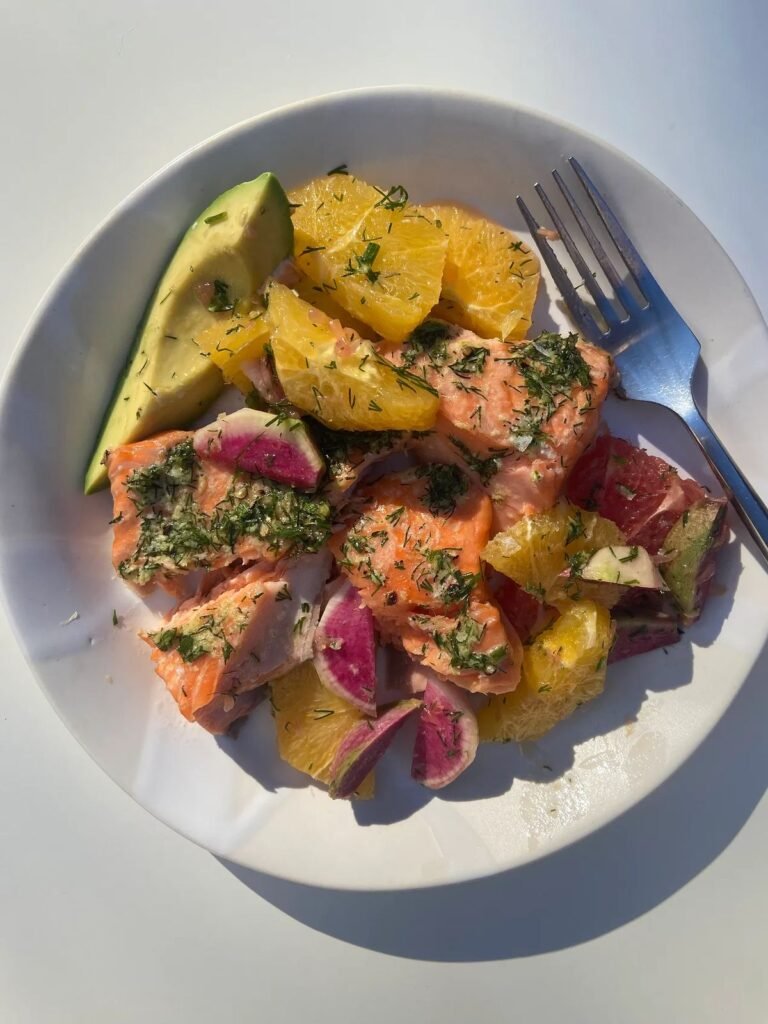
Description:
Ginger-Dill Salmon is a fresh, flavorful dinner featuring tender salmon coated with fragrant ginger, fresh dill, garlic, lemon juice, and olive oil. Baking keeps the salmon moist and flaky while the bright citrus and herbs add plenty of flavor without heavy sauces. With around 40g of protein per serving and only a small amount of carbohydrates, this is an excellent choice for high-protein and low-carb recipes.
Short 3-Line Description:
Tender salmon is baked with fresh ginger, dill, garlic, and lemon for a bright and savory flavor.
This easy high-protein meal delivers approximately 40g of protein per serving.
With only a few grams of carbohydrates, it fits naturally into many low-carb meal plans.
Can This Ginger-Dill Salmon Support Weight Loss Goals?
Ginger-Dill Salmon can fit into a balanced weight-management meal plan because salmon provides substantial protein in a satisfying main dish. The recipe uses flavorful ingredients such as ginger, lemon, garlic, and dill instead of a heavy carbohydrate-rich coating or sauce. Its relatively low carbohydrate content can also make it suitable for low-carb meal planning. Portion size and the foods served alongside it still matter when considering the overall balance of a meal.
Does Ginger-Dill Salmon Fit a High-Protein Lifestyle?
Yes, this recipe is particularly suitable for a high-protein lifestyle because each serving provides approximately 40g of protein. The main protein source is a 6-ounce salmon fillet, complemented by small amounts of protein from the other ingredients. The recipe contains approximately 2–5g of total carbohydrates per serving according to the source, making it naturally low-carb.
My Personal Experience
- The ginger adds a delicious fresh warmth:
Freshly grated ginger gives the salmon a subtle zing without overpowering its natural flavor.
It works especially well with the lemon and dill for a bright, aromatic finish. - The salmon stays beautifully tender:
Baking the seasoned fillets at 400°F keeps the inside moist while allowing the edges to become nicely cooked.
Watching for easy flaking helps prevent the fish from becoming dry. - Lemon makes the whole dish taste lighter:
Lemon juice and zest add acidity that balances the richness of the salmon and olive oil.
A little extra lemon just before serving makes the flavors even more vibrant. - It works well for meal prep:
The cooked salmon can be portioned with vegetables for convenient high-protein lunches or dinners.
Gentle reheating helps preserve its moisture and texture.
Perfect For:
- High-protein meals: The salmon provides approximately 40g of protein per serving.
- Low-carb recipes: The simple seasoning mixture keeps the dish low in carbohydrates.
- Healthy weeknight dinners: It requires minimal preparation and cooks in about 15–20 minutes.
- High-protein lunch: Pair a portion with cucumber salad or steamed broccoli for an easy lunch.
- Keto diet plans: The basic salmon recipe is naturally low in carbohydrates.
- Meal prep: Individual salmon portions can be stored and reheated for convenient meals.
- Light summer dinners: Lemon, dill, and ginger give the dish a fresh seasonal character.
- High-protein lifestyle meals: Salmon provides a substantial protein base without needing a breaded coating.
Why You’ll Love This Recipe:
- Fresh ginger and dill create a distinctive flavor:
The combination gives ordinary baked salmon a bright, herbaceous character.
Lemon and garlic add additional layers without making the recipe complicated. - It is naturally high in protein:
Each serving contains approximately 40g of protein according to the source’s estimate.
That makes it an easy centerpiece for a protein-focused meal. - The ingredient list is simple:
Salmon, olive oil, dill, ginger, garlic, lemon, salt, and pepper are all you need.
There is no complicated sauce or specialty ingredient required. - It is naturally low-carb:
The recipe contains only a small amount of carbohydrate per serving.
This makes it easy to combine with other low-carb vegetables and salads. - It is ready in about 30 minutes:
With 10 minutes of preparation and 15–20 minutes of cooking, it fits busy evenings.
Common Mistakes to Avoid:
- Overcooking the salmon: Baking too long can quickly make salmon dry and tough. Start checking for easy flaking around the recommended cooking time.
- Using too much ginger: Fresh ginger is flavorful, so increasing it substantially can overpower the delicate salmon and dill.
- Skipping the drying step: Pat the salmon dry before seasoning so the ginger-dill mixture adheres more evenly.
- Not checking the thickest part: Salmon fillets vary in thickness, so use the center of the thickest fillet to judge doneness rather than relying only on the timer.
Required Equipment:
- Baking tray — provides a stable surface for evenly baking the salmon.
- Parchment paper — helps prevent sticking and makes cleanup easier.
- Small mixing bowl — makes it easy to combine the ginger-dill seasoning mixture.
- Pastry brush or spoon — spreads the olive-oil mixture evenly over the fillets.
- Oven — provides consistent heat for tender, evenly cooked salmon.
Storage Instructions:
Store leftover salmon in an airtight container in the refrigerator for up to 3 days, as specified by the source. For longer storage, wrap individual portions well and freeze for up to 2 months.
For best quality, use shallow airtight containers or individually wrapped portions to limit air exposure. Thaw frozen salmon overnight in the refrigerator before reheating. Reheat gently at a low oven temperature or in short microwave intervals to reduce the chance of drying out.
The recipe remains a high-protein option after storage because the primary protein source—salmon—remains intact; however, overall texture and freshness are best within the recommended storage period.
Recipe Details
Preparation Time: 10 minutes
Cooking Time: 15–20 minutes
Total Time: 30 minutes
Servings: 4
Best Season for This Recipe: All-season
Total Calories (Per Serving): Approximately 350–400 calories
The calorie figure is an approximate estimate and can vary according to salmon size and the amount of olive oil used.
📝 Ingredients
Ginger-Dill Salmon
- 4 salmon fillets (about 6 oz each) — the main high-protein ingredient.
- 2 tablespoons olive oil — adds moisture and helps carry the flavors.
- 2 tablespoons fresh dill, chopped — provides a fresh herbal flavor.
- 1 tablespoon fresh ginger, finely grated — adds warm, zesty flavor.
- 2 cloves garlic, minced — adds savory depth.
- 2 tablespoons lemon juice — provides acidity and brightness.
- 1 teaspoon lemon zest — intensifies the citrus flavor.
- 1 teaspoon salt — seasons the salmon.
- ½ teaspoon black pepper — adds gentle spice.
Optional Garnish
- Extra fresh dill
- Lemon slices
- Green onions
- Chili flakes
The ingredient quantities above follow the published recipe.
Directions
1. Preheat the Oven
Heat the oven to 400°F (200°C).
Line a baking tray with parchment paper.
2. Prepare the Salmon
Place the salmon fillets on the lined baking tray and pat them dry with a paper towel.
Drying the surface helps the seasoning adhere properly.
3. Make the Ginger-Dill Mixture
In a small bowl, combine the olive oil, grated ginger, minced garlic, chopped dill, lemon juice, lemon zest, salt, and black pepper.
Stir until the mixture is evenly combined.
4. Season the Salmon
Brush or spoon the ginger-dill mixture evenly over each salmon fillet.
Let the seasoned salmon rest for 5–10 minutes so the flavors can develop.
5. Bake
Place the tray in the 400°F (200°C) oven and bake for approximately 12–15 minutes, checking the thickest fillet first.
The salmon should flake easily with a fork while remaining moist in the center.
6. Check the Texture
Look for an opaque, cooked center and tender flakes rather than a dry, firm texture.
Avoid extending the cooking time unnecessarily because salmon can dry out quickly.
7. Finish and Serve
Remove the salmon from the oven and allow it to rest for a few minutes.
Garnish with fresh dill, lemon slices, and additional black pepper if desired.
High-protein cooking tip: Keep the salmon as the main component of the plate and pair it with protein-friendly, low-carb vegetables such as broccoli, cucumber salad, or roasted vegetables.
Nutrition Facts (Per Serving – Approximate)
| Nutrient | Approximate Amount |
|---|---|
| Calories | 350–400 kcal |
| Fats | 20–24 g |
| Cholesterol | ~100 mg |
| Sodium | ~650 mg |
| Potassium | ~800 mg |
| Total Carbohydrates | ~2–5 g |
| Fiber | ~1 g |
| Net Carbs | ~1–4 g |
| Sugars | ~1 g |
| Protein | ~40 g |
| Calcium | ~20–30 mg |
Note: Nutrition values are approximate. The original recipe specifically reports approximately 350–400 calories, 40g protein, 2–5g carbohydrates, 20–24g fat, and 1g fiber per serving, with variation depending on salmon size and added oil. The remaining values above are reasonable estimates rather than laboratory-tested measurements.
Notes:
- Storage: Refrigerate leftovers in an airtight container for up to 3 days or freeze for up to 2 months.
- Reheating: Reheat gently until warmed through to help prevent the salmon from drying out.
- Frozen salmon: Thaw completely and pat dry before seasoning.
- Allergy note: Salmon is a fish and may not be suitable for people with fish allergies.
- Flavor boost: Add chili flakes for heat or finish with extra fresh lemon and dill.
- Freshness tip: Freshly grated ginger gives the strongest ginger flavor.
- Salmon choice: Wild-caught salmon can be used when available for a richer flavor, while skin-on fillets can help retain moisture during cooking.
Frequently Asked Questions
1. Can I use frozen salmon for Ginger-Dill Salmon?
Yes, thaw the salmon completely in the refrigerator and pat it dry before applying the seasoning.
2. How do I keep the salmon from becoming dry?
Avoid overbaking and remove it once the thickest part flakes easily while remaining moist.
3. Can I make this recipe keto-friendly?
Yes, the basic recipe is naturally low in carbohydrates and can fit into many keto-style meal plans when served with low-carb sides.
4. Can I prepare Ginger-Dill Salmon ahead of time?
Yes, you can prepare and season the salmon shortly before baking, or cook it ahead for meal prep.
5. What vegetables go well with this salmon?
Steamed broccoli, roasted vegetables, cucumber salad, or other low-carb vegetables pair particularly well with the lemon-dill flavor.
6. Can I make this salmon in an air fryer?
Yes, the source gives an air-fryer variation of 390°F (200°C) for about 8–10 minutes, depending on the thickness of the fillets.