
Description
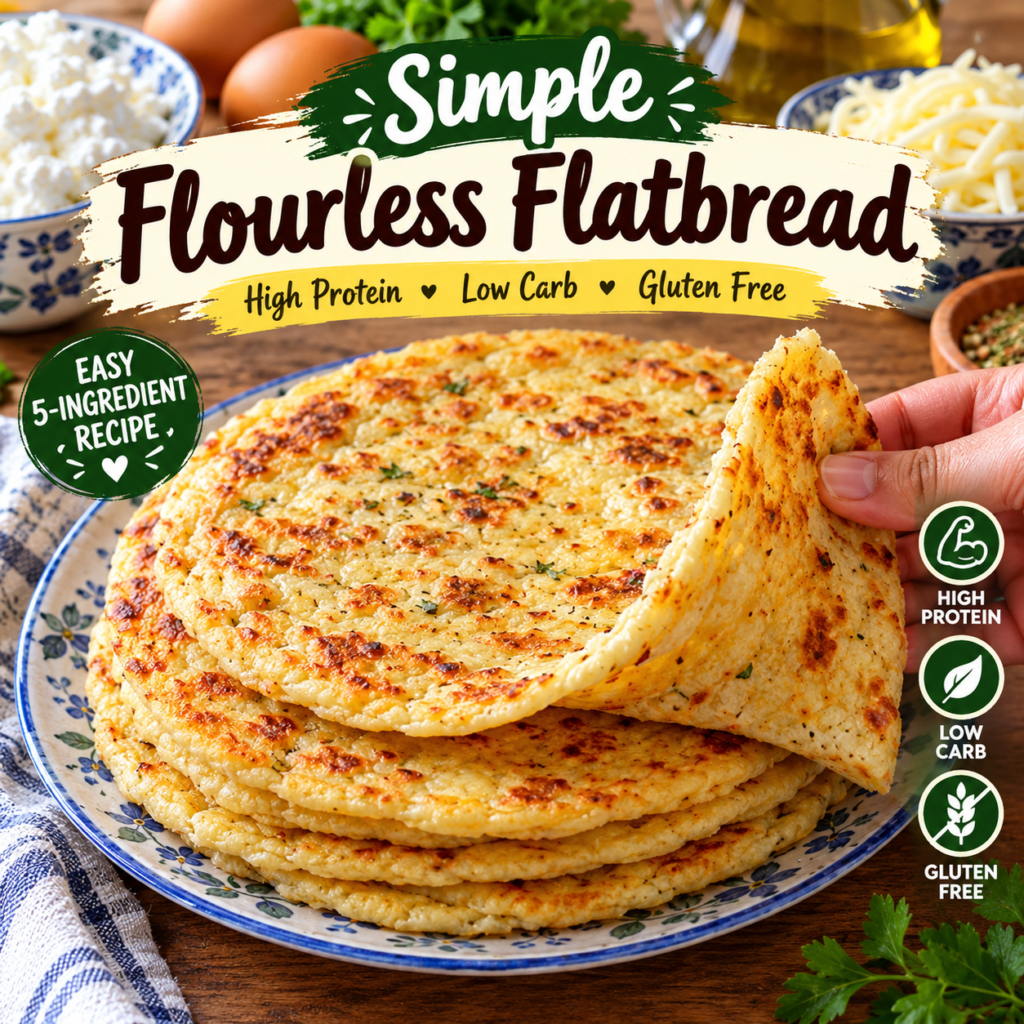
This Simple Flourless Flatbread is soft, tender, lightly chewy, and beautifully golden on the outside without using traditional flour. Made with protein-rich cottage cheese and eggs, it is an easy option for anyone looking for a high-protein, low-carb flatbread that works for breakfast, snacks, wraps, or as a side dish.
The flatbreads develop delicious toasted spots in the pan while staying soft enough to fold and tear apart. They’re especially useful for adding more protein to everyday meals without relying on regular flour-based bread.
Can This Simple Flourless Flatbread Support Weight Loss Goals?
It can fit into a weight-conscious eating pattern because it provides a good amount of protein for its calorie content and contains substantially fewer carbohydrates than conventional flour flatbread. Protein can contribute to fullness as part of an overall balanced diet. Portion size and the toppings or fillings served with the flatbread still matter, particularly if you’re managing total calories.
Does Simple Flourless Flatbread Fit a High-Protein Lifestyle?
Yes, this recipe is particularly suitable for a high-protein, low-carb lifestyle because cottage cheese and eggs provide the majority of its protein. Each flatbread contains relatively low net carbs compared with a conventional wheat flatbread. Cottage cheese also contributes calcium and additional protein without requiring flour. For keto-style meal plans, choose full-fat or low-carb cottage cheese and check the nutrition label of your preferred brand.
My Personal Experience
Rather than claiming personal experience, here are recipe-specific observations based on the ingredients and cooking method:
- The texture is soft and flexible.
The cottage cheese and eggs create a tender center that makes the flatbread easy to fold without traditional flour. - Golden spots add plenty of flavor.
Cooking over medium heat allows the surface to develop attractive toasted patches without drying the inside. - The recipe is naturally filling.
Cottage cheese and eggs provide substantially more protein than a comparable flour-based flatbread. - It works well for savory meals.
The mild flavor pairs easily with eggs, chicken, turkey, vegetables, cheese, or fresh herbs.
Perfect For:
- High-protein breakfasts — Serve with scrambled eggs, turkey, cottage cheese, or Greek yogurt.
- Low-carb meals — Use it instead of traditional bread or flour tortillas.
- High-protein snacks — Fold one around turkey, chicken, or cottage cheese for a satisfying snack.
- Quick lunches — Turn it into a protein-rich wrap with lean meat and vegetables.
- Meal prep — Make several flatbreads at once and refrigerate them for later.
- Keto-style meal plans — The basic recipe is relatively low in carbohydrates, although exact suitability depends on the cottage cheese used.
- Gluten-free eating — No wheat flour is used in the recipe.
Why You’ll Love This Recipe
- No flour required
Cottage cheese and eggs create the structure, making this a simple alternative to conventional flatbread. - Protein-rich ingredients
Cottage cheese and eggs make the recipe naturally more protein-focused than ordinary flour flatbreads. - Soft enough to fold
When cooked correctly, the flatbread remains tender rather than becoming brittle or cracker-like. - Golden and delicious
A lightly oiled skillet creates attractive browned patches and adds a subtle toasted flavor. - Very versatile
Use it for breakfast sandwiches, wraps, dipping, or alongside soups and salads.
Common Mistakes to Avoid
- Using watery cottage cheese without draining it — Excess moisture can make the batter too loose and difficult to cook.
- Cooking over very high heat — The outside can brown too quickly while the center remains soft and undercooked.
- Making the flatbread too thick — A moderately thin layer cooks more evenly and is easier to flip.
- Flipping too early — Wait until the underside is set and golden around the edges before turning.
Required Equipment
- Blender or food processor — Creates a smooth, uniform cottage-cheese batter.
- Non-stick skillet — Helps prevent sticking and promotes even browning.
- Spatula — Makes flipping the delicate flatbread easier.
- Measuring cups and spoons — Keeps the ingredient ratio consistent.
- Mixing bowl — Useful if seasoning or herbs are added after blending.
Storage Instructions
Allow the flatbreads to cool completely before storing. Place parchment paper between individual pieces and keep them in an airtight container or zip-top bag in the refrigerator for up to 4 days.
For longer storage, wrap individual flatbreads and place them in a freezer-safe bag or container for up to 2 months. Thaw in the refrigerator before reheating.
Refrigeration or freezing does not significantly change the protein content; however, the texture may become slightly softer after storage.
Recipe Details
- Preparation Time: 5 minutes
- Cooking Time: 12–16 minutes
- Total Time: About 20 minutes
- Servings: 4 flatbreads
- Best Season: All-season
- Total Calories: Approximately 140 calories per flatbread
- Protein: Approximately 12 g per flatbread
Nutrition is an approximate estimate and can vary depending on the cottage cheese and egg brands used.
Short 3-Line Description
Soft, golden flourless flatbread made with protein-rich cottage cheese and eggs.
Low in carbohydrates, naturally gluten-free, and easy to prepare in a skillet.
Perfect for high-protein breakfasts, wraps, snacks, and quick low-carb meals.
📝 Ingredients
- 1 cup (225 g) cottage cheese — Full-fat, low-fat, or 2% can be used; drain excess liquid if very watery.
- 2 large eggs
- ½ cup (50 g) shredded mozzarella cheese — Helps create a softer, more cohesive flatbread.
- ¼ teaspoon salt
- ¼ teaspoon garlic powder
- ¼ teaspoon dried Italian herbs — Optional.
- 1 teaspoon olive oil — For greasing the skillet.
Optional Flavor Additions
- ¼ teaspoon black pepper
- 1 tablespoon chopped fresh parsley
- Pinch of smoked paprika
- 1 tablespoon grated Parmesan
Directions
1. Prepare the mixture
Add the cottage cheese, eggs, mozzarella, salt, and seasonings to a blender or food processor.
Blend for approximately 30–45 seconds, until the mixture is smooth and creamy with no large cottage-cheese curds remaining.
2. Rest the batter
Let the blended mixture rest for 2–3 minutes.
The batter should be smooth and pourable but not extremely watery.
High-protein tip: Avoid replacing the cottage cheese with a low-protein creamy ingredient, as the cottage cheese is the main protein source.
3. Heat the skillet
Place a non-stick skillet over medium-low to medium heat and lightly brush with olive oil.
Allow the pan to heat for approximately 1–2 minutes.
4. Cook the first side
Pour approximately ¼ of the mixture into the skillet and gently spread it into a thin round, approximately 5–6 inches wide.
Cook for about 3–4 minutes, or until the edges look set and the underside is lightly golden.
5. Flip carefully
Slide a wide spatula underneath the flatbread and flip it gently.
Cook the second side for another 2–3 minutes, until golden-brown spots appear and the center feels set.
6. Repeat
Transfer the cooked flatbread to a plate and repeat with the remaining mixture.
Keep the heat around medium-low to medium throughout cooking so the exterior doesn’t brown before the interior sets.
7. Serve
Serve immediately while warm and soft.
For a higher-protein meal, fill the flatbread with scrambled eggs, grilled chicken, turkey, tuna, cottage cheese, or Greek yogurt-based fillings.
Nutrition Facts
Per Flatbread — Approximate
| Nutrient | Amount |
|---|---|
| Calories | ~140 kcal |
| Fat | ~8 g |
| Cholesterol | ~105 mg |
| Sodium | ~300 mg |
| Potassium | ~100 mg |
| Total Carbohydrates | ~3.5 g |
| Fiber | ~0.2 g |
| Net Carbs | ~3.3 g |
| Sugars | ~1.5 g |
| Protein | ~12 g |
| Calcium | ~130 mg |
These values are approximate and will vary according to the specific cottage cheese, mozzarella, eggs, and amount of oil used.
Notes
- Storage: Refrigerate in an airtight container for up to 4 days or freeze for up to 2 months.
- Reheating: Warm in a dry skillet over low-medium heat for 30–60 seconds per side, or microwave for approximately 15–20 seconds.
- Allergy notes: Contains milk and eggs; use dairy-free substitutions only if you have a suitable tested alternative.
- For extra flavor: Add garlic powder, chili flakes, smoked paprika, fresh parsley, or Italian herbs.
- For extra protein: Serve with grilled chicken, turkey, tuna, eggs, or Greek yogurt.
- For lower carbs: Choose cottage cheese with minimal added carbohydrates and avoid sweetened varieties.
- For softer flatbreads: Avoid overcooking; remove them as soon as the center is set and the surface has developed light golden spots.
Frequently Asked Questions
1. Is this flatbread really flourless?
Yes, the recipe contains no wheat or other traditional flour, with cottage cheese, eggs, and mozzarella providing the main structure.
2. Is flourless flatbread high in protein?
Yes, this version provides approximately 12 g of protein per flatbread, primarily from cottage cheese, eggs, and mozzarella.
3. Is this flatbread low-carb?
Yes, it is relatively low in carbohydrates, with approximately 3.3 g net carbs per flatbread, although exact values depend on the ingredients used.
4. Can I make it without mozzarella?
Yes, you can omit the mozzarella, although the flatbread may be slightly less cohesive and have a different texture.
5. Can I make the flatbread ahead of time?
Yes, prepare and cool the flatbreads completely, then refrigerate them for up to 4 days or freeze them for longer storage.
6. What can I serve with flourless flatbread?
It pairs especially well with eggs, grilled chicken, turkey, tuna, vegetables, cottage cheese, Greek yogurt dips, and fresh herbs.