

Have you ever heard of ackee fruit? It’s one of among some unique African exotic fruits that’s very popular in Jamaica and some parts of West Africa. People enjoy it because it tastes great when cooked properly, but it can be dangerous if you don’t prepare it correctly, as some parts are poisonous. Don’t worry, this article explains everything in simple words. We’ll cover what ackee fruit is, its health benefits, how to use it, why it can be risky, and how to eat it safely.
By the end, you’ll know if ackee fruit is safe for you and why it’s called Jamaica’s national fruit. Some people, like children, pregnant women, or those with allergies, should be cautious. Knowing who may need to avoid ackee can help you assess your personal risk.
What Is Ackee Fruit?
Ackee fruit comes from a tall evergreen tree called Blighia sapida. It started in West Africa, in places like Ghana, Nigeria, and the Ivory Coast. Then people brought it to the Caribbean, especially Jamaica, where it’s now the national fruit.
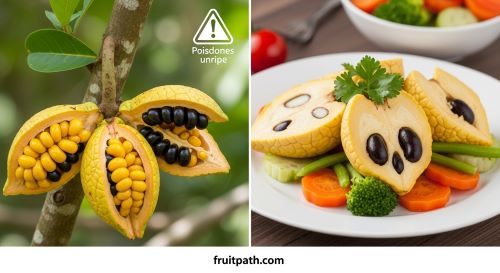
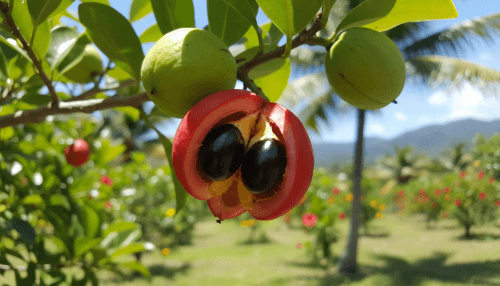
The fruit grows in big pods that look red or yellow on the outside. When it’s fully ripe, the pod splits open on its own. Inside, you see soft, creamy yellow parts called arils—that’s the part you can eat. There are also big black seeds and a pinkish lining.
The most important rule is to eat only the yellow arils from a pod that has opened on its own while still on the tree. Never pick the fruit early or try to open it yourself.
Ackee Fruit Taste and Texture:
Cooked ackee fruit has a mild, creamy taste. It’s a little nutty and feels soft, like scrambled eggs. That’s why people use it in salty meals, not sweet ones like desserts. Many say it feels buttery in your mouth.
Ackee Fruit Health Benefits Explained:
When you eat ackee fruit the safe way, it’s actually good for your body. It’s packed with nutrients that help you stay healthy.
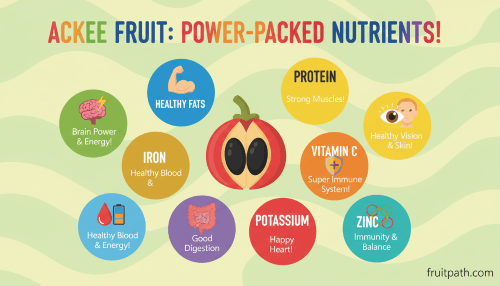
Ackee fruit has healthy fats (mostly the kind found in olive oil or avocados), a little protein, fiber, and vitamins A, C, and some B vitamins. It also provides minerals such as potassium, iron, zinc, calcium, and magnesium.
These things do cool stuff:
- Healthy fats give you steady energy and help your brain work well.
- Protein helps build and fix muscles.
- Vitamin A keeps your eyes sharp and your skin healthy.
- Vitamin C boosts your immune system to fight off colds and germs.
- Potassium helps control blood pressure and keeps your heart happy.
- Fiber helps your tummy digest food and stay regular.
- Iron helps carry oxygen in your blood, so you don’t feel tired.
- Zinc supports your immune system and helps make hormones.
Some studies show that the healthy fats in ackee fruit may help lower bad cholesterol and protect against illnesses such as heart disease. The antioxidants fight harmful things in your body that can make you sick over time.
Ackee Benefits for Men:
Guys might like the extra ackee fruit because of the zinc. Zinc helps make testosterone, which is important for energy, strength, and feeling good. The healthy fats and protein also provide long-lasting energy for sports or hard work and help muscles grow stronger after exercise.

Ackee Benefits for Skin:
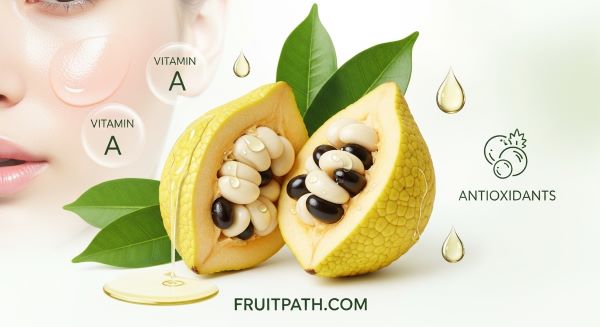
Eating ackee fruit can make your skin look better, too. Vitamin A helps fix skin and keeps it smooth. Antioxidants help slow the appearance of aging signs like wrinkles. According to Gardenia.net, the healthy fats in ackee may help keep skin soft and moist, and in some regions, ackee oil is traditionally used for dry skin or hair care.
Ackee Fruit Nutritional Value:
Here’s a simple table showing what you get from about 100 grams (about a small handful or half a cup) of cooked ackee fruit (usually canned or properly boiled fresh arils). These numbers come from trusted sources, like food tables from the Caribbean and other studies. The amounts can change a bit depending on how it’s prepared, but this gives a good average idea.
| Calories | 140–160 | Gives you energy to play, learn, and grow. |
| Healthy fats | 9–18 grams (mostly good unsaturated fats like oleic acid) | Provides long-lasting energy, helps your brain, and keeps your heart healthy. Similar to fats in avocados or olive oil. |
| Protein | 2–9 grams (often around 3g) | Helps build strong muscles and repair your body after playing or exercising. |
| Carbohydrates | 0.8–10 grams (usually low) | Low in carbs, so it’s not super sweet like other fruits. |
| Fiber | 2–3.5 grams | Helps your tummy feel good and keeps digestion working smoothly. |
| Vitamin C | 30–65 mg (good amount) | Boosts your immune system to fight germs and helps heal cuts. |
| Vitamin A | Good source (from carotene) | Keeps your eyes healthy and your skin smooth. |
| Potassium | Around 270 mg | Helps your heart beat right and controls blood pressure. |
| Iron | 0.7–5 mg | Carries oxygen in your blood so you don’t feel super tired. |
| Zinc | About 1 mg | Supports your immune system and helps with growth and hormones. |
| Calcium | 35–83 mg | Builds strong bones and teeth. |
Ackee fruit is special because it’s one of the few fruits that are high in healthy fats and low in sugar. It feels more like eating a creamy vegetable than a sweet fruit. Most of the fats are the good kind that can help lower bad cholesterol when you eat them as part of a healthy diet. Ideal for those following vegan, gluten-free, or low-carb diets, ackee is a versatile option.

However, some individuals may experience allergic reactions, so it’s important to be cautious and perhaps consult with a healthcare provider if you have known food allergies. If you use canned ackee, remember it might have extra salt, so rinse it or eat less if you need to watch your salt.
This makes ackee fruit a nutritious choice for energy, especially for active kids or grown-ups, but always eat it safely!
Ackee Fruit vs Other Exotic Fruits:
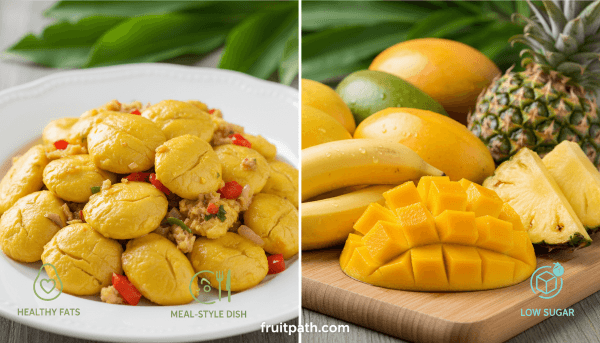
Ackee fruit stands out from fruits like mangoes, pineapples, or bananas. Most exotic fruits are sweet and juicy, full of sugar and water. But ackee fruit is different:
- It’s savory and creamy, more like scrambled eggs or a mild veggie.
- Very high in healthy fats, which is rare for fruits. It’s similar to the fat content in avocados.
- Low in natural sugars and carbs.
- Needs careful preparation, unlike grab-and-eat fruits.
- Used in main dishes, not snacks or desserts.
This makes it unique among tropical fruits and a great addition to meals for people who want savory, filling options.
Cultural Importance of Ackee Fruit:
In Jamaica, ackee fruit is more than just food; it’s part of the culture. It’s the national fruit, and ackee and saltfish are the national dish. Families often eat it for breakfast on weekends, holidays, or special occasions. It reminds people of home, family gatherings, and happy times.
Ackee fruit also has roots in West Africa, where the tree originally grew. People brought the seeds to the Caribbean a long time ago, and now it stands as a symbol of strength, tradition, and delicious heritage. During festivals or big events, ackee fruit is often served, bringing everyone together.

Can You Grow Ackee Fruit at Home?
Yes, you can grow an ackee fruit tree, but it’s not easy for everyone. The tree needs hot, tropical weather and cannot survive cold winters. Here’s what it needs:
- Warm temperatures all year (above 60°F/15°C, best in zones 10–12).
- Lots of bright sunlight every day.
- Soil that drains water well (not too wet, or roots rot).
- Regular water, but don’t drown it.
- Some fertilizer now and then for healthy growth.
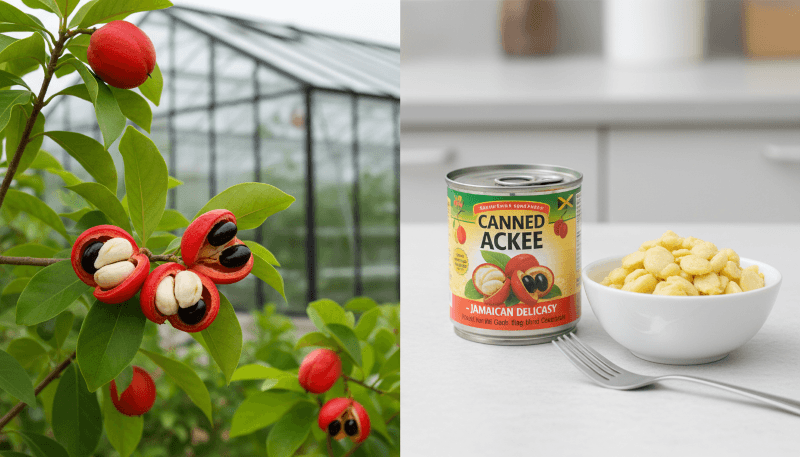
It can take 3 to 8 years, or even longer, for the tree to start bearing fruit. You can start from seeds, but pieces from a healthy tree will grow faster. When the fruits show up, wait patiently until the pods split open on their own. Never try to rush it. In most places, it’s hard to grow outdoors.
Some people try in greenhouses, but it’s not easy. For most people, buying canned ackee fruit is much easier and safer. You can find safe, canned ackee in international markets, Caribbean grocery stores, or purchase it online from reputable retailers. Always ensure the product comes from a trusted source to enjoy the authentic taste of this unique fruit.
Myths About Ackee Fruit:
Lots of wrong ideas about ackee fruit float around. Let’s clear them up:
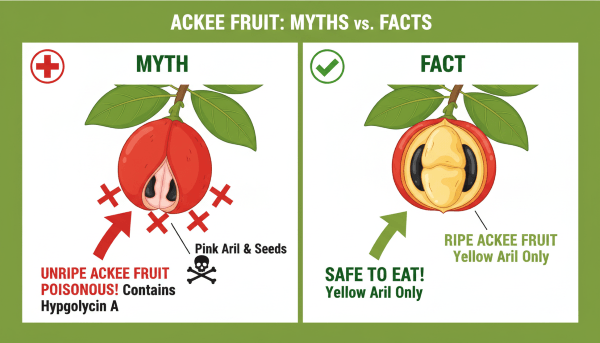
- Myth: “Ackee fruit is always poisonous.” Truth: No! Only the unripe parts, seeds, and pink lining are bad. Ripe yellow arils are safe and yummy.
- Myth: “Cooking removes the poison from unripe ackee fruit.” Truth: Wrong. According to the US Food and Drug Administration, unripe ackee fruit, as well as the rind and seeds of ripe fruit, can contain dangerous levels of hypoglycin A that are not made safe by boiling. The myth that all parts of ackee fruit are edible is not true.” Truth: Nope. Seeds and pink stuff can make you very sick—throw them away!
- Myth: “Ackee fruit is just like any other fruit.” Truth: It’s special—high fat, needs special care, and is treated like a veggie in cooking.
Knowing the facts keeps everyone safe and lets you enjoy it.
Safety Tips for Eating Ackee Fruit:
consider some easy rules to remember so you stay safe:
- Never force a pod open—wait for it to split on its own.
- Don’t eat unripe ackee fruit—it looks closed and green/red.
- Always remove every black seed and pink lining completely.
- Boil the yellow arils in fresh water before adding to recipes.
- If you’re not sure it’s ripe or prepared right, skip it.
- For first-timers or kids, start with a trusted canned ackee.
- Ask an adult or someone experienced if you’re trying something new.
Following these tips turns ackee fruit from risky to reliable and fun. For those trying ackee for the first time, here’s a simple recipe to get you started:
Ackee and Tomato Stir-Fry:
1. Start with one can of ackee fruit, rinsed and drained.
2. Heat a tablespoon of oil in a pan over medium heat.
3. Add one chopped onion and two minced garlic cloves, and sauté until soft.
4. Stir in two chopped tomatoes and let them cook until they are soft and juicy.
5. Gently fold in the ackee, being careful not to break it apart.
6. Season with salt, pepper, and a pinch of thyme to taste.
7. Serve warm, alongside rice or bread.
This easy recipe showcases ackee’s creamy texture and makes it approachable for beginners.

Final Thoughts on Ackee Fruit:
Ackee fruit is a wonderful, one-of-a-kind food. It’s packed with good stuff like healthy fats for energy, protein for muscles, vitamins for eyes and skin, and minerals for your whole body. In Jamaica and West Africa, it’s loved in tasty dishes like ackee and saltfish, bringing families joy and tradition.
But it comes with a big warning: respect it! Eat only the ripe yellow arils, prepare it carefully, and avoid the toxic parts. When done right, ackee fruit is delicious, nutritious, and totally safe. When ignored, it can cause serious illness, such as low blood sugar or worse.
The good news? With simple rules, education, and safe canned options, people enjoy ackee fruit every day without problems. If you’re curious, try a small bit from a good source and taste why it’s so special.
Stay safe, eat smart, and maybe one day you’ll love ackee fruit too!

FAQs:
What toxins are found in ackee fruit?
Ackee fruit contains natural toxins called hypoglycin A and hypoglycin B. These toxins are found in unripe ackee, the seeds, and the pink inner lining. When eaten, they can cause dangerously low blood sugar and serious illness.
What is ackee fruit used for?
Ackee fruit is mainly used as a savory food, not a dessert. When fully ripe and cooked, it is used in traditional dishes like ackee and saltfish, stews, and stir-fries. According to the FDA, unripe ackee fruit, as well as the rind and seeds of ripe fruit, should never be eaten because they may contain harmful levels of hypoglycin A.
Ackee is restricted in the USA because unripe ackee can be poisonous and has caused past poisonings. Fresh ackee imports are tightly controlled, but properly processed canned ackee is legal and safe to sell under FDA regulations.
What is the No. 1 healthiest fruit?
There is no single No. 1 healthiest fruit, because different fruits offer different benefits. Fruits like berries, baobab, apples, and citrus fruits are often considered very healthy due to their vitamins, fiber, and antioxidants.
Why don’t Haitians eat ackee?
According to a report by the Jamaica Gleaner, ackee is not traditionally eaten in Haiti because it is not part of Haitian culinary culture, unlike in Jamaica, where it is a staple.
Why do I feel sick after eating ackee?
Feeling sick after eating ackee may happen if the fruit is unripe, poorly prepared, or eaten in excess. Symptoms like nausea or vomiting can be early signs of ackee poisoning, and medical help should be sought immediately.
If you or someone else experiences these symptoms, stay calm and follow these urgent steps: Call emergency services right away and provide clear information about the consumption of ackee fruit. Do not induce vomiting unless advised by medical professionals. It’s important to act quickly to prevent further complications.