
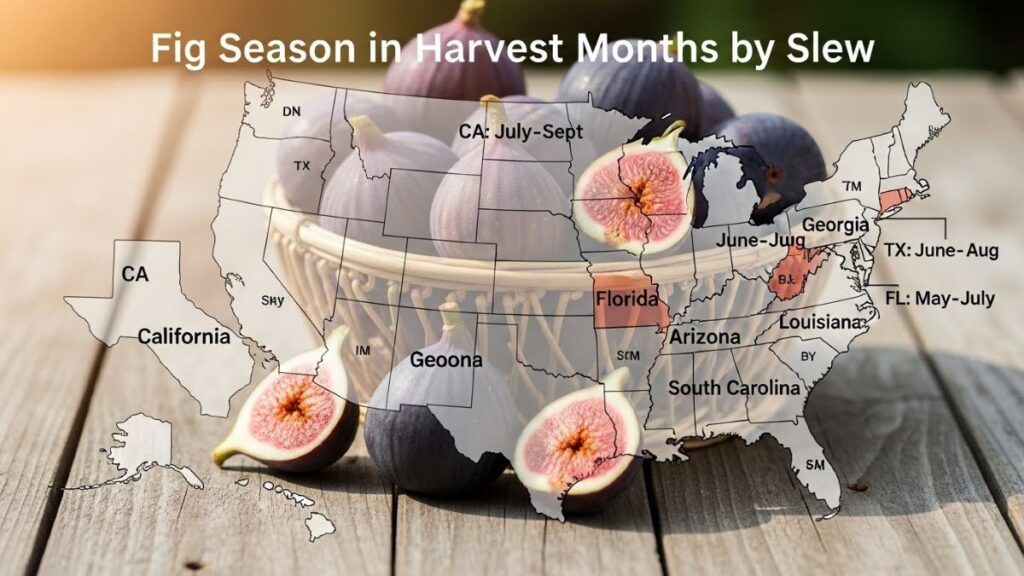
Fresh figs are a favorite summer fruit in America, known for their sweet flavor and special texture that’s rare outside the season. If you are looking up “fig season in the USA” or asking “when do figs ripen in America,” this guide will help you. In this article we’ll look at when figs are in season in different states and share tips for enjoying them at their best.

Fig trees grow well in warm places, from backyard gardens of your sweet homes, to large orchards in California. Knowing how fig season changes by region helps you find the freshest figs, whether you shop at farmers’ markets or grocery stores. For more details, see our general figs guide or our post about fig seasons around the world.
Why Fig Season Changes Across the United States:
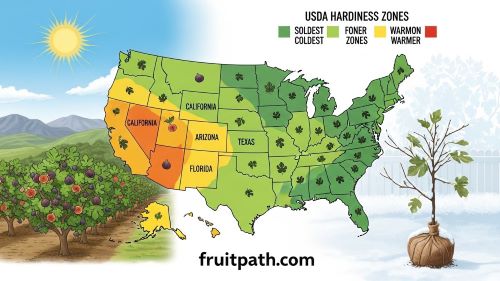
Fig trees do best in USDA hardiness zones 7 to 10, where summers are hot, winters are mild, and there’s little risk of hard frost. This is why fig season is different in each state:
- Climate Zones (USDA Zones): Southern and Western states (zones 8 to 10) have longer fig seasons and can grow figs commercially. In the North, figs usually need to be grown in containers or protected areas.
- Temperature & Sunlight Differences: Figs need plenty of sun and temperatures over 70°F to ripen. In hotter places like California and Texas, figs are ready sooner, while cooler areas have a later harvest.
- Rainfall and Frost Timing: Too much rain can cause figs to split, and early frosts can end the season quickly. Dry, sunny weather in the West helps produce the best figs.
These reasons are why almost all commercial fresh figs come from one state, while home growers fill in the gaps in other places.
Fig Season Calendar by US State:
Here’s a helpful table showing when figs are usually harvested in each state. The dates are based on grower reports, extension services, and recent seasons, but they can change with the weather:
| State | Fig Harvest Months |
| California | July – September (main; breba May-June, extends to November in some years) |
| Texas | June – August |
| Florida | May – July |
| Georgia | July – September |
| Arizona | June – August |
| South Carolina | July – September |
| Louisiana | June – August |
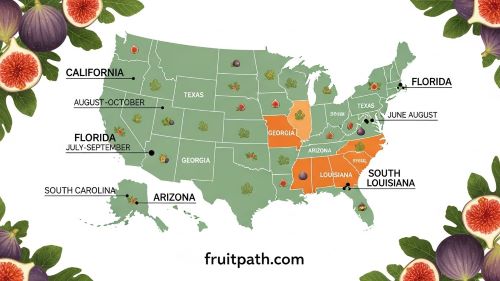
Searches for terms like “fig season California” are common because California is the main producer. However, states like Texas and Florida have earlier harvests for local markets. Warmer southern states start the season sooner, so people in Texas and Florida can enjoy figs for a longer time.
Early Crop vs Main Crop (Breba Explained):
Many fig trees give two harvests each year, which makes the season even more interesting:
- What is Breba Crop: The early, or breba, crop grows on branches from the previous year. These small figs survive the winter and ripen first.
- When Breba Figs Appear: In warmer states like California, breba figs usually ripen in May or June. For example, the Black Mission variety produces breba figs that are often larger in size.
- Why Main Crop is Better: The main crop grows on new branches and is usually bigger, sweeter, and more flavorful. It ripens from July to September across the country. While breba figs can be good, especially in varieties like Desert King, most growers focus on the main crop for the best taste.
In cooler areas, breba figs may be the only dependable crop. Having two harvests helps some growers enjoy fresh figs for a longer season.
Where Do Most USA Figs Come From?
Most commercial fresh figs in the U.S. come from just a few places:
- California #1 Producer: The Golden State grows 98% of U.S. fresh figs and 100% of dried, mainly in the Central Valley (Fresno, Madera, Merced counties). Varieties like Black Mission, Brown Turkey, and Sierra.
- Role of Backyard Fig Trees: In states such as Texas, Louisiana, Georgia, and Florida, home gardeners and small farms grow figs for local markets. These trees do well in the humid South and offer many different varieties.
- Why Figs Aren’t Shipped Far: Figs have thin skins that bruise easily and don’t last long, so they can’t be shipped far. Most fresh figs are sold close to where they are grown, which is another reason the season seems short.
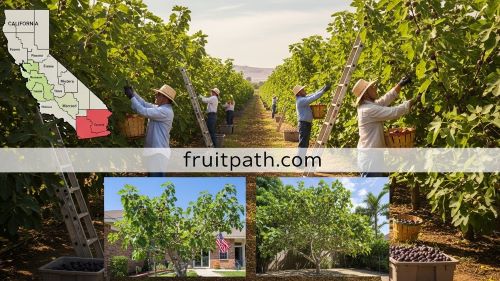
Imports help fill the gap in winter, but nothing compares to the quality of fresh, in-season figs grown in the US.
Best Time to Buy Fresh Figs in America:
To get the best fig experience, July and August are the top months, as the main fig crop is at its peak and the fruit is at its sweetest and juiciest. When it comes to where to shop, farmers markets offer local, tree-ripened figs, but according to Utah State University Extension, fresh produce at farmers markets is generally more expensive than at grocery stores. Grocery stock California shipments, often slightly underripe for travel.
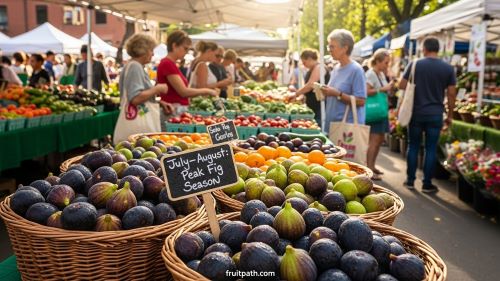
- How to Choose Ripe Figs: Pick figs that feel soft when you gently press them and have a sweet smell and deep color. Avoid any with bruises or a sour odor. If they are not quite ripe, let them sit at room temperature. Stock up during peak season if you want to freeze or make jam.
Why You Can’t Find Fresh Figs in Winter:
Fresh figs disappear after the season because of:
- Transport Issues: Figs spoil quickly, so they can’t be shipped far. They also bruise and go bad faster.
- Cold Damage: Fig trees go dormant in winter, and frost can destroy crops in colder areas.
- Dependence on Imports: In the off-season, figs come from the Southern Hemisphere, like Australia, or from greenhouses. These are limited and often expensive.limited and pricey.
Dried figs are available all year and help fill the gap when fresh ones aren’t in season.

FAQs About Fig Season in the USA:
Q: Are figs grown in all 50 states?
The answer is No,commercial production is nearly all in California, with home growing possible in zones 7-10 (South and West). Northern states use pots or protection.
Q: What state has the longest fig season?
California, often May-November with breba and extended main crops in mild years.
Q: Are California figs better than others?
Many say yes due to the ideal dry climate yielding concentrated flavor, but Southern backyard figs (e.g., Celeste in Texas) offer unique tastes and freshness.
Conclusion – Make the Most of America’s Short Fig Season:
America’s fig season is short, so it’s worth enjoying while it lasts. From early figs in Texas to big harvests in California, fresh figs bring us closer to local flavors and traditions. Visit your local market, try different varieties, or even plant a fig tree. Enjoy the season and make memories with this delicious fruit. Figs don’t last long, so savor every bite!
