
Hey there, fellow green-thumb dreamer! Picture picking a sun-kissed apple from your backyard tree or popping fresh strawberries from your own patch. That’s the magic of fruit cultivation and gardening.
It’s not just for farmers—anyone with a sunny spot, some dirt, and patience can do it. In this guide, we’ll cover everything you need to know, from picking fruits to harvesting a basket of yum. Whether you are new or levelling up your garden, we’ll keep it easy, like chatting with a friend.
Why try fruit cultivation and gardening? Homegrown fruits taste much better than store-bought. They are vitamin-rich, super fresh, and you control what goes in—no strange chemicals.
Plus, it’s fun! Watching seeds grow into trees that give you free snacks each year? That’s a win. In 2026, with everyone into healthy eating and eco-friendly living, starting a fruit garden is easier than ever. Tools like affordable soil testers and bee-friendly fertilisers are everywhere.
This blog post is not some fancy textbook stuff. We are talking real, hands-on tips that even a sixth-grader could follow (hey, kids—grab your parents and get digging!). By the end, you’ll have a plan to start your own fruit cultivation adventure. Let’s dive in—your future orchard awaits!
- What Is Fruit Cultivation & Gardening? The Basics Explained:
- Choosing the Perfect Spot for Your Fruit Garden:
- Best Fruits for Beginners in Fruit Cultivation & Gardening:
- Step-by-Step Guide to Starting Fruit Cultivation & Gardening:
- Essential Tools and Supplies for Fruit Gardening
- Keeping Your Fruit Garden Healthy: Pruning, Watering, and Fertilising:
- Common Pests and Diseases in Fruit Cultivation & Gardening:
- Harvesting and Storing Your Homegrown Fruits:
- Benefits of Fruit Cultivation & Gardening for You and the Planet:
- Advanced Tips for Thriving Fruit Gardens in 2026-27:
- Wrapping Up: Start Your Fruit Cultivation Adventure Today!
- Frequently Asked Questions about Fruit Cultivation & Gardening:
What Is Fruit Cultivation & Gardening? The Basics Explained:
Okay, let’s start at the very beginning. Fruit cultivation & gardening means growing fruit plants—like trees, bushes, or vines—in your yard, patio, or even pots. It’s like being a fruit detective: you pick the right spot, plant the seeds or seedlings, water them, and watch them bloom into berry bushes or apple trees.
Fruits aren’t just the sweet stuff we eat. In plant talk, a fruit is the part that holds the seeds—like tomatoes (yep, they’re fruits!) or cucumbers. But for fruit gardening, we’re focusing on tasty ones: apples, oranges, strawberries, and more. Cultivation is the “how-to” part—figuring out soil, sun, and care so your plants thrive.
Why does this matter? Backyard fruit cultivation saves money (those berries add up at the store!), boosts your health (fresh picks mean more crunch and nutrients), and helps the planet (fewer trucked-in fruits mean less pollution). In places like Illinois or Minnesota, folks grow everything from blueberries to grapes right at home. Even in small spaces, like a balcony in the city, you can have a mini fruit garden.
Fun fact: Did you know ancient people started fruit cultivation thousands of years ago? They traded seeds along the Silk Road, turning wild berries into the juicy ones we love today. Now, in 2026, we have dwarf trees that fit anywhere and apps to track watering. Cool, right?
To get started, think smart. Don’t plant a whole orchard on day one. Pick 2-3 easy fruits and build from there. That’s the heart of fruit cultivation & gardening—slow and steady wins the juicy race.
Choosing the Perfect Spot for Your Fruit Garden:
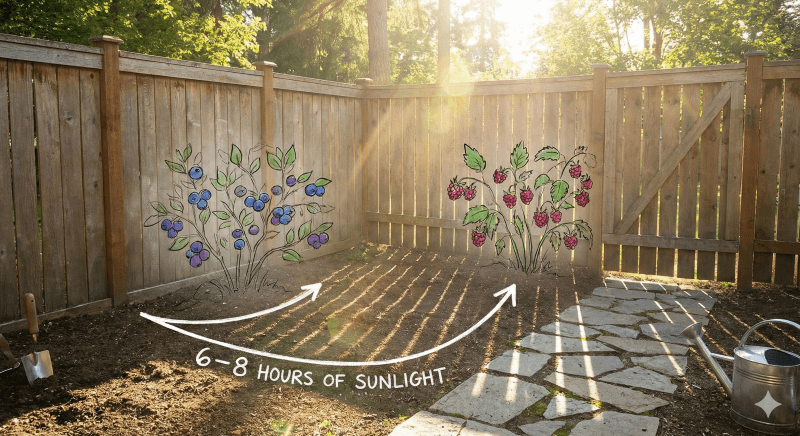
Your fruit garden needs a happy home, just like you do. The best spot? One that gets lots of sun—aim for at least 6-8 hours a day. Fruits love sunlight; it’s like their breakfast that helps them make sweet, colourful goodies.
Think about your yard (or balcony). Is there a corner away from big shade trees? Fruits like apples need full sun to ripen properly, while some berries can handle a bit of afternoon shade. In hot spots like California, pick a place with some breeze to keep things cool.
Soil is next—it’s the plant’s bed, so make it comfy! Good soil for fruit cultivation is loamy (a mix of sand, silt, and clay) and drains water well, like a sponge that doesn’t drown. Test it with a cheap kit from the store (pH between 6.0-7.0 is gold for most fruits). If it’s too sandy, add compost (rotted leaves or veggie scraps). Too clay-heavy? Mix in sand or peat moss.
Don’t forget space! A small fruit garden might be 10×10 feet for bushes. Trees need more room—dwarfs are 8-10 feet tall, standards up to 20. And water? Easy access to a hose or rain barrel keeps things simple.
Pro tip from my 20 years digging dirt: Sketch your spot on paper. Draw circles for plants, arrows for sun paths. It’ll save headaches later. In 2026, apps like Garden Planner let you do this on your phone—free and fun!
One more thing: Pollinators! Bees and butterflies are fruit matchmakers. Plant flowers nearby, like marigolds, to invite them over. No bees? Hand-pollinate with a soft brush—easy peasy.
With the right spot, your fruit cultivation & gardening journey is off to a sunny start.
Best Fruits for Beginners in Fruit Cultivation & Gardening:
Not all fruits are equal for newbies. Some are picky divas; others are chill pals. Based on what works in home fruit gardens everywhere—from backyards in the UK to patios in the US—here are the easiest to grow. We’ll cover a mix: trees, bushes, and vines.
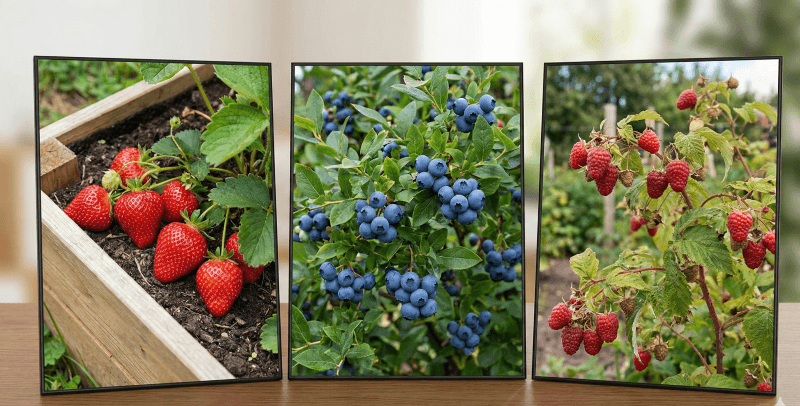
Easy Berry Bushes: Strawberries, Blueberries, and Raspberries
Berries are the gateway drug to fruit gardening. They’re small, fast, and forgiving.
Strawberries are top picks. These red gems grow in sunny beds or hanging pots. Plant crowns (baby plants) in spring, 12 inches apart. They love rich soil and steady water—keep it moist, not soggy. In 2-3 months, you’ll have berries for pies or snacks. LSI fun: June-bearing types give one big crop; everbearing ones keep going all summer. Watch for slugs—beer traps work wonders!
Blueberries add blue powerhouses to your plate (hello, antioxidants!). They need acidic soil (pH 4.5-5.5), so mix in peat or pine needles. Bushes grow 4-6 feet tall; pick high-bush for bigger yields. Full sun, mulch with wood chips to hold moisture. First fruits in year 2—worth the wait! In cold spots like Minnesota, rabbit-eye varieties handle winters like champs.
Raspberries are thorny but oh-so-rewarding. Red or black, they spread like gossip—use a trellis to keep ’em tidy. Plant bare-root canes in the fall, 2 feet apart. Prune old sticks after harvest. They thrive in well-drained soil and give buckets of berries for jams.
Tree Fruits: Apples, Peaches, and Cherries Made Simple:
Trees sound big, but dwarf versions are backyard-friendly.
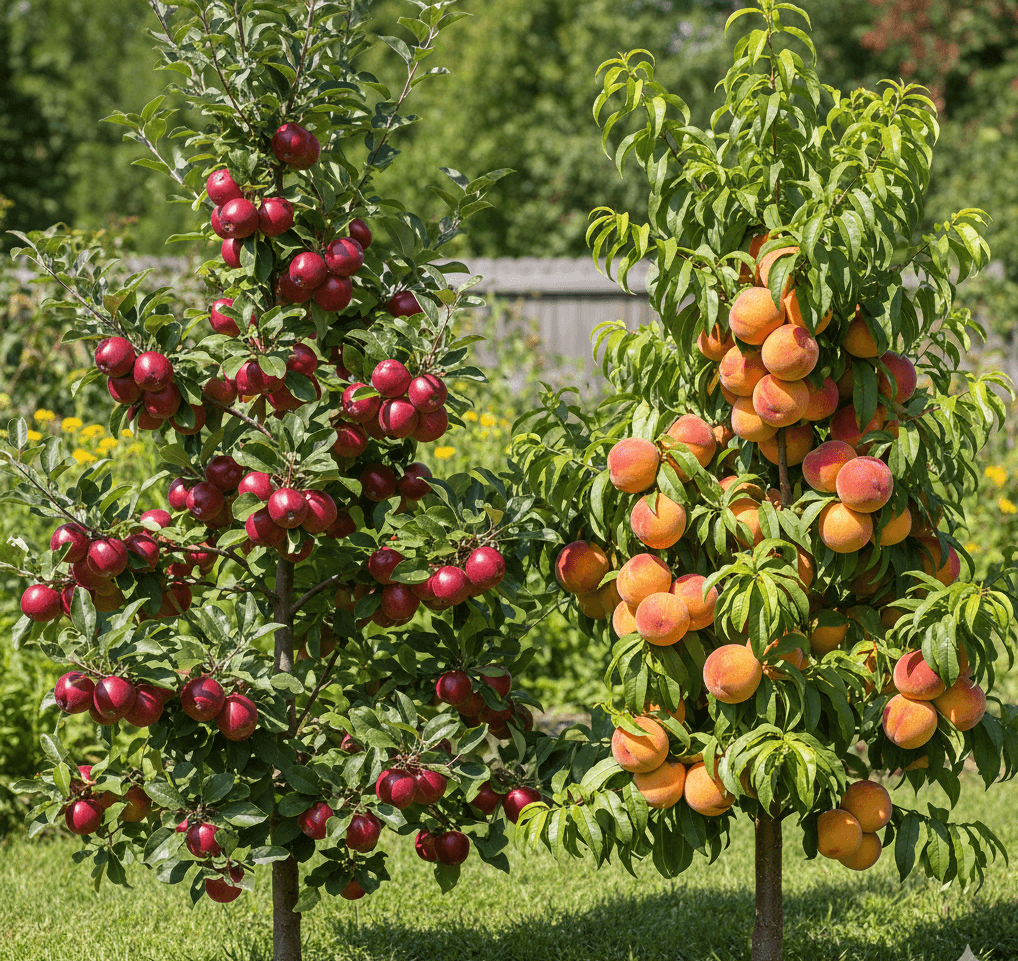
Apples are classic fruit cultivation stars. Pick disease-resistant types like Liberty or Honeycrisp. Plant in full sun, 15 feet apart. They need cross-pollination, so grab two varieties (bees do the rest). Water deeply weekly; fertilise in spring with balanced food. Prune in winter to shape like a vase—snip crossing branches. Harvest when they drop easily—crisp and ready for eating!
Peaches bring fuzzy summer joy. They’re warm-lovers, so if you’re in zone 5+, go for container dwarfs. Self-pollinating, they bloom pink in spring. Thin fruits early (remove extras) for bigger ones. Soil? Neutral pH, lots of compost. Curl leaf? Spray with copper fungicide—easy fix.
Cherries (sweet or sour) are bird magnets—net ! Dwarf sweets like Stella grow 10 feet. Plant in pairs for pollination. They hate wet feet, so raised beds help. Harvest in June; pie cherries ripen later.
These trees build topical authority around gardening tips for fruit trees, covering varieties, zones, and care.
Vines and More: Grapes and Kiwis for Fun Twists:
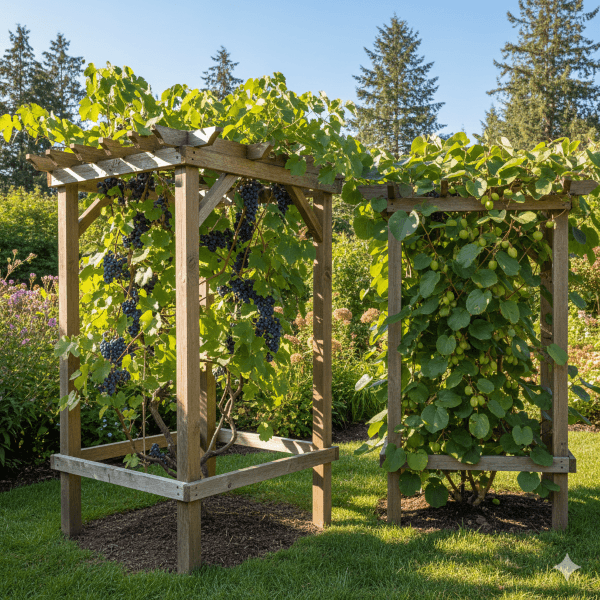
Grapes climb arbours like pros. Seedless table types are easiest—plant in sun, train on wires. Prune hard in winter (keep 4-6 canes). They love heat and give clusters for snacking or jelly.
Kiwis (fuzzy or hardy) add tropical vibes. Actinidia varieties are cold-tough. Male and female plants needed for fruit—buy a pair. Trellis up, and harvest green orbs in the fall.
Mix these in your fruit garden for year-round colour and eat. Start with 3-5 plants total—overwhelm-free!
Step-by-Step Guide to Starting Fruit Cultivation & Gardening:
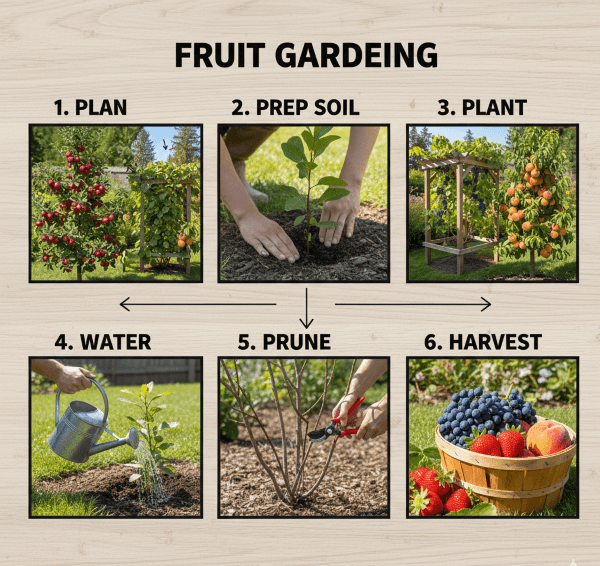
Now, let’s get our hands dirty. Here’s your no-fail road-map for fruit cultivation & gardening.
Step 1: Plan Your Fruit Garden Layout:
- Sketch your available space on graph paper (even a tiny balcony counts).
- List the fruits you love and check if they actually grow in your climate (use your hardiness zone).
- Place tallest plants (standard or dwarf trees) at the north side so they don’t shade everything else.
- Group plants with similar needs: blueberries together (acid soil), strawberries in a block, raspberries along a fence.
- Mark pathways (at least 60 cm / 2 ft wide) so you can reach everything without stepping on roots.
Step 2: Prep the Soil for Happy Roots:
- Dig or fork over the top 30–50 cm (12–20 in) to loosen compacted soil—roots need oxygenate better.
- Remove weeds, rocks, and old roots; perennial weeds like bindweed will haunt you later if left.
- Do a simple soil test (cheap kits from garden centers) to know pH and nutrients—most fruits want 6.0–7.0. Spread 5–10 cm (2–4 in) of well-rotted compost or aged manure and work it in; this is the #1 thing beginners skip.
- If soil is heavy clay or sandy, add extra organic matter every year—soil improvement is never “one and done.”
Step 3: Planting Time—When and How:
- Best windows: early spring (after last frost) or autumn (6 weeks before first frost)—roots establish without heat stress.
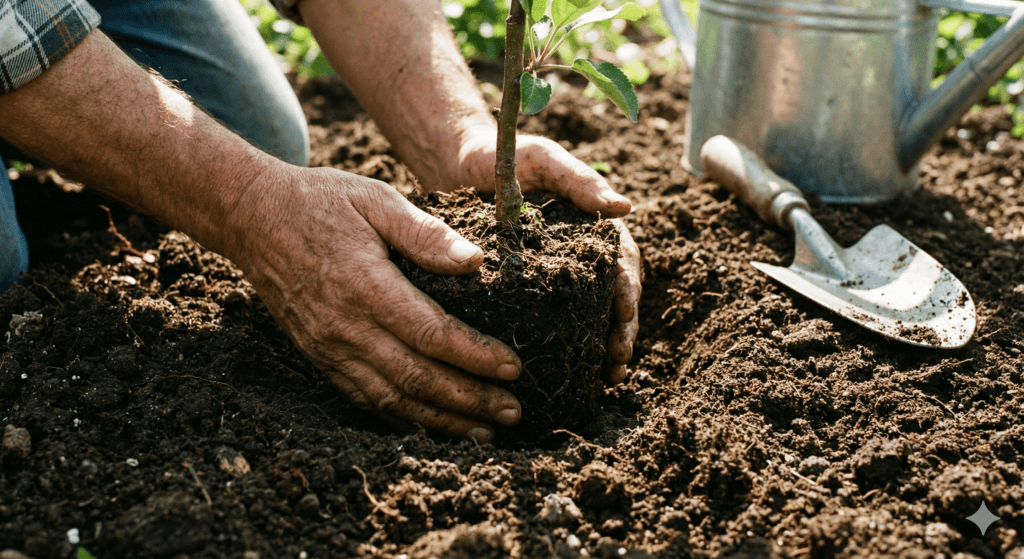
- Dig each hole twice as wide as the root ball but no deeper—planting too deep is the #1 killer of young trees.
- For grafted trees and bushes, keep the graft union (the bulge near the base) 5–10 cm (2–4 in) above soil level.
- Tease out circling roots on pot-bound plants, spread bare roots gently, then backfill with the improved soil.
- Water with 10–20 liters (2–5 gallons) per plant immediately after planting, then mulch 5–8 cm thick (keep mulch away from stems).
Step 4: Daily Care—Water, Feed, and Love:
- First year: water deeply 2–3 times a week (20–40 L per tree); never let roots dry out completely while establishing.
- From year 2: aim for 25–40 mm (1–1.5 inch) of water per week during the growing season—use a rain gauge or tuna can to measure.
- Fertilize lightly: early spring a balanced slow-release (e.g., 10-10-10) or organic fruit-tree fertilizer; avoid late summer feeding (causes weak growth before winter).
- Weed regularly by hand or hoe—mulching with wood chips, straw, or cardboard almost eliminates this chore.
- Visit your garden daily even if just for 5 minutes—you’ll spot pests, ripe fruit, or problems early and it becomes pure joy.
Essential Tools and Supplies for Fruit Gardening
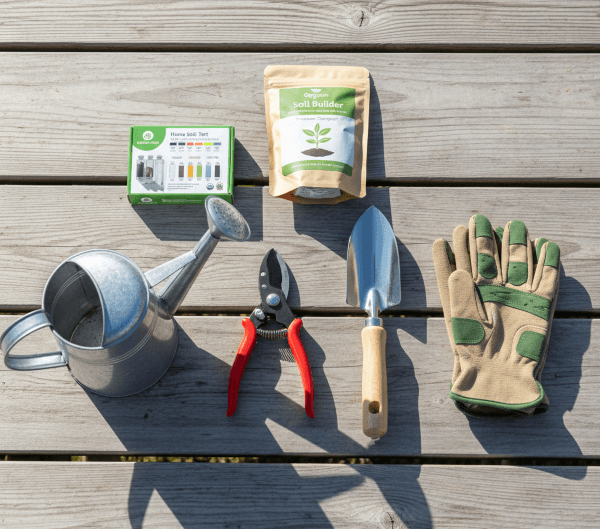
No fancy gear needed, but these make fruit cultivation smoother:
- Trowel and gloves: For digging without blisters.
- Pruners: Sharp ones for clean cuts ($15).
- Watering can or soaker hose: Gentle on roots.
- Compost bin: Turn scraps into gold.
- Row covers: Bug shield.
In 2026, smart tools like moisture sensors ($20) ping your phone—lazy gardener’s dream!
Keeping Your Fruit Garden Healthy: Pruning, Watering, and Fertilising:
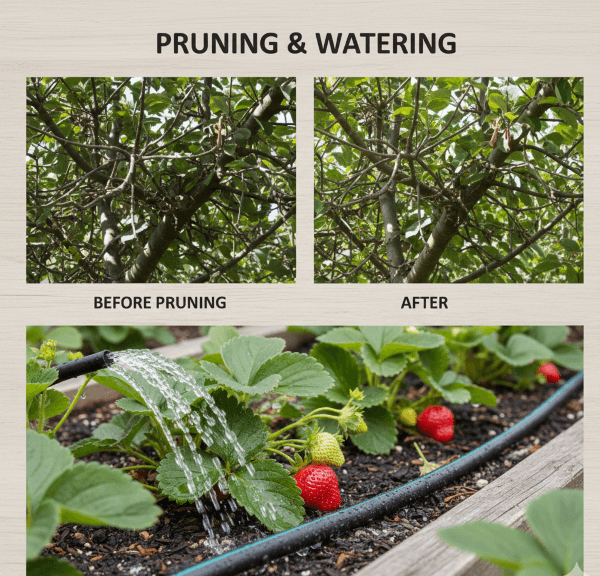
Healthy plants = happy harvests. Pruning is like a haircut—it removes dead bits, shapes for the sun. For bushes, trim after fruiting; trees in dormancy.
Watering: Consistent is key. Drip systems save time. Overdo it? Root rot. Under? Dry fruits.
Fertilising: Balanced NPK (10-10-10) in spring. Organics like fish emulsion smell fishy, but work great. Test soil yearly—don’t guess.
Rotate crops yearly to dodge diseases. Companion planting? Marigolds near tomatoes (fruit cousins) repel nematodes.
Common Pests and Diseases in Fruit Cultivation & Gardening:
Bugs happen—don’t panic. Here’s the scoop on foes and fixes.
Pesky Pests: Aphids, Birds, and Slugs
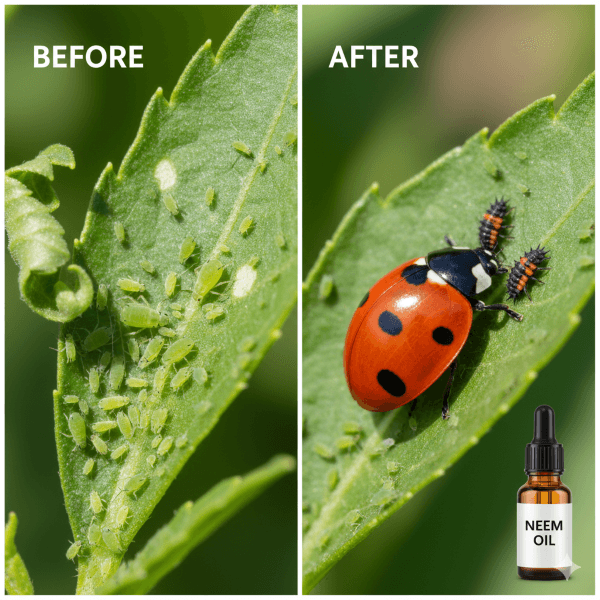
- Aphids suck sap—tiny green vampires on new growth—blast with water or ladybugs (nature’s eaters).
- Birds love berries—netting or shiny tape scares .
- Slugs munch leaves at night. Beer traps or diatomaceous earth (crispy powder) .
Diseases: Powdery Mildew and Root Rot:
White fuzzy powdery mildew on leaves? Improve air flow, milk spray (1:9 water).
Root rot from wet feet—fix drainage, use fungicide.
Integrated pest management (IPM): Scout weekly, use soaps over poisons. In 2026, neem oil is king—safe and green.
Prevention beats cure: Clean tools, healthy soil.
Harvesting and Storing Your Homegrown Fruits:
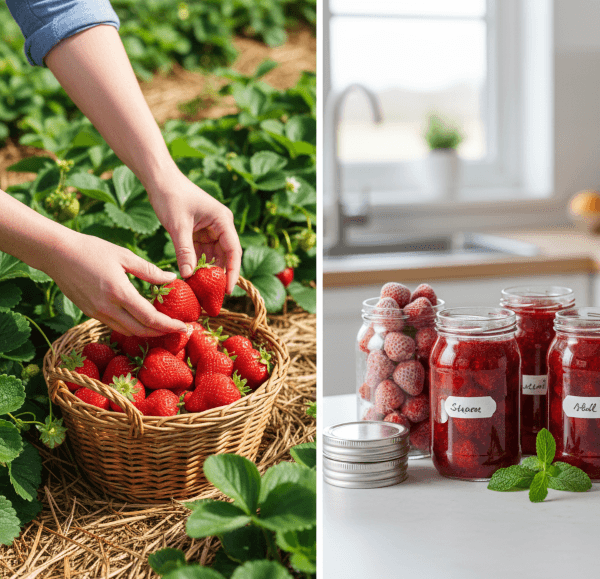
Yay—time to eat! Harvest when ripe: Strawberries pull gently; apples twist off.
Store: Berries fridge 3-5 days; apples cool, dark spot months. Freeze extras—wash, bag, done.
Use : Salads, smoothies, pies. Share with neighbours—build community!
Benefits of Fruit Cultivation & Gardening for You and the Planet:
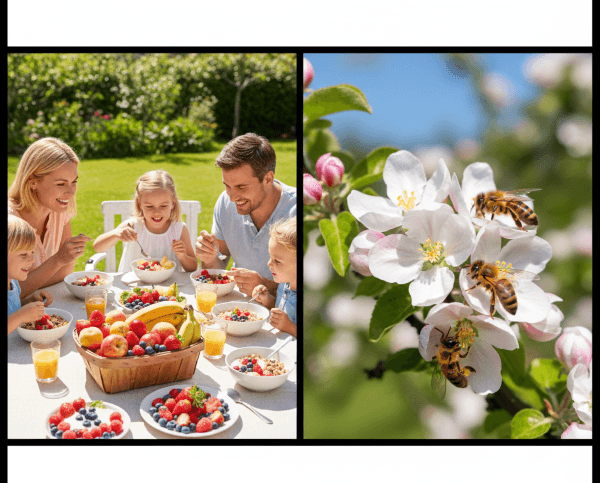
Beyond tasty bites, fruit gardening slashes food miles (less carbon), teaches kids patience, and reduces stress (dirt therapy!). Nutritionally? Vitamin C from oranges boosts immunity; fibre from apples aids the tummy.
Eco-win: Pollinator havens, soil builders. In urban spots, it’s a green rebellion.
Advanced Tips for Thriving Fruit Gardens in 2026-27:
Level up: Espalier trees on walls (space-saver art). Hydroponics for balconies. Track with apps like PlantSnap—ID issues fast.
Climate change? Choose resilient varieties, like drought-tough peaches.
Wrapping Up: Start Your Fruit Cultivation Adventure Today!
There you have it—your complete, easy-peasy guide to fruit cultivation & gardening. From sunny spots to squashing slugs, we’ve covered the bases so you can grow a garden that feeds your family and soul. Remember, every big orchard starts with one little seed. Grab your shovel, pick a berry bush, and get growing. In a season, you’ll be the neighbourhood fruit hero!
Frequently Asked Questions about Fruit Cultivation & Gardening:
What is the 3-hour gardening rule?
This is a beginner-friendly tip that says: Spend at least 3 hours per week in your garden (especially in the growing season). Why 3 hours? It’s enough time to water, weed, check for pests, prune a little, and harvest — without feeling overwhelmed.
Many successful home gardeners swear that once you consistently give your garden those 3 focused hours a week (for example, 1 hour on Monday, Wednesday, and Saturday), everything stays healthy and you actually see big results. It’s more effective than doing 10 hours once a month!
What is the cultivation of fruits?
Fruit cultivation means the process of growing fruit plants (trees, bushes, vines, or ground plants) from planting to harvesting. It includes choosing the right varieties, preparing the soil, planting, watering, fertilising, pruning, protecting from pests and diseases, and finally picking the ripe fruits.
In short, everything you do to help fruit plants grow strong and give lots of tasty fruits. It can be done on big farms (commercial cultivation) or in your backyard (home fruit gardening).
What is the 3-year rule in gardening?
This rule mainly applies to fruit trees and berry bushes. It says: “In the first 3 years, focus on roots and branches — not fruit.”
- Year 1: The plant builds strong roots.
- Year 2: It grows more branches and leaves.
- Year 3: It starts giving a good harvest. That’s why experts tell you to remove most or all flowers/young fruits in the first 2–3 years (especially on apples, peaches, pears, etc.). It feels hard, but it makes the tree much stronger and gives way bigger harvests from year 4 onward.
What is the 70/30 rule in gardening?
This is a popular planting ratio for raised beds or vegetable + fruit patches: 70% of your space = plants that feed you (edibles: fruits, veggies, herbs)30% of your space = flowers and plants that help the edibles (pollinators + pest controllers) Example: In a bed, plant 70% tomatoes, strawberries, lettuce… and 30% marigolds, nasturtiums, lavender, or sunflowers. The flowers attract bees (better pollination = more fruit) and good bugs that eat pests, so you get a healthier, more productive garden with almost no chemicals.