
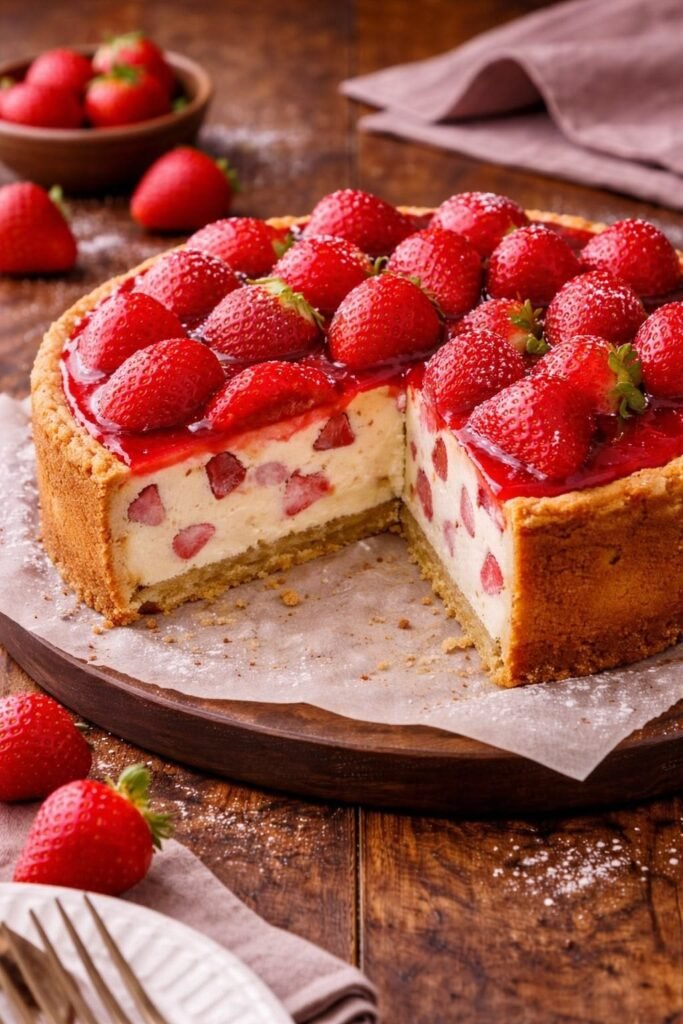
- Description:
- Can This Mediterranean Strawberry Cheesecake Support Weight Loss Goals?
- Does Mediterranean Strawberry Cheesecake Fit a High Protein Lifestyle?
- My Personal Experience
- Perfect For:
- Why You’ll Love This Recipe:
- Common Mistakes to Avoid:
- Required Equipment:
- Storage Instructions:
- Recipe Details:
- Short 3-Line Description:
- 📝 Ingredients:
- Directions:
- Nutrition Facts (Per Serving – Approximate):
- Notes:
- Frequently Asked Questions:
Description:
This Mediterranean Strawberry Cheesecake combines a creamy, velvety cheesecake filling with the bright sweetness of fresh strawberries and a lightly crisp crust. It’s a beautiful dessert that feels indulgent while using protein-rich ingredients such as Greek yogurt and cream cheese. With a few smart ingredient choices, it can fit nicely into high-protein and lower-carb meal plans while still delivering a satisfying strawberry-cheesecake flavor.
Can This Mediterranean Strawberry Cheesecake Support Weight Loss Goals?
This cheesecake can fit into a balanced weight-loss-focused eating pattern when enjoyed in an appropriate portion. Using Greek yogurt and cream cheese provides protein, which can make a dessert more satisfying than many traditional sweets. Choosing a reduced-sugar sweetener and keeping the crust portion moderate can also help manage carbohydrates and calories. Individual nutrition needs vary, so the overall portion and daily eating pattern matter more than any single recipe.
Does Mediterranean Strawberry Cheesecake Fit a High Protein Lifestyle?
Yes, this cheesecake can be adapted to suit a high-protein lifestyle by using thick Greek yogurt and protein-rich cream cheese.
The estimated net carbs can be kept moderate by limiting added sugar and using fresh strawberries for natural sweetness.
Greek yogurt contributes a useful amount of protein while creating a smooth, creamy texture.
For an even higher-protein version, unflavored or vanilla protein powder can be incorporated carefully into the filling.
My Personal Experience
- The strawberry flavor really stands out: Fresh strawberries add a naturally sweet, slightly tangy flavor that balances the rich cheesecake filling.
They also give the finished dessert a fresh Mediterranean-inspired appearance. - The filling stays creamy and smooth: Greek yogurt makes the cheesecake feel lighter while complementing the cream cheese beautifully.
Chilling it thoroughly helps the filling develop a firm but silky texture. - It feels satisfying in a smaller portion: The combination of protein-rich dairy ingredients and creamy texture makes each slice feel substantial.
This makes it especially enjoyable as an occasional high-protein dessert. - The topping makes it look bakery-worthy: Fresh strawberry slices add color and a naturally elegant finish.
A small amount of strawberry sauce can be drizzled over the top for extra flavor.
Perfect For:
This Mediterranean Strawberry Cheesecake is ideal for high-protein desserts, low-carb recipes, summer gatherings, family celebrations, brunches, and lighter dessert tables. It can also work as a protein-friendly sweet option for people following structured meal plans or keto-style eating patterns, provided the ingredients and portion sizes fit their individual carbohydrate targets. Serve chilled after breakfast, as an afternoon high-protein snack, or as a refreshing dessert after dinner.
Why You’ll Love This Recipe:
- Fresh strawberry flavor: Juicy strawberries provide a bright fruitiness that cuts through the richness of the cheesecake filling.
Every bite has a refreshing combination of creamy and fruity flavors. - Creamy protein-rich filling: Greek yogurt and cream cheese create a thick, smooth filling with useful protein content.
The result is satisfying without relying entirely on heavy cream. - Beautiful presentation: Fresh strawberries make the cheesecake naturally colorful and inviting.
It looks impressive enough for birthdays, brunches, and summer celebrations. - Easy to prepare ahead: The cheesecake needs chilling time rather than complicated finishing techniques.
Making it several hours ahead also gives the filling time to set properly. - Adaptable for lower-carb eating: A reduced-sugar filling and a controlled portion of crust can lower the overall carbohydrate content.
You can further adjust the ingredients according to your preferred nutrition targets.
Common Mistakes to Avoid:
- Using watery yogurt: Excess liquid can make the filling too soft and prevent a clean slice. Use thick Greek yogurt and drain it further if necessary.
- Adding strawberries while they are wet: Excess moisture can loosen the filling or make the topping watery. Pat strawberries dry before decorating.
- Overmixing the filling: Excessive mixing can incorporate too much air and affect the cheesecake texture. Mix only until the ingredients are smooth.
- Cutting before chilling: A cheesecake that has not had enough time to set can fall apart when sliced. Chill it thoroughly before serving.
Required Equipment:
- 9-inch springform pan — makes it easier to remove the chilled cheesecake without damaging the edges.
- Mixing bowls — keep the crust and creamy filling preparation organized.
- Electric hand mixer — creates a smooth, lump-free cheesecake filling quickly.
- Rubber spatula — helps fold ingredients and scrape the bowl efficiently.
- Measuring cups and spoons — provide consistent ingredient portions and nutrition estimates.
- Refrigerator — allows the cheesecake to firm up and develop its best texture.
Storage Instructions:
Store leftover cheesecake in an airtight container or tightly cover the springform pan with plastic wrap. Keep it refrigerated at 4°C/40°F or below and enjoy within about 3–4 days for the best texture and freshness.
For longer storage, freeze individual slices in freezer-safe containers or wrap them tightly in plastic wrap followed by foil. Freeze for up to 1–2 months. Thaw individual portions overnight in the refrigerator rather than at room temperature. The protein content remains part of the recipe after freezing, although the texture may become slightly softer after thawing.
Recipe Details:
- Preparation Time: 25 minutes
- Cooking Time: 45–50 minutes
- Total Time: About 5 hours including chilling
- Servings: 10 slices
- Best Season: Summer
- Total Calories: Approximately 285 calories per serving
Short 3-Line Description:
Creamy Mediterranean-inspired cheesecake meets juicy fresh strawberries in this refreshing dessert.
Greek yogurt and cream cheese add protein while keeping the filling rich and smooth.
It’s a beautiful option for high-protein desserts and moderate-carb meal plans.
📝 Ingredients:
For the Crust:
- 1 cup almond flour
- 2 tablespoons unsalted butter, melted
- 1 tablespoon granulated low-carb sweetener
- ½ teaspoon vanilla extract
- Pinch of salt
Note: Almond flour gives the crust a naturally nutty flavor and helps keep carbohydrates lower than a traditional flour crust.
For the Cheesecake Filling:
- 16 oz (450 g) cream cheese, softened
- 1½ cups (360 g) plain Greek yogurt
- ½ cup granulated low-carb sweetener
- 3 large eggs
- 1 teaspoon vanilla extract
- 1 tablespoon lemon juice
- 1 teaspoon lemon zest
- 2 tablespoons unflavored protein powder
- 1 tablespoon cornstarch or 1 tablespoon arrowroot powder
For the Strawberry Topping:
- 1½ cups fresh strawberries, sliced
- 1 tablespoon low-carb sweetener
- 1 teaspoon lemon juice
- ½ teaspoon vanilla extract
Note: Choose firm, ripe strawberries and pat them dry before using them as a topping.
Directions:
- Preheat the oven: Heat the oven to 325°F (165°C). Lightly grease a 9-inch springform pan and line the bottom with parchment paper.
- Prepare the crust: Combine almond flour, melted butter, sweetener, vanilla, and salt until the mixture resembles damp crumbs. Press it firmly into the bottom of the pan.
- Bake the crust: Bake at 325°F (165°C) for 8–10 minutes, until lightly golden around the edges. Remove and let it cool for several minutes.
- Prepare the filling: Beat softened cream cheese on low to medium speed for 1–2 minutes until smooth. Add Greek yogurt and sweetener, mixing just until combined.
- Add the protein ingredients: Mix in the eggs one at a time on low speed, followed by vanilla, lemon juice, lemon zest, protein powder, and cornstarch. Stop mixing as soon as the batter becomes smooth.
- Check the texture: The filling should look thick, creamy, and lump-free rather than thin or heavily aerated. Avoid excessive mixing to reduce the amount of air incorporated.
- Fill the pan: Pour the cheesecake mixture over the cooled crust and gently smooth the surface with a spatula.
- Bake: Bake at 325°F (165°C) for approximately 40–50 minutes. The edges should look set while the center should still have a gentle wobble.
- Cool gradually: Turn the oven off, crack the oven door open, and leave the cheesecake inside for about 15–20 minutes. This gradual cooling helps reduce sudden temperature changes.
- Chill thoroughly: Remove the cheesecake and cool at room temperature for about 30–45 minutes, then refrigerate for at least 4 hours, preferably overnight.
- Prepare the strawberries: Toss sliced strawberries with sweetener, lemon juice, and vanilla. Let them sit for 10 minutes so their flavors develop.
- Decorate and serve: Arrange the strawberries over the chilled cheesecake just before serving. For a high-protein-friendly approach, keep the topping and sweetener portions moderate.
Nutrition Facts (Per Serving – Approximate):
- Calories: 285 kcal
- Fats: 22 g
- Cholesterol: 94 mg
- Sodium: 235 mg
- Potassium: 185 mg
- Total Carbohydrates: 12 g
- Fiber: 2 g
- Net Carbs: 10 g
- Sugars: 5 g
- Protein: 11 g
- Calcium: 115 mg
Nutrition values are approximate and can vary depending on the brands, sweetener, protein powder, cream cheese, yogurt, and strawberries used.
Notes:
- Storage: Keep covered in the refrigerator for 3–4 days or freeze individual slices for up to 1–2 months.
- Reheating: Cheesecake is best served chilled; reheating is generally unnecessary and can soften the filling.
- Allergy note: This recipe contains milk/dairy and almonds. Use suitable alternatives if needed, but changing ingredients will alter the nutrition values.
- Flavor boost: Add extra lemon zest for brightness or a small amount of chopped fresh mint for a refreshing Mediterranean-style finish.
- Protein tip: Use plain, thick Greek yogurt and an unsweetened protein powder to increase protein without adding unnecessary sweetness.
- Texture tip: Always allow the cheesecake to chill completely before slicing for cleaner, firmer pieces.
Frequently Asked Questions:
1. Can I use frozen strawberries?
Yes, but thaw and drain them thoroughly because excess water can make the topping watery.
2. Can I make this cheesecake without protein powder?
Yes, you can omit the protein powder, although the protein content per serving will be lower.
3. How long should the cheesecake chill?
Chill it for at least 4 hours, with overnight chilling providing the firmest texture.
4. Can I make this cheesecake lower in carbohydrates?
Yes, using a low-carb sweetener and keeping the almond-flour crust and strawberry topping portions controlled can reduce the overall carbohydrate content.
5. Can I use regular yogurt instead of Greek yogurt?
Greek yogurt is preferred because its thicker texture produces a firmer filling and generally provides more protein per serving.
6. Why is my cheesecake too soft?
It may need additional chilling, or the yogurt may have contained too much liquid; allow it to chill overnight before judging the final texture.