
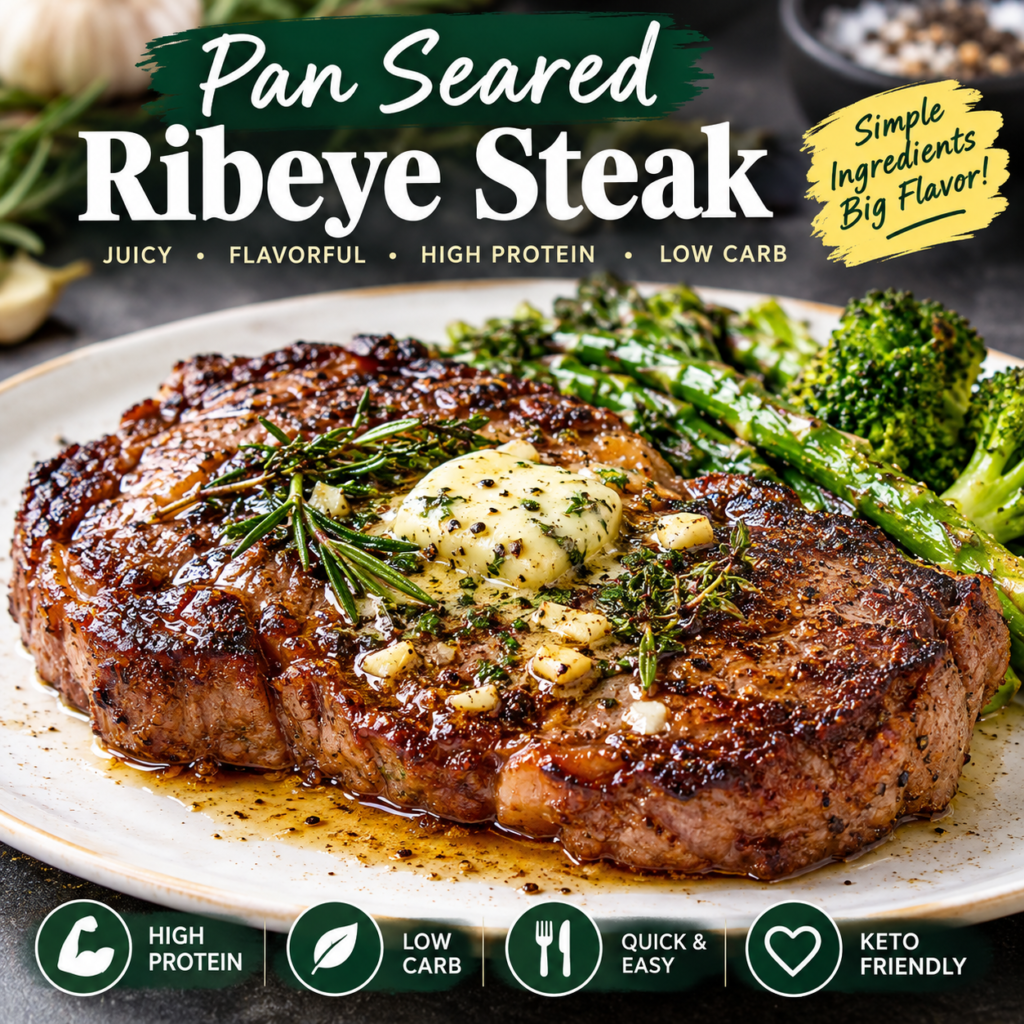
- Description
- Can This Pan Seared Ribeye Steak Support Weight Loss Goals?
- Does Pan Seared Ribeye Steak Fit a High-Protein Lifestyle?
- My Personal Experience
- Perfect For:
- Why You’ll Love This Recipe
- Common Mistakes to Avoid
- Required Equipment
- Storage Instructions
- Recipe Details
- 3-Line Recipe Description 📝
- 📝 Ingredients
- Directions
- Nutrition Facts (Per Serving – Approximate)
- Notes
- Frequently Asked Questions
Description
This Pan Seared Ribeye Steak is juicy, tender, and packed with rich, savory flavor. A beautifully browned crust gives way to a buttery, succulent center, while garlic, butter, and herbs add an irresistible finishing touch.
With naturally high protein and very low carbohydrates, this ribeye is an easy choice for anyone looking for a satisfying high-protein, low-carb recipe. It requires simple ingredients and one skillet, making restaurant-style steak surprisingly easy to prepare at home.
Can This Pan Seared Ribeye Steak Support Weight Loss Goals?
Yes, this recipe can fit into a weight-conscious eating pattern when portion size and total daily intake are considered. Ribeye provides substantial protein, which can make a meal satisfying, while the recipe contains very few carbohydrates. Because ribeye is also relatively calorie-dense due to its fat content, keeping the serving size appropriate and pairing it with low-carb vegetables can help it fit different calorie goals.
Does Pan Seared Ribeye Steak Fit a High-Protein Lifestyle?
Absolutely. Each serving provides a substantial amount of protein while contributing only a small amount of carbohydrates. The main ingredients—ribeye steak, butter, garlic, olive oil, and herbs—keep the recipe naturally low in carbs. With approximately 1–2g net carbs per serving, it works well for many high-protein and low-carb meal plans. The steak itself is the primary protein source, without relying on protein powders or processed ingredients.
My Personal Experience
- The crust is my favorite part.
Getting the skillet properly hot creates a deep golden-brown crust while keeping the center tender and juicy. - A simple seasoning works surprisingly well.
Salt and black pepper let the natural beef flavor shine, while garlic, butter, and herbs add a rich finishing layer. - The butter-basting step makes a noticeable difference.
Spoonfuls of hot garlic butter over the steak help build flavor and give the surface a glossy, aromatic finish. - Using a thermometer takes the guesswork out of cooking.
Checking the internal temperature helps achieve your preferred doneness without unnecessarily overcooking the steak.
Perfect For:
This ribeye is ideal for a high-protein, low-carb dinner, keto-friendly meal plan, weekend steak night, or satisfying post-workout meal. It can also be served alongside eggs and vegetables for a high-protein breakfast, although it is more naturally suited to lunch or dinner. Unlike high-protein snacks or desserts, this recipe is designed as a substantial savory main course.
Why You’ll Love This Recipe
- Restaurant-style crust at home.
A very hot skillet quickly sears the exterior for an appetizing browned crust without complicated equipment. - Naturally high in protein.
Ribeye provides a generous serving of complete protein, making this a satisfying centerpiece for a protein-focused meal. - Very low in carbohydrates.
The steak and seasonings contain minimal carbs, making the recipe easy to incorporate into low-carb meal plans. - Rich garlic-butter flavor.
Butter, garlic, and fresh herbs are added toward the end so their flavor remains fragrant rather than burning in the skillet. - Simple ingredient list.
You only need steak, basic seasonings, cooking fat, garlic, and herbs to create a flavorful meal.
Common Mistakes to Avoid
- Starting with a cold pan — A properly preheated skillet is essential for developing a strong, browned crust.
- Moving the steak too often — Let the steak remain undisturbed long enough to form a deep golden crust before flipping.
- Adding butter too early — Butter can burn over high heat, so add it after the initial sear when lowering the heat.
- Skipping the resting period — Resting the cooked steak allows the juices to redistribute before slicing.
Required Equipment
- Heavy cast-iron or stainless-steel skillet — Holds high heat and promotes excellent browning.
- Instant-read meat thermometer — Helps you cook the steak to your preferred doneness.
- Tongs — Allow you to turn and handle the steak without piercing it.
- Small spoon — Makes butter-basting easier during the final cooking stage.
- Cutting board — Provides a stable surface for resting and slicing the steak.
Storage Instructions
Refrigerator: Allow leftover steak to cool briefly, then place it in an airtight container or tightly wrap it in foil. Refrigerate within about 2 hours of cooking and use within 3–4 days.
Freezer: For longer storage, wrap individual portions tightly in plastic wrap or freezer-safe material and place them in an airtight freezer bag or container. For best quality, use within 2–3 months.
Reheating: Gently reheat refrigerated steak in a skillet over low to medium-low heat with a small splash of broth or a little butter. Avoid high heat, which can make the steak tough and dry.
The steak remains a high-protein food after storage, although reheating can affect texture. For best results, slice leftovers thinly and use them in salads, lettuce wraps, omelets, or low-carb bowls.
Recipe Details
- Preparation Time: 10 minutes
- Cooking Time: 10–12 minutes
- Total Time: 20–22 minutes
- Servings: 2
- Best Season for This Recipe: All-season
- Total Calories (Per Serving): Approximately 650–680 calories
Calories and nutrition values are approximate and can vary according to steak size, marbling, cooking method, and exact ingredients used.
3-Line Recipe Description 📝
Juicy ribeye steaks are pan-seared until deeply browned and finished with fragrant garlic butter and herbs.
This easy one-pan recipe delivers tender, flavorful steak with minimal carbohydrates and plenty of protein.
Serve it with your favorite low-carb vegetables for a satisfying high-protein meal.
📝 Ingredients
- 2 ribeye steaks (8 oz / 227 g each) — About 1-inch thick; bring to room temperature for approximately 20–30 minutes before cooking.
- 1 tsp kosher salt — Adjust according to steak thickness and personal preference.
- ½ tsp freshly ground black pepper
- 1 tsp olive oil — Helps start the sear and promotes even browning.
- 1 tbsp unsalted butter
- 3 garlic cloves, lightly crushed — Crushing releases more aroma while keeping the cloves easy to remove.
- 2 sprigs fresh rosemary
- 2 sprigs fresh thyme
Directions
- Prepare the steaks.
Pat both ribeyes completely dry with paper towels. Season both sides evenly with kosher salt and black pepper.
High-protein cooking tip: Drying the surface is important because excess moisture can prevent proper browning. - Preheat the skillet.
Place a heavy skillet over high heat and heat for approximately 3–5 minutes, until very hot. Add the olive oil and swirl to coat the surface. - Sear the first side.
Carefully place the steaks in the hot skillet. Cook for approximately 3–4 minutes without moving them.
Look for a deep golden-brown crust before flipping. - Sear the second side.
Flip the steaks using tongs and cook for another 2–3 minutes over high heat. Adjust the heat to medium if the outside is browning too quickly. - Add the flavoring ingredients.
Reduce the heat to medium-low and add the butter, crushed garlic, rosemary, and thyme. Allow the butter to melt for about 30 seconds. - Baste the steaks.
Tilt the skillet slightly and repeatedly spoon the hot garlic butter over the steaks for approximately 1–2 minutes.
Continue cooking until the desired internal temperature is reached. - Check doneness.
For medium-rare, remove the steak at approximately 130–135°F (54–57°C); for medium, aim for approximately 140–145°F (60–63°C). The internal temperature will continue to rise slightly while resting. - Rest before slicing.
Transfer the steaks to a cutting board and rest for 5–10 minutes. This helps preserve their juices and keeps the meat tender. - Slice and serve.
Slice against the grain if desired and spoon a little of the remaining garlic butter over the top. Serve immediately with low-carb vegetables or a fresh salad.
Nutrition Facts (Per Serving – Approximate)
- Calories: 660 kcal
- Fat: 48 g
- Cholesterol: 170 mg
- Sodium: 500 mg
- Potassium: 650 mg
- Total Carbohydrates: 1.5 g
- Fiber: 0.2 g
- Net Carbs: 1.3 g
- Sugars: 0.1 g
- Protein: 49 g
- Calcium: 25 mg
Nutrition values are approximate estimates and can vary considerably depending on the ribeye’s size, fat marbling, trimming, butter absorption, and exact ingredients.
Notes
- Storage: Refrigerate leftovers in an airtight container for 3–4 days or freeze tightly wrapped portions for approximately 2–3 months.
- Reheating: Warm gently in a skillet over low to medium-low heat to help prevent the steak from becoming dry.
- Allergy notes: This recipe contains dairy from butter. Use a dairy-free cooking fat if needed, although this will change the flavor and nutrition profile.
- Flavor boost: Add a small squeeze of fresh lemon after resting, or finish with flaky sea salt and freshly cracked black pepper.
- Low-carb serving idea: Pair the ribeye with roasted broccoli, asparagus, sautéed spinach, cauliflower mash, or a crisp leafy salad.
Frequently Asked Questions
1. Can I use a different pan for ribeye steak?
Yes, a heavy stainless-steel or other high-heat skillet can also produce a good crust, although cast iron retains heat particularly well.
2. How do I know when my ribeye is done?
The most reliable method is to check the center with an instant-read thermometer rather than relying only on cooking time.
3. Should I rest ribeye steak after cooking?
Yes, resting the steak for about 5–10 minutes gives the juices time to redistribute before slicing.
4. Is pan-seared ribeye low in carbs?
Yes, this version contains approximately 1–2 grams of net carbohydrates per serving, with most of its calories coming from protein and fat.
5. Can I make this recipe without butter?
Yes, you can use additional olive oil or another suitable cooking fat, although butter provides much of the classic garlic-butter flavor.
6. What should I serve with ribeye on a low-carb diet?
Roasted vegetables, leafy salads, asparagus, broccoli, cauliflower mash, or sautéed spinach are all simple low-carb pairings.