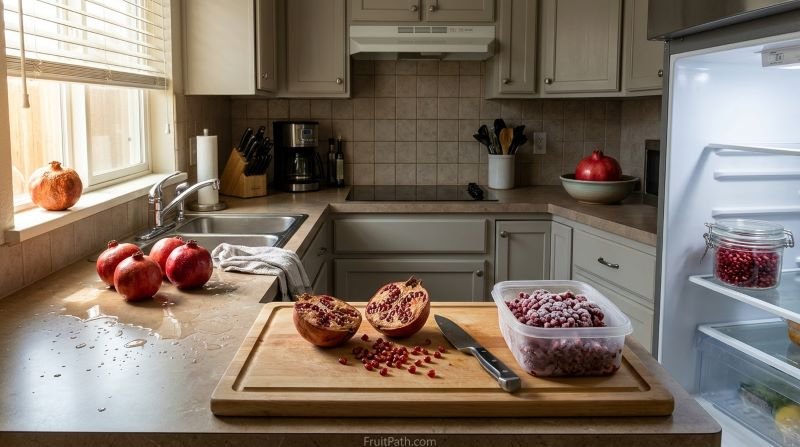
You bought a few pomegranates because they looked so good. Now you are wondering: do they go in the fridge? Can they stay on the counter? What do you do with half a pomegranate you did not finish?
Good news. A pomegranate is one of the longest-lasting fruits you can buy because of its thick, tough skin. But once you cut it open or take out the seeds, the clock runs much faster.
In this guide, you will learn how to store pomegranate in every situation: whole, cut, or as loose seeds. You will also learn how long each form lasts, how to freeze the seeds, and when it is time to throw one out.
Quick answer: A whole pomegranate lasts several days on the counter and about a month in the fridge. Loose seeds last 3 to 5 days in a sealed container in the fridge. For long storage, freeze the seeds in a single layer on a tray, then move them to a freezer bag.
Here is a simple chart. Experts give slightly different numbers, so these are ranges.
Whole pomegranate
Counter, cool and out of the sun
Several days to about 2 weeks
Whole pomegranate
Fridge
About 1 to 3 months
Cut half
Fridge, covered
A few days (use it fast)
Loose seeds (arils)
Fridge, airtight container
About 3 to 5 days
Loose seeds (arils)
Freezer, in a sealed container
Up to 6 months for best quality, up to 1 year at most
Pomegranate juice
Fridge
Up to about 3 days
Why the numbers differ: Different sources test different fruit and different kitchens. The Pomegranate Councilsays whole fruit lasts up to 3 months in the fridge and pomegranate seeds up to 3 days. Others, like Chowhound, say whole fruit lasts about 2 months, and seeds last just under a week. When in doubt, use the shorter number and check the fruit with your eyes and nose.
How to Store Pomegranate Overnight:
Maybe you want to keep it safe until tomorrow. Here is what to do, based on what you have:
A whole pomegranate: Leave it on the counter in a cool spot, out of direct sunlight. Nothing else is needed.
Half a pomegranate: Cover the cut side tightly with plastic wrap, or put it in an airtight container. Put it in the fridge. Eat it soon.
Loose seeds: Put them in an airtight container and refrigerate them overnight.
Juice: Pour it into a sealed jar or bottle and refrigerate.
The rule is simple. Whole fruit can stay out. Put anything cut or opened in the fridge.
Keep whole pomegranates in a cool spot overnight, but refrigerate cut fruit, loose seeds, and sealed pomegranate juice.
How to Store Pomegranate Without Fridge:
No room in the fridge? A whole pomegranate can do fine without the fridge for a while. Follow these steps:
Check the fruit. Pick ones with firm, unbroken skin. Skip any with soft spots, mold, or big cracks.
Keep the skin dry. Do not wash the fruit until you are ready to eat it. Water on the skin can help mold start.
Choose a cool, dark spot. A pantry, a cool cupboard, or a ventilated drawer works well. Keep it away from sunlight and heat, such as the top of the fridge or near the stove.
Give it space. Do not stack them in a tight pile. Air around the fruit helps keep mold away.
Check it every few days. Move any fruit that looks soft or spotted to the fruit bowl, and eat it first.
Keep in mind that this only works for whole fruit. Cut pomegranate and loose seeds should never sit out for long.
How Long Does Pomegranate Last Unrefrigerated?
A whole pomegranate usually lasts several days to about two weeks at room temperature. Here is why it varies so much:
Cool rooms last longer. A cool pantry can keep fruit good for around two weeks.
Place it in the crisper drawer. This is the coolest, most stable spot.
Check it every week. Remove any fruit that feels soft or shows mold.
A whole pomegranate can last 1 to 3 months this way, depending on how fresh it was when you bought it.
For loose seeds (arils):
Pat the seeds dry with a paper towel. Extra water makes them spoil faster.
Put them in an airtight container.
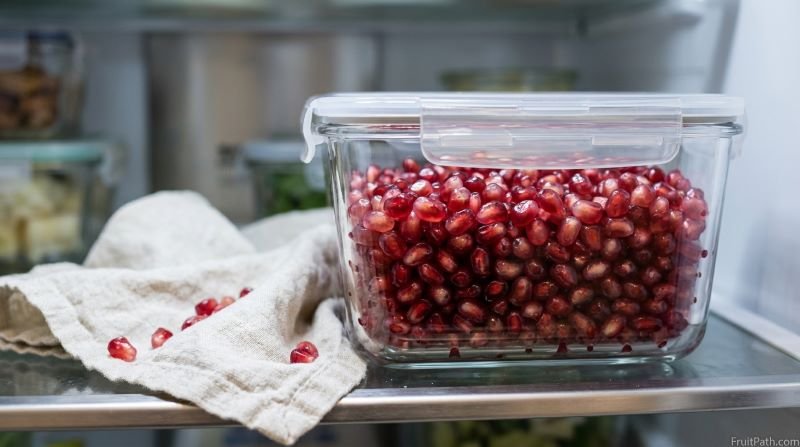
Store them in the fridge and eat them within 3 to 5 days.
Seeds that sit in the fridge too long can dry out, turn dull, or become slimy, so use them quickly.
Pat pomegranate seeds dry, store them in an airtight container, and refrigerate for about 3–5 days.
How to Store Pomegranates Long Term:
Want your pomegranates to last as long as possible? You have two good choices.
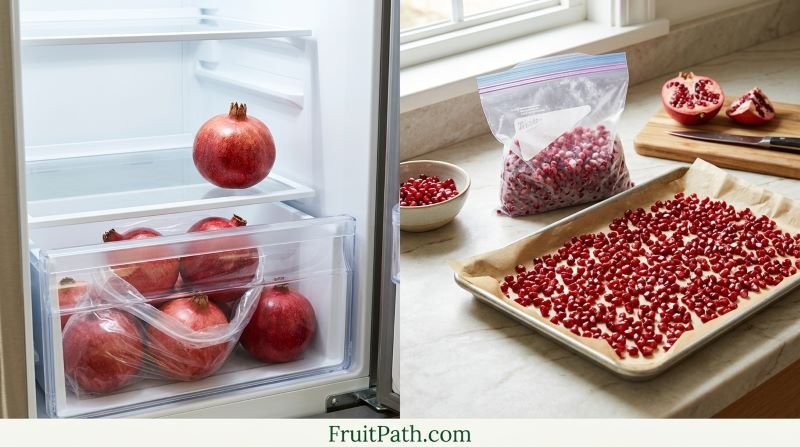
Option 1: Keep them whole in the fridge. This is the easiest way. A whole fruit in a plastic bag in the crisper drawer can last about three months. Pick the freshest, heaviest fruit with firm, tight skin. Our guide on how to see if a pomegranate is ripe will help you choose.
Option 2: Freeze the seeds. If you have more pomegranate than you can eat, freeze the seeds. They can last for months. The next section shows you how.
One thing not to do: do not freeze a whole pomegranate. One food writer who tested this advisesagainst freezing a whole pomegranate. Take the seeds out first.
Extend pomegranate storage life by refrigerating whole fruit or removing the seeds and freezing them separately.
How to Store Pomegranate in Freezer:
Freezing is the best way to save loose seeds. Here is a simple tray method that keeps them from sticking together.
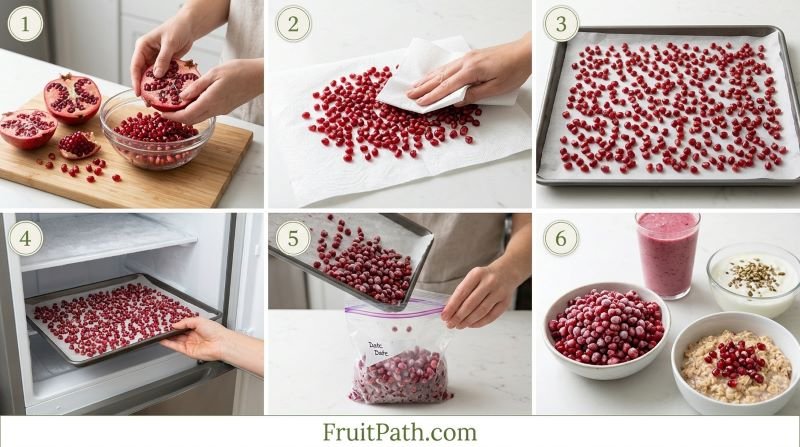
Step 1: Take out the seeds. Remove the arils from the fruit. Our guide on how to cut a pomegranate shows an easy, no-mess way.
Step 2: Dry them well. Spread the seeds on a clean towel or paper towels and pat them dry. Wet seeds freeze into a clump.
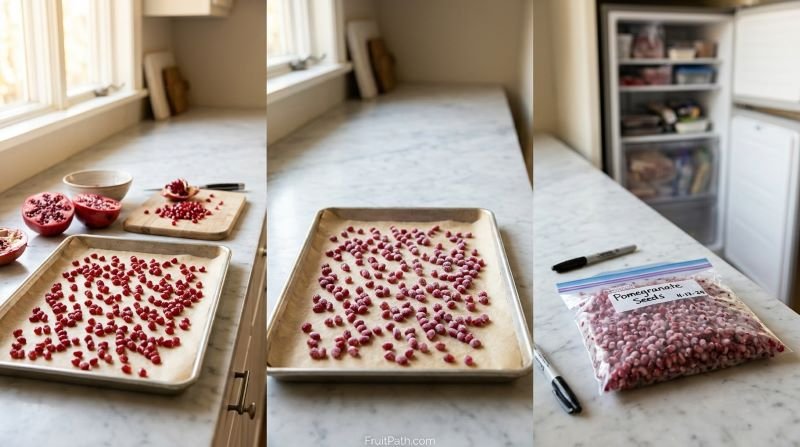
Step 3: Spread them on a tray. Cover a baking sheet with parchment paper or a clean sheet pan. Spread the seeds in a single layer so none of them touch.
Step 4: Freeze for a few hours. Put the tray in the freezer until the seeds are hard. This usually takes a few hours.
Step 5: Move them to a container. Pour the frozen seeds into a freezer bag or an airtight container. Squeeze out the extra air. Write the date on it.
Step 6: Keep them frozen. The Pomegranate Council says frozen seeds keep for up to 6 months. University of California experts say they can last up to 12 months. For the best taste and texture, try to use them within 6 months.
How to use frozen seeds:
Take out only what you need. The Pomegranate Council notes that seeds often lose their shape after thawing.
Use them in smoothies, yogurt, oatmeal, sauces, or cooking, where a softer texture does not matter.
Or snack on them straight from the freezer. They taste like little icy bursts.
Dry pomegranate seeds: freeze them in a single layer on a tray, then transfer them to a freezer bag to prevent clumping.
How to Store Pomegranate Seeds Without Freezing Them:
Do not want to use the freezer? You still have a few options.
1. Keep them in the fridge (short-term). Dry the seeds, put them in an airtight container, and eat them within 3-5 days.
2. Dehydrate them. Dried pomegranate seeds last much longer than fresh ones. They taste chewy, sweet, and tart. The University of California shares simple steps for drying pomegranate seeds and making pomegranate syrup.
3. Make syrup. Cook the juice down into a thick syrup. Store it in a sealed glass jar in the fridge. Use it on pancakes, yogurt, or in drinks.
4. Juice them. Pomegranate juice lasts about 3 days in the fridge, and you can also freeze it. See our pomegranate juice recipe for an easy way to make it.
5. Keep the fruit whole until you need it. The easiest “no-freezer” trick is to open only what you will eat. A whole fruit protects its seeds much better than a bowl does.
Preserve pomegranates without freezing by refrigerating fresh seeds, dehydrating them, making syrup or juice, or keeping the fruit whole.
How Long Does Pomegranate Last After Opening?
Once you cut a pomegranate open, it spoils much faster.
A cut half: Wrap it tightly and refrigerate it. Use it within a few days.
Loose seeds: Store in an airtight container in the fridge for about 3-5 days.
Juice: Store in the fridge for about 3 days.
Frozen seeds: Store for up to 6 months for best quality.
Cut fruit has less protection, so the seeds dry out or grow mold more quickly. If you cannot finish a whole pomegranate, either eat the seeds quickly or freeze them the same day.
Freeze pomegranate seeds in a single layer on a tray before transferring them to a freezer bag.
How to Tell if Your Stored Pomegranate Has Gone Bad:
Even well-stored pomegranates do not last forever. Throw it out if you see any of these signs:
A very light weight, which can mean the inside has dried out or rotted
Pomegranates hold a lot of water, so mold can spread inside where you cannot see it. If you find mold inside, throw the whole fruit away. For a full checklist, read our guide onhow to see if a pomegranate is ripe, which includes a section on spoiled fruit.
Check stored pomegranates for mold, soft spots, unusual odors, and discolored or slimy seeds before eating.
Common Mistakes When Storing Pomegranates:
Washing the fruit before storing it. Wet skin can help mold grow. Wash it right before you eat it.
Keeping cut fruit on the counter. Put anything cut or opened in the fridge.
Freezing a whole pomegranate. Take the seeds out first.
Skipping the tray step when freezing. Seeds frozen all at once will clump into one big block.
Leaving seeds wet. Extra water makes them spoil faster and clump into lumps when they freeze.
Putting it in a hot spot. Heat from the stove or sun shortens the fruit’s life.
Forgetting to check. Check stored fruit weekly and remove anything that has started to go bad.
Avoid heat, excess moisture, uncovered cut fruit, and freezing pomegranate seeds in one large clump.
Frequently Asked Questions About Storing Pomegranate:
Should pomegranates be refrigerated?
They do not have to be, but the fridge makes them last much longer. A whole pomegranate stays good for several days to two weeks on the counter, and about one to three months in the fridge. Cut fruit and loose seeds must always go in the fridge.
How long do pomegranate seeds last in the fridge?
Loose seeds last about 3 to 5 days in an airtight container in the fridge. Some sources say a little less than a week. Dry them first, because extra water makes them spoil faster. If you cannot finish them in that time, freeze them.
Can you freeze pomegranate seeds?
Yes. Dry the seeds, spread them in a single layer on a tray, and freeze them for a few hours. Then move them to a freezer bag. They keep for about 6 months at best quality, and some experts say up to a year. They may be softer after thawing.
Can you store a cut pomegranate?
Yes, for a short time. Cover the cut side tightly with plastic wrap or put the half in an airtight container, then refrigerate it. Use it within a few days. For longer storage, take the seeds out and freeze them.
How do you keep pomegranate fresh for a long time?
Choose a fresh, firm fruit, keep the skin dry, and store it whole in a plastic bag in the fridge. Check it every week. If you have extra, remove the seeds, freeze them on a tray first, then bag them.
Why did my stored pomegranate go bad so fast?
Heat, wet skin, bruises, or cracks usually cause this. Warm rooms speed up decay, and mold can enter through tiny cracks. Buy fruit with firm, unbroken skin, keep it dry, and store it in a cool place or in the fridge.
Final Thoughts: Store Pomegranate the Smart Way:
Now you know how to store pomegranate so it stays fresh and juicy. Keep whole fruit cool and dry. Put it in the fridge for the longest life. Refrigerate anything you cut, and freeze extra seeds on a tray before bagging them.
A little care at the start saves you from wasting fruit later. Next time you bring home a pile of pomegranates, you will know exactly what to do with each one.
Want to learn more about this fruit? Read our fullpomegranate fruit guidefor nutrition facts, health benefits, and the best ways to enjoy it.