You walk into the store and see a pile of shiny red pomegranates. They all look the same. You pick one, pay for it, and cut it open at home. The seeds inside are pale, hard, and sour. What went wrong?
Here is the good news. Once you know how to see if a pomegranate is ripe, you will rarely pick a bad one again. You do not need special skills. You only need your hands, your eyes, and your ears.
In this guide, you will learn seven simple signs of a ripe pomegranate, how to read a pomegranate ripening chart, what a ripe pomegranate looks like inside, and how to tell when one has gone bad. You will also learn how to cut one without making a mess.
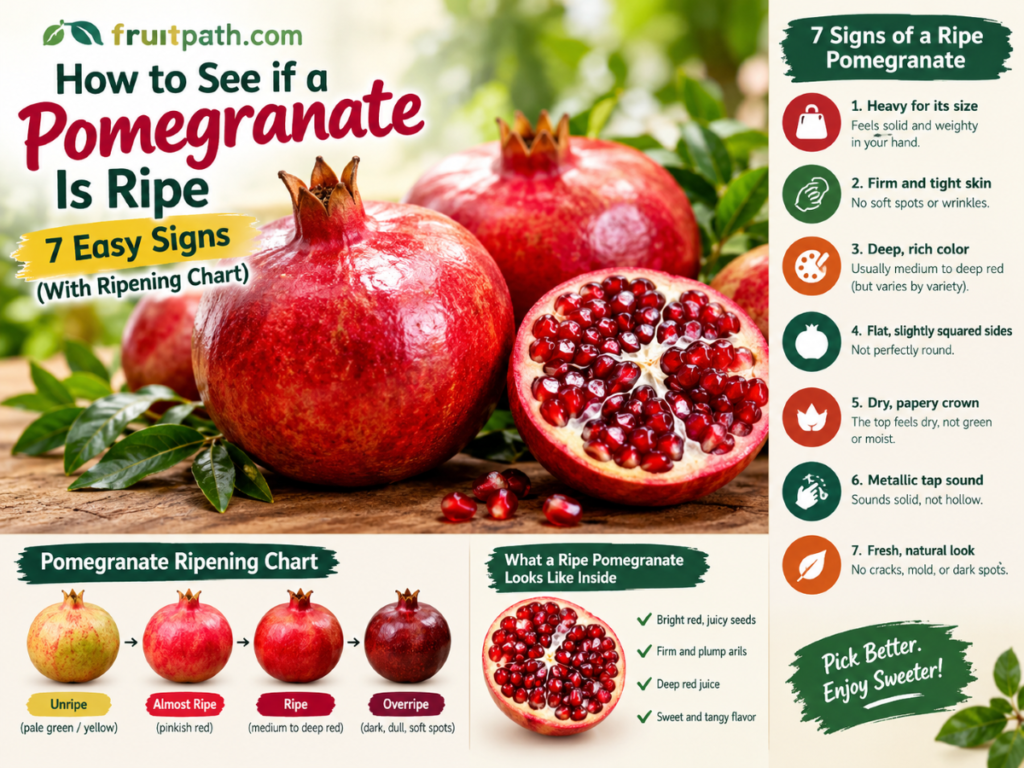
Quick answer: A ripe pomegranate feels heavy for its size, has firm, tight skin, and flat, slightly squared sides instead of a perfectly round shape. The skin is usually medium to deep red, but color varies by variety, so don’t trust it alone. A dense, metallic tap sound is a good extra clue.
Learn how to identify a ripe pomegranate by checking its weight, skin, shape, crown, and seeds before buying.
How to See if a Pomegranate Is Ripe: 7 Simple Signs:
Use these signs together. No single sign is perfect, but when three or four agree, you can feel confident. Here is what the Pomegranate Council and other fruit experts say to look for.
1. It Feels Heavy for Its Size:
This is the best sign. A ripe pomegranate is packed with juicy seeds, and juice has weight. Pick up two pomegranates that are the same size. The heavier one is usually better.
A light pomegranate may be dry inside. It may also be rotting from the inside, which can make the fruit lighter than it should be.
2. The Shape Is Flat on the Sides:
Many people think a ripe pomegranate should be perfectly round. It is the opposite. As the seeds grow and push outward, the fruit flattens near the top and bottom. The sides look slightly squared, like a box.
So if you have two pomegranates, pick the one that looks a bit “boxy.” A perfectly round one is often not ready.
3. The Skin Is Firm, Tight, and a Bit Leathery:
Run your hand over the skin. A ripe pomegranate has firm, tight skin with a slightly leathery feel, like a good leather wallet. It should not feel mushy, wet, or sticky.
Small scratches and scuffs on the surface are fine. They do not hurt the fruit inside. Do not skip a good pomegranate just because the skin has a few marks.
4. The Color Is Medium to Deep Red (But Color Is Not Everything):
Most ripe pomegranates are medium red to deep red. If you see a lot of green on the skin, it is not ripe yet.
But be careful. Color is the sign that fools people the most. Different kinds of pomegranates ripen to different colors. Some are deep red, some are pinkish, and some are yellow with a red blush. Bright red skin doesn’t always mean sweet seeds. That is why weight and shape matter more than color.
5. It Makes a Dense, Metallic Sound When You Tap It:
Tap the pomegranate with your finger, like you are knocking on a door. A ripe one sounds dense and a little metallic. An unripe or dry one often sounds hollow, like tapping an empty box.
A small warning: people describe this sound differently, and some websites say the opposite. Use the tap test only as a backup, not as your main sign.
6. The Crown Looks Dry:
The crown is the little flower-shaped tip at the top of the fruit. On a ripe pomegranate, the crown looks dry and firm. If the crown looks green, soft, or moldy, skip that fruit.
7. Small Splits Can Be a Good Sign (Big Ones Are Not):
Sometimes a ripe pomegranate gets a small crack in the skin. This happens when the juicy seeds grow faster than the skin can stretch. A small, dry crack is a normal sign of ripeness.
A big crack is different. If the crack is wide, wet, or has mold, the fruit may be overripe or damaged. Bugs and mold can enter through cracks like this, so growers sort out cracked fruit.
Pomegranate Ripening Chart: Unripe vs. Ripe vs. Overripe:
Here is a simple pomegranate ripening chart you can save on your phone. Remember that color changes by variety, so use the other columns too.
Weight
Light or average
Heavy for its size
Very light, or soft and leaking
Shape
Perfectly round
Flat sides, slightly squared
Sunken, wrinkled, or lopsided
Skin feel
Hard, stiff
Firm, tight, leathery
Mushy, spongy, soft spots
Skin color
Green patches, pale
Medium to deep red (varies)
Brown, dark, or moldy patches
Tap sound
Hollow
Dense, metallic
Dull and empty
Crown
Green or soft
Dry and firm
Moldy or rotting
Seeds inside
Pale pink, small, hard
Deep red, plump, juicy
Brown, dry, or slimy
How to Tell if a Pomegranate Is Good at the Grocery Store:
Here is a secret that helps a lot. Stores usually pick pomegranates when they are already ripe. So at the store, your job is not to find a ripe one. Your job is to find the best one and avoid damaged ones.
Follow these steps:
Pick up three or four pomegranates. Hold each one in your palm.
Choose the heaviest one. Weight is your top clue.
Check the shape. Look for flat, slightly squared sides.
Press gently with your thumb. The skin should be firm and tight, with no soft spots.
Look at the crown. It should be dry, not moldy or green.
Check for damage. Skip any fruit with wet spots, mold, large splits, or sticky skin.
Tap it if you want a final check. A dense, metallic sound is a good sign.
Shopping tip: buy pomegranates in the fall and winter, when they are in season. In the Northern Hemisphere, that is roughly from September to February. In the Southern Hemisphere, it is about March to May. In-season fruit is fresher, juicier, and often cheaper.
Compare pomegranates by weight, shape, skin firmness, and freshness to choose the best fruit at the grocery store.
What Does a Ripe Pomegranate Look Like Inside?
Once you cut it open, you can see right away if you chose well. Inside a pomegranate are small juicy pockets called arils. Each aril holds one seed. These are the “seeds” most people eat.
Inside a ripe pomegranate, you will see:
Arils that are deep red or ruby colored
Plump, shiny, and see-through pockets full of juice
Pale cream or white skin-like walls (called membranes) between the sections
No brown spots, no mold, and no bad smell
Inside an unripe pomegranate, you will see:
Arils that are pale pink or whitish
Small, hard, or dry pockets
A sour taste with very little juice
One thing to know: a few pomegranate varieties naturally have lighter pink arils, even when they are fully ripe and sweet. If the arils are pale, taste one before you decide.
A ripe pomegranate usually contains plump, juicy arils, but some varieties naturally have lighter pink seeds.
Ripe Pomegranate Seeds: Color, Taste, and Texture:
Good ripe pomegranate seeds are easy to spot. Here is what to expect:
Color: Deep red, bright, and shiny.
Texture: Plump and juicy. They should burst and “pop” when you bite them.
Taste: Sweet with a little tang. Not sharp, not bland.
Smell: Fresh and mild, a little fruity.
If the seeds are hard, dry, or very sour, you likely picked the fruit too early. If they are brown, slimy, or smell like alcohol or vinegar, throw them away.
How to Know if a Pomegranate Is Bad:
Even a perfect pomegranate can go bad if you keep it too long. Here is how to know if a pomegranate is bad.
Soft or sunken spots: Dark brown, black, or yellow soft areas mean the fruit is rotting.
Spongy or sticky skin: Fresh pomegranate skin is firm and dry.
Very light weight: The fruit may be dry or rotten inside.
Signs on the inside:
Brown, black, or beige arils: Fresh arils are deep red. Brown or black ones have gone bad.
Slimy or mushy seeds: This means the fruit is breaking down.
A sour, sharp, or alcohol-like smell: This means the juice has started to ferment.
Fuzzy or powdery patches: Never eat these.
Can you cut off the bad part and eat the rest? If there is only a small spot of mold on the skin and the inside is perfectly clean, some people cut the spot away. But pomegranates are full of water, and mold can spread inside where you cannot see it. If you see mold inside, or if you feel unsure, throw the whole fruit away. It is not worth getting sick.
Dark sunken spots, mold, mushy arils, and an unpleasant smell can indicate that a pomegranate has spoiled.
How to Cut a Pomegranate Without the Mess:
Once you have a ripe one, you want to cut it the right way. Pomegranate juice stains clothes, so wear an apron if you can. Here is the easy water method:
Cut off the crown. Slice a thin piece from the top, just enough to see the white center.
Score the skin. Look for the ridges on the sides. Cut shallow lines from top to bottom along the ridges.
Fill a large bowl with cool water.
Break the fruit apart underwater. Hold it underwater and gently pull the sections open by hand.
Rub out the seeds. Use your thumbs to push the arils off the skin. The seeds sink. The white membrane floats.
Skim and drain. Use a spoon to scoop out the floating white parts. Drain the seeds in a strainer and pat them dry.
The water keeps the juice from spraying all over your kitchen. Want more tips and other ways to do it? See our full guide to cutting a pomegranate.
Can a Pomegranate Ripen After You Pick It?
No. Unlike bananas or avocados, a pomegranate does not keep ripening on your counter. Once it is picked, it will not get sweeter. This is why picking a ripe one at the start is so important.
If you buy one that isn’t ripe, leaving it at home will not fix it. You can still use it, though. Unripe pomegranate seeds are tart, so they work well in salads with a sweet dressing, or in sauces and drinks with honey or sugar.
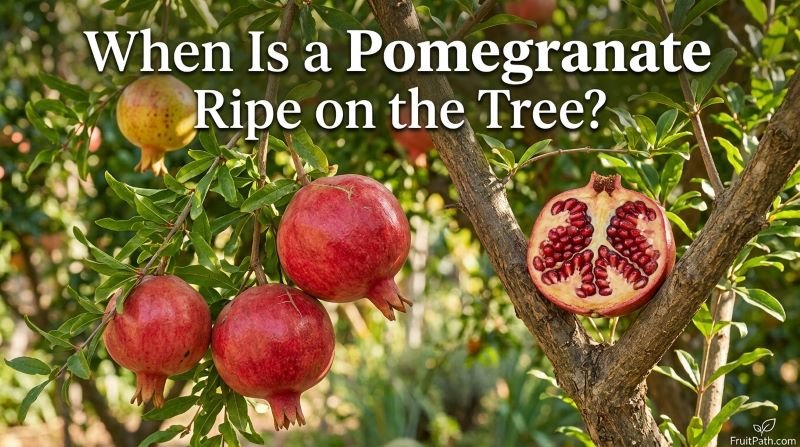
When Is a Pomegranate Ripe on the Tree?
If you grow your own pomegranates, the signs are similar. Look for fruit that is uniformly medium to deep red with no green patches, feels heavy, and has flat sides. According to the California Rare Fruit Growers, pomegranate fruit matures about 5 to 7 months after the tree blooms, depending on your weather and the variety.
Do not wait too long to pick them. Ripe fruit can split open, letting birds, bugs, and mold in. If you see small cracks forming, pick that fruit soon. For more on timing, see our guide to pomegranate season.
Ripe pomegranates often develop deep color, feel heavy for their size, and have flatter sides. Harvest promptly if the fruit begins to split.
How to Keep Pomegranates Fresh:
With proper storage, a good pomegranate can last a long time. These are common time ranges:
Whole, on the counter or in a cool pantry: about 2 weeks
Seeds (arils) in a sealed container in the fridge: up to about 5 days
Seeds in the freezer: up to 12 months in a freezer bag
To freeze seeds, spread them in a single layer on a tray first. Freeze them for a few hours. Then pour them into a bag. This keeps them from sticking together in one big lump. For details, read our guide onstoringpomegranates.
Common Mistakes When Picking a Pomegranate:
Choosing by color only. Color varies by variety, so it can fool you.
Picking the roundest one. Slightly squared sides are a better sign.
Ignoring weight. Heavy fruit usually means juicy seeds.
Skipping good fruit because of scratches. Surface scars are harmless.
Keeping it too long. Even the best pomegranate will go bad after a few weeks on the counter.
Frequently Asked Questions About Ripe Pomegranates:
How do you know when a pomegranate is ripe?
A ripe pomegranate feels heavy for its size, has firm, tight skin, and has flat, slightly squared sides. The color is usually medium to deep red, but it changes by variety. Tapping it should give a dense, metallic sound. Use several signs together for the best result.
Does color tell you if a pomegranate is ripe?
Not always. Green patches usually mean the fruit is not ready. But ripe pomegranates can be deep red, pink, or even yellow with a red blush, depending on the variety. Weight and shape are better clues than color, so check those first.
Should a ripe pomegranate be soft or hard?
It should be firm, not soft or rock-hard. The skin should feel tight and leathery. If you feel mushy spots, sponginess, or wet patches, the fruit is overripe or going bad. If it feels stiff and light, it may be unripe or dry inside.
What does a ripe pomegranate look like inside?
Inside a ripe pomegranate, the arils are deep red, plump, shiny, and juicy. The white walls between sections should be clean and pale. Pale pink, hard, or dry arils mean the fruit was picked too soon. Brown or slimy arils mean it has gone bad.
Can you eat an unripe pomegranate?
Yes, it is safe to eat, but it will taste sour and dry. Many people add unripe seeds to salads, sauces, or sweet drinks, where the tang works well. Just know it will not be as sweet or juicy as a ripe one.
How long does a pomegranate last?
A whole pomegranate lasts about 2 weeks on the counter and about 1 to 2 months in the fridge. Loose seeds last around 5 days in the fridge. For longer storage, freeze the seeds for up to a year.
Final Thoughts: Pick the Best Pomegranate Every Time:
Now you know how to see if a pomegranate is ripe, and it comes down to a few simple checks. Pick one that feels heavy, looks slightly squared, and has firm, tight skin. Add the tap test and a quick look at the crown, and you are set.
Next time you are at the store, take an extra minute to hold a few pomegranates in your hands. You will be surprised how easy it is to feel the difference. Then take your juicy fruit home, cut it using the water method, and enjoy those ruby-red seeds.