Pomegranate seeds look like tiny red jewels. They taste sweet and a little sour, and they make almost any dish look fancy. But what is actually inside them? Are they high in sugar? Are they good for you?
Here are the pomegranate nutrition facts in plain words. You will see the calories, fiber, sugar, vitamins, and minerals. You will also see what research really says about the health benefits, and who should be careful.
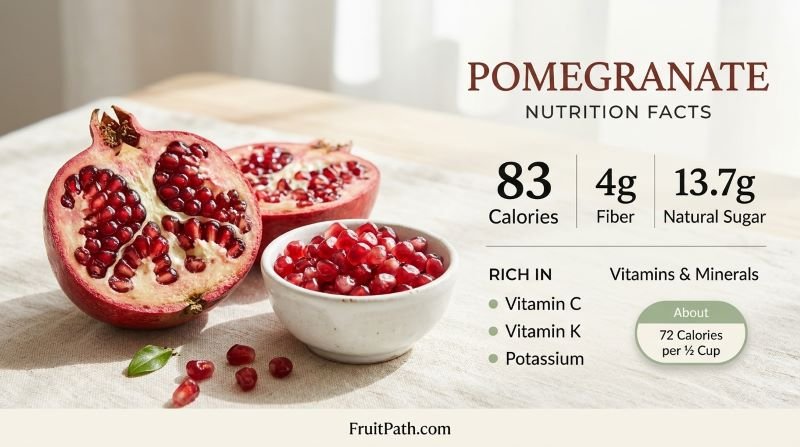
Quick answer: Raw pomegranate seeds (arils) have about 83 calories per 100 grams. They are a good source of fiber (4 g), vitamin K, vitamin C, folate, and potassium. They also have natural sugar (about 13.7 g per 100 g) and almost no fat. A half cup has about 72 calories.
Pomegranate seeds provide fiber, vitamins, minerals, and natural sugar, with about 83 calories per 100 grams.
Pomegranate Nutrition Facts Table (Per 100g and Per Half Cup)
This table uses data from the USDA FoodData Central for raw pomegranate arils. The “% Daily Value” column is based on the standard FDA Daily Values for a 2,000-calorie diet. I worked those percentages out myself, so treat them as close estimates.
Calories
83 kcal
72 kcal
—
Water
77.9 g
67.8 g
—
Protein
1.67 g
1.45 g
—
Total fat
1.17 g
1.02 g
—
Carbohydrate
18.7 g
16.3 g
7%
Total sugars
13.7 g
11.9 g
—
Fiber
4.0 g
3.5 g
14%
Vitamin K
16.4 µg
14.3 µg
14%
Vitamin C
10.2 mg
8.9 mg
11%
Folate
38 µg
33 µg
about 10%
Potassium
236 mg
205 mg
5%
Vitamin E
0.60 mg
0.52 mg
4%
Magnesium
12 mg
10.4 mg
3%
Iron
0.3 mg
0.26 mg
2%
Calcium
10 mg
8.7 mg
1%
Pomegranate also has small amounts of B vitamins, including vitamin B5 (0.38 mg), B6 (0.075 mg), thiamin (0.067 mg), and riboflavin (0.053 mg) per 100 grams.
How Many Calories Are in a Pomegranate?
Pomegranate calories are moderate. They are higher than a juicy fruit like watermelon, but they still come with fiber and plant compounds.
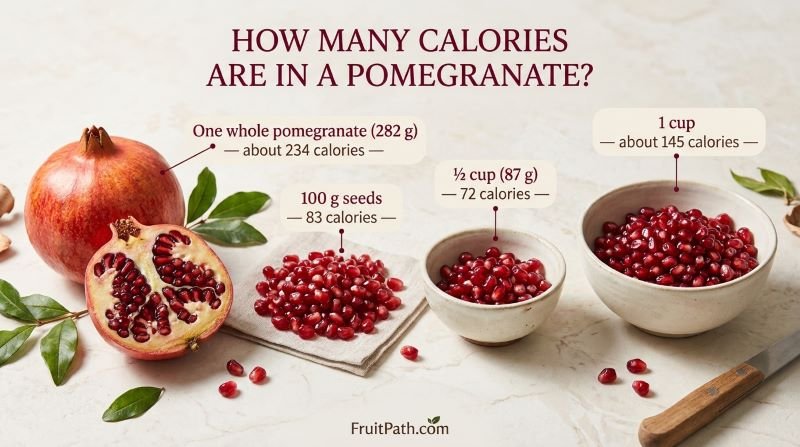
Per 100 grams of seeds: about 83 calories
Per half cup of seeds (87 g): about 72 calories
Per full cup of seeds: about 145 calories (this is my math: double the half cup)
A whole pomegranate sounds like a lot, but most people eat only about a half cup at a time, as a topping or snack. That keeps the calories low.
Pomegranate calories vary by serving size, from about 72 calories per half cup of seeds to 234 calories for a 282-gram serving.
Pomegranate Fiber: A Big Plus:
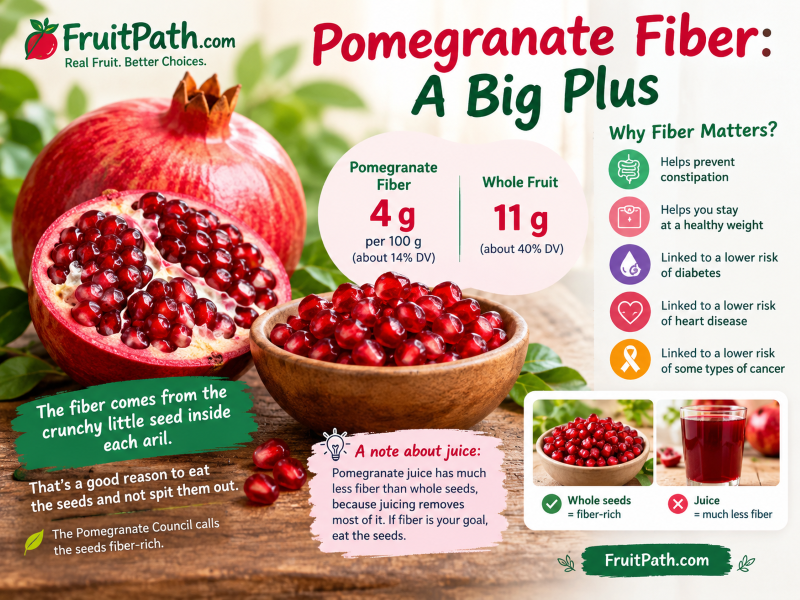
Pomegranate fiber is one of its best features. You get about 4 grams per 100 grams, which is about 14% of the daily value. A whole fruit has about 11 grams, which is about 40% of the daily value.
This fiber comes from the crunchy little seed inside each aril. That is one reason to eat the seeds instead of spitting them out. The Pomegranate Council describes the seeds as fiber-rich.
Why does fiber matter? The Mayo Clinic says fiber helps prevent constipation, supports a healthy weight, and is linked to a lower risk of diabetes, heart disease, and some cancers.
A note about juice: Pomegranate juice has much less fiber than whole seeds, because juicing removes most of it. If fiber is your goal, eat the seeds.
Pomegranate seeds provide dietary fiber that supports digestive health. Whole pomegranate seeds contain much more fiber than strained juice.
Pomegranate Carbs and Sugar:
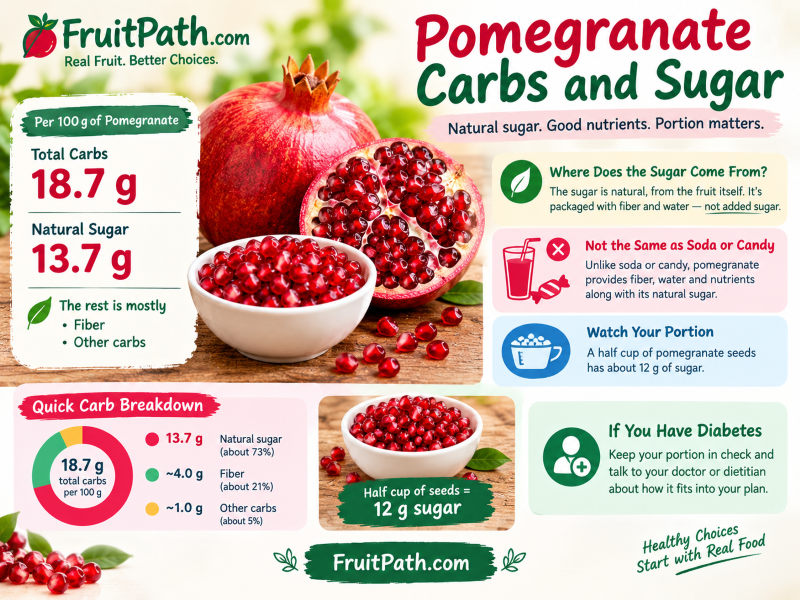
Pomegranates have about 18.7 grams of carbs per 100 grams. About 13.7 grams of that is natural sugar. The rest is mostly fiber and other carbs.
This sugar comes from the fruit itself, not from added sugar. It also comes packaged with fiber and water, which is very different from soda or candy. Still, pomegranate is not a “free” food if you are watching sugar. A half cup of seeds has about 12 grams of sugar. If you have diabetes, keep your portion in check and talk to your doctor or dietitian about how it fits into your plan.
Pomegranates contain natural sugar along with fiber and water. Enjoying a mindful portion can help you manage your carbohydrate intake.
Pomegranate Vitamins and Minerals:
Pomegranate isn’t the highest in any single vitamin, but it offers a good mix. Here are the standouts.
Vitamin K
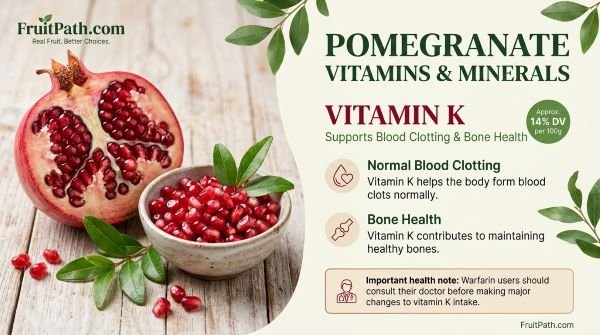
At about 14% of the daily value per 100 grams, vitamin K is pomegranate’s top vitamin. Your body needs it for normal blood clotting and for strong bones.
Important: If you take a blood thinner like warfarin, vitamin K can affect how your medicine works. Ask your doctor before making major changes to your vitamin K intake.
Vitamin C
Pomegranate gives you about 11% of the daily value of vitamin C per 100 grams. The National Institutes of Health says vitamin C is an antioxidant and supports immune function.
Folate
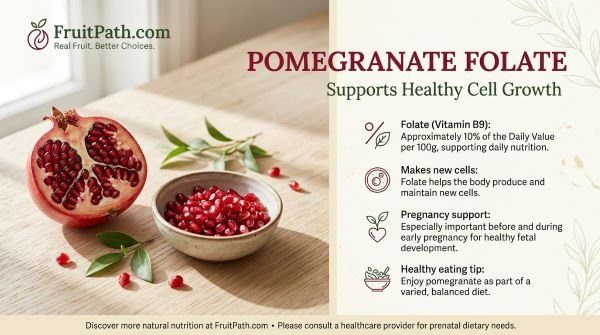
Folate (a B vitamin) is at about 10% of the daily value per 100 grams. Your body uses it to make new cells. It is especially important for women who are pregnant or could become pregnant.
Potassium
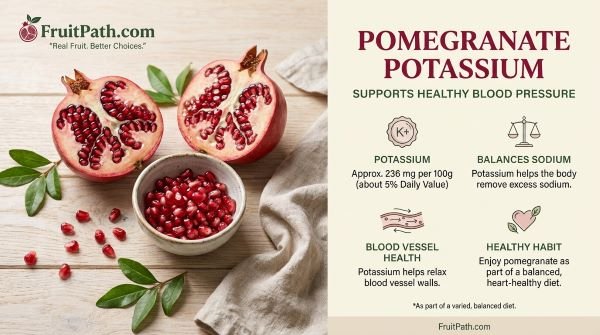
With 236 mg per 100 grams (about 5% of the daily value), pomegranate adds a little potassium to your day. The American Heart Association says potassium helps your body remove extra sodium and relax blood vessel walls, both of which help lower blood pressure.
What Pomegranate Does Not Have Much Of
Pomegranate is low in protein, fat, calcium, and iron. It is a great add-on to a meal, but it won’t meet those needs on its own.
Plant Compounds in Pomegranate:
Besides vitamins and minerals, pomegranate has natural plant compounds called polyphenols. You may hear the names punicalagins, ellagic acid, and anthocyanins. These are described as giving the fruit and its juice their deep red color.
These compounds act as antioxidants in a lab. Scientists are still studying what that means for people. So you will see big claims online, but the honest answer is that research is still growing.
Pomegranate Fruit Benefits: What Does the Research Say?
You will see lots of health claims about pomegranate. Here is a fair look at what the evidence shows, and where it is still thin. The National Center for Complementary and Integrative Health (NCCIH), part of the NIH, is a helpful source.
1. Good for Digestion and Fullness:
This one is solid because it comes from fiber. Four grams per 100 grams helps keep things moving and keeps you full longer. It works best when you eat the seeds, not just the juice.
2. May Help Blood Pressure:
NCCIH says pomegranate juice or extract may help lower blood pressure, but more research is needed. One review of eight trials, summarized by Nutrition Advance, found an average drop of about 5 points in the top blood pressure number. That is a small change, and it came from juice studies, so don’t treat pomegranate like medicine.
3. May Slightly Lower Blood Sugar:
NCCIH says studies suggest pomegranate may slightly lower blood glucose. Small is the key word. It is not a replacement for diabetes care.
4. Heart Health and Cholesterol: Not Proven:
Pomegranate is often promoted for heart health. NCCIH says products have been studied for effects on cholesterol, but no clear effects have been shown. The fruit still fits a heart-healthy diet because it’s high in fiber and potassium and low in fat. Just do not expect it to lower your cholesterol on its own.
5. Antioxidants and Inflammation: Mixed Results:
Because of its polyphenols, many people say pomegranate fights inflammation. Some studies show promise, but results are mixed. A large review of 21 trials, also summarized by Nutrition Advance, found varied results. More research is needed.
The honest bottom line: Pomegranate is a nutritious, fiber-rich fruit that fits well in a healthy diet. It is not a miracle food, and no single fruit will fix your health on its own.
Seeds vs. Juice vs. Whole Fruit:
Seeds (arils)
Fiber, vitamins, and crunch
Natural sugar, so watch portions
Juice
Plant compounds, less fiber
Easy to drink a lot of sugar fast; store-bought juice may have added sugar, so check the label
For most people, eating the seeds is the best choice. You get the fiber, and you control your portion.
Pomegranate Side Effects and Who Should Be Careful:
Pomegranate is safe for most people. According to NCCIH, it usually causes no side effects, though some people may get digestive symptoms like an upset stomach. A few things to know:
Allergies: Allergic reactions to pomegranate have been reported, though they are uncommon. If you try it for the first time, start with a small amount. Healthline says to stop and seek medical care if you have trouble breathing, a rash, or itching in your mouth or on your skin.
Blood pressure medicine: Pomegranate may lower blood pressure. If you take blood pressure medicine, talk to your doctor about the right amount of pomegranate for you.
Blood thinners: Because pomegranate has vitamin K, ask your doctor if you take warfarin.
Medicine in general: NCCIH advises talking with a health care provider about herbal products and juices if you take any medicine.
Pregnancy and breastfeeding: NCCIH says drinking pomegranate juice may be safe, but little is known about other forms.
The peel, stem, and root: NCCIH says these may not be safe in large amounts. Stick to the seeds and the juice.
This article is for general information. It is not medical advice. If you have a health condition, ask your doctor or a dietitian.
Frequently Asked Questions About Pomegranate Nutrition:
How many calories are in a pomegranate?
Raw pomegranate seeds have about 83 calories per 100 grams, or about 72 calories in a half cup. A whole pomegranate has about 234 calories, based on the USDA serving size of 282 grams. Most people eat only part of a fruit, so a normal serving is far lower.
Is pomegranate high in sugar?
It has about 13.7 grams of natural sugar per 100 grams, which is moderate for a fruit. The sugar comes with fiber and water, which makes it different from added sugar. If you watch your sugar, keep your portion to about a half cup and check with your doctor or dietitian.
Is pomegranate good for weight loss?
It can fit into a weight-loss diet. It has only about 83 calories per 100 grams and plenty of fiber, which helps you feel full. But it will not cause weight loss on its own. Portion size and your overall diet matter most.
Are pomegranate seeds good for you?
Yes. The seeds (arils) give you fiber, vitamin K, vitamin C, folate, and potassium. The small crunchy seed inside each aril is where much of the fiber comes from. For more, see our upcoming guide on whether you can eat pomegranate seeds.
Is pomegranate juice as healthy as the whole fruit?
Not quite. Juice has plant compounds but much less fiber, and it is easier to drink a lot of sugar quickly. Store-bought juice can also have added sugar. Whole fruit is usually the better choice. If you drink juice, check the label and keep servings small.
Who should avoid pomegranate?
Most people can eat it safely. People with a pomegranate allergy should avoid it. People taking blood pressure medicine or blood thinners should talk to their doctor first. The peel, stem, and root may not be safe in large amounts, so stick to the seeds and juice.
Final Thoughts: Pomegranate Is a Smart, Tasty Choice:
The pomegranate nutrition facts tell a simple story. It is a low-fat, fiber-rich fruit with vitamin K, vitamin C, folate, and potassium. It contains natural sugars, so portion sizes matter. And while research on its health benefits is promising in some areas, it is not a cure-all.
The best way to enjoy it is simple: add a handful of seeds to your yogurt, salad, or oatmeal. You get the crunch, the color, and a nice nutritional boost.
Want to learn more? Read our fullpomegranate guidefor types, seasons, and more ways to enjoy it.