Pomegranate fruit looks like a red apple with a crown on top. But crack it open, and you find something very different: hundreds of shiny, ruby-red seed pockets packed tightly together. They taste sweet, a little sour, and a little crunchy.
People have grown and eaten this fruit for thousands of years. Today, it is easy to find in stores, but many people still wonder how to pick, cut, or even eat one.
This guide covers it all. You will learn what pomegranate fruit is, where it comes from, what types exist, and when it is in season. You will also learn how to pick, cut, eat, and store it; what it contains; and what research says about its health benefits.
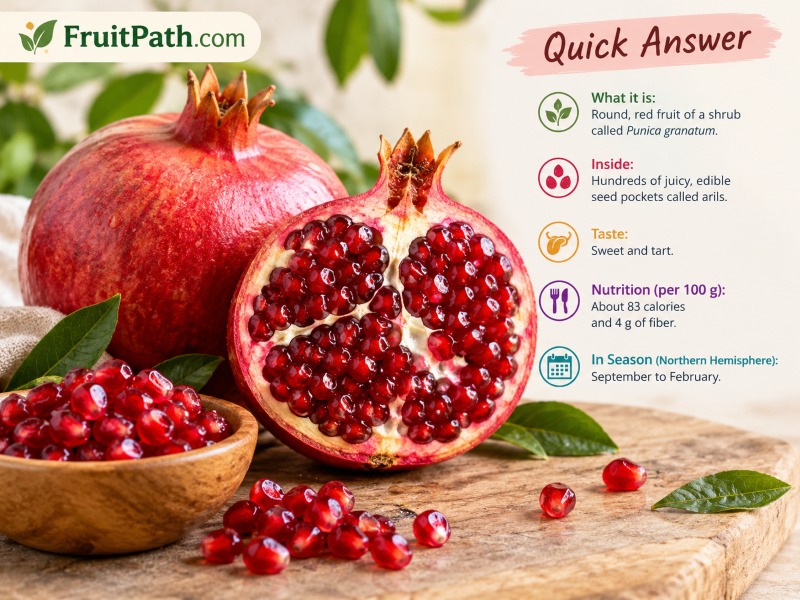
Quick answer: Pomegranate fruit is the round, red fruit of a shrub called Punica granatum. Inside are hundreds of juicy, edible seed pockets called arils. It tastes sweet and tart. Raw arils have about 83 calories and 4 grams of fiber per 100 grams. In the Northern Hemisphere, it is in season from about September to February.
Discover pomegranate fruit, its juicy edible arils, sweet-tart flavor, nutritional value, and Northern Hemisphere season from September to February.
The pomegranate (Punica granatum) is a fruit-bearing shrub or small tree. Wikipedia says it belongs to the Lythraceae family and can grow 5 to 10 meters (16 to 33 feet) tall.
The fruit is round, with a thick, reddish-purple skin. Wild fruit is about 2 to 8 centimeters wide, and some garden types grow up to 12 centimeters (about 4.7 inches). Botanically, it is a berry, even though it looks nothing like a blueberry.
What Is Inside a Pomegranate?
The inside has a few different parts:
Part
What it is
Can you eat it?
Crown
The flower-shaped tip on top
No
Rind
The tough outer skin
No
Membrane (pith)
The white, spongy walls between sections
Safe, but bitter
Arils
The juicy red seed pockets
Yes
Seed
The small, crunchy seed inside each aril
Yes
A single fruit can hold anywhere from about 200 to 1,400 seeds. The Pomegranate Council says the arils are full of sweet-tart juice around a small, white, crunchy seed, and that the rind and white membranes are bitter.
Where Does Pomegranate Fruit Come From?
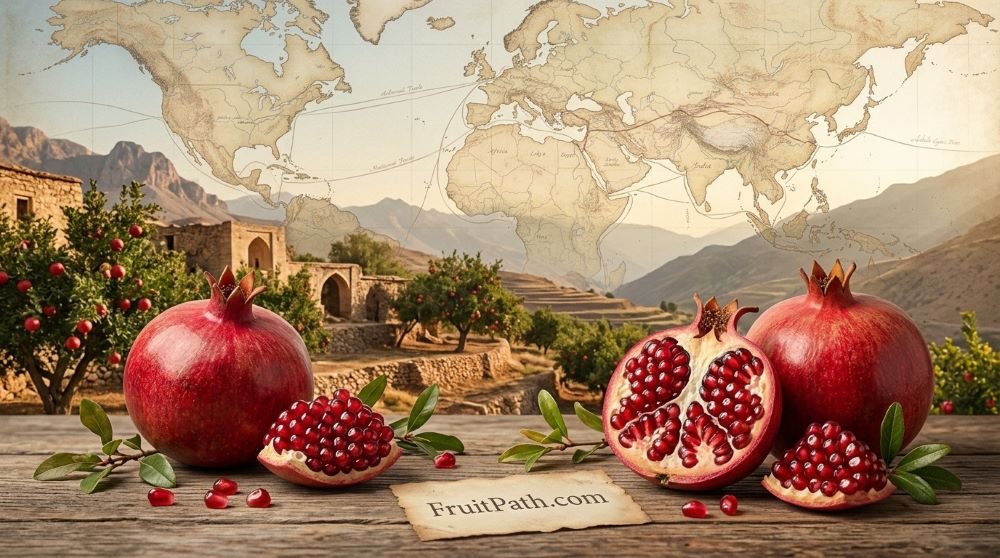
Pomegranates are very old. Wikipedia says the plant is native to the Caucasus and the Iranian plateau and was first grown by ancient Iranians about 5,000 years ago. From there, it spread to Iraq, Turkey, India, parts of Africa, and Europe.
Here is how it traveled to the Americas and beyond:
Spanish settlers brought it to Spanish America in the late 1500s.
It reached California in 1769.
It reached England in the 1600s.
Thomas Jefferson planted it at his home, Monticello, in 1771.
Today, according to Wikipedia, India and China are the leading producers, followed by Iran, Turkey, Afghanistan, the United States, Iraq, Pakistan, Syria, and Spain.
Pomegranates originated in the region around the Iranian plateau and Caucasus before spreading across Asia, Africa, Europe, and the Americas
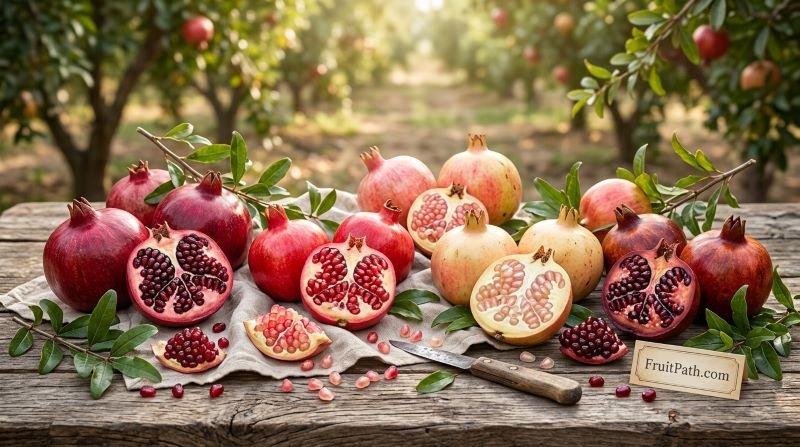
Pomegranate fruit comes in many types. Wikipedia says there are more than 500 named varieties. But the same one is often given different names in different places, so the real number of truly different types is lower.
Most pomegranates in U.S. stores are one variety, called Wonderful. A University of California article says it makes up over 90 percent of U.S. commercial production. But there are many others:
Eversweet: very sweet, with pale arils and soft seeds
Angel Red: soft, chewable seeds
Utah Sweet: very sweet, with pink skin and pink pulp
Surh-Anor: a pale type often called a “white” pomegranate
Kazake and Salavatski: good for cold climates
Bhagwa: the leading variety in India
Want the full list, with tastes, colors, seed softness, and how to choose? Read our complete guide to pomegranate varieties.
Explore pomegranate varieties, from deep-red Wonderful and Bhagwa to sweet, pink, and pale-skinned types.
Pomegranate Season: When Is It Ripe and Available?
Wikipedia says pomegranate fruit is in season from September to February in the Northern Hemisphere and from March to May in the Southern Hemisphere.
On the tree, fruit takes time to ripen. The California Rare Fruit Growers say it matures about 5 to 7 months after the tree blooms. So for the best flavor and price, shop in the fall and winter.
For a deeper look at regional timing, see our guide to pomegranate season.
How to Pick a Ripe Pomegranate Fruit:
A good pomegranate is heavy, juicy, and sweet. A bad one is dry and sour. Here are the quick signs to look for:
It feels heavy for its size. This is the best sign, because juice has weight.
The sides look slightly flat or squared. Perfectly round ones are often less ready.
The skin is firm, tight, and a bit leathery. Small scratches are fine.
The color is medium to deep red. But color varies by variety, so don’t trust it alone.
It makes a dense, metallic sound when you tap it. Use this as a backup test.
Also skip any fruit with mold, wet spots, or large splits. Our full guide onhow to tell if a pomegranate is ripe has a ripening chart, a store shopping checklist, and signs a pomegranate has gone bad.
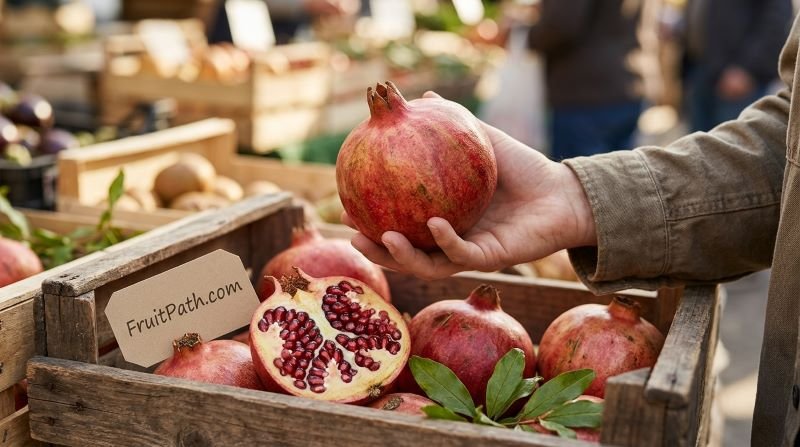
Choose a ripe pomegranate by looking for firm skin, slightly flattened sides, and a fruit that feels heavy for its size.
How to Cut a Pomegranate and Get the Seeds Out:
Cutting a pomegranate scares a lot of people because of the juice. The trick is to do it underwater. Here is the short version:
Cut off the crown and score the skin along the ridges, keeping the cuts shallow.
Fill a bowl with cool water and break the fruit apart underwater.
Push the seeds out with your thumbs. They sink, and the white pith floats.
Skim off the pith, then drain and dry the seeds.
You can also use the spoon method (tap the back of a cut half with a wooden spoon) or score and pull apart for pretty sections. Wear an apron, because pomegranate juice stains. Get all three methods in our guide to how to cut a pomegranate.
How to Eat Pomegranate Fruit:
Eating pomegranate is simple once you remove the seeds.
Eat the arils with the seeds. The little crunchy seeds are edible and fiber-rich, so you don’t need to spit them out, though you can if you prefer.
Skip the white pith and the rind. They are bitter.
Eat them plain with a spoon, or add them to your meals.
Easy Ways to Use Pomegranate Seeds:
Sprinkle them on yogurt, oatmeal, or cereal.
Toss them into green salads for a sweet-tart pop.
Mix them into rice, couscous, or quinoa.
Blend them into smoothies.
Use them to decorate desserts, like cakes and puddings.
Juice them for a fresh drink.
Add pomegranate seeds to yogurt, salads, smoothies, grains, and desserts for a colorful sweet-tart flavor.
How People Eat Pomegranate Around the World:
Wikipedia notes many food traditions built around this fruit:
In Persian cooking, pomegranate molasses adds a sweet-sour flavor to stews and sauces, like the famous dish fesenjān.
In Turkey, pomegranate sauce serves as a salad dressing and marinade, and the seeds decorate desserts.
In Mexico, the seeds top a dish called chiles en nogada, where they stand for the red in the flag.
Grenadine, the red syrup used in drinks, was originally made from pomegranate juice.
The California Rare Fruit Growers add that the fruit can be made into jellies, sorbets, sauces, cake flavoring, and wine.
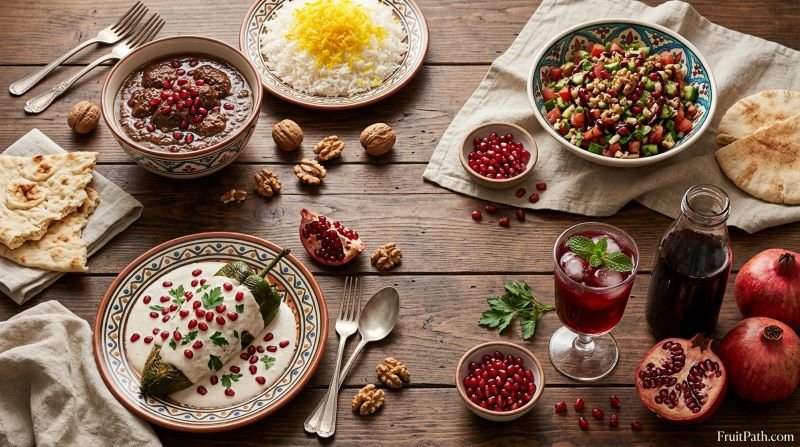
From Persian fesenjān to Mexican chiles en nogada, pomegranate adds a distinctive sweet-tart flavor and color to dishes worldwide.
Pomegranate Fruit Nutrition Facts:
Here are the main numbers for raw pomegranate seeds, based on USDA data:
Calories
83 kcal
72 kcal
Fiber
4.0 g
3.5 g
Total sugars
13.7 g
11.9 g
Protein
1.67 g
1.45 g
Fat
1.17 g
1.02 g
Vitamin K
16.4 µg
14.3 µg
Vitamin C
10.2 mg
8.9 mg
Folate
38 µg
33 µg
Potassium
236 mg
205 mg
In short, pomegranate is low in fat, rich in fiber, and a good source of vitamin K, vitamin C, folate, and potassium. It also contains natural sugars, so portion sizes matter. For the full table, daily values, and what each nutrient does, see our pomegranate nutrition facts guide.
Pomegranate Fruit Benefits: What Does the Research Say?
Cholesterol and heart health: NCCIH says products have been studied for effects on cholesterol, but no clear effects have been shown.
The honest summary: pomegranate is a nutritious fruit that fits well in a healthy diet. It is not a miracle food or a replacement for medical care. We will cover the research in more detail in our upcoming guide to pomegranate fruit benefits.
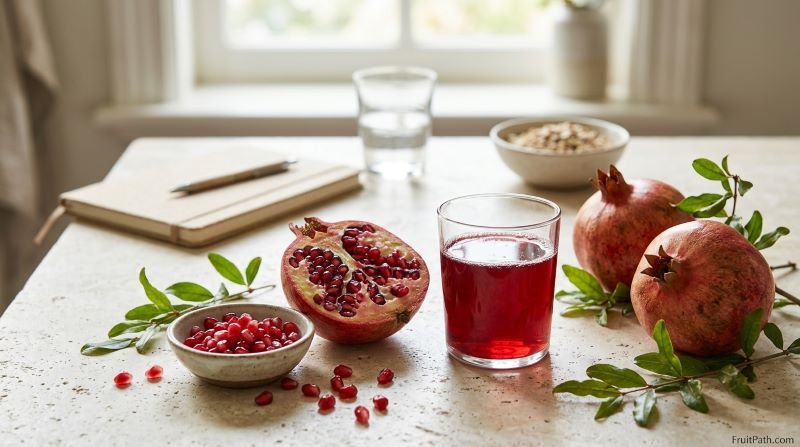
Pomegranate provides fiber and beneficial plant compounds, while research into its effects on blood pressure, blood sugar, and cholesterol is ongoing.
Side Effects and Who Should Be Careful:
Pomegranate is safe for most people. NCCIH says it usually causes no side effects, though some people may get digestive symptoms. A few cautions:
Allergies: Allergic reactions have been reported, though they are uncommon. Try a small amount first.
Medicine: Pomegranate may lower blood pressure. If you take blood pressure medicine or any other medicine, talk to your doctor.
Peel, stem, and root: NCCIH says these may not be safe in large amounts. Stick to the seeds and juice.
This is general information, not medical advice. Read more cautions in our pomegranate nutrition facts guide.
How to Store Pomegranate Fruit:
A whole pomegranate lasts a long time. Cut fruit and loose seeds do not. Here is a quick guide:
Whole fruit
Cool counter
Several days to about 2 weeks
Whole fruit
Fridge
About 1 to 3 months
Loose seeds
Fridge, airtight container
About 3 to 5 days
Loose seeds
Freezer
Up to 6 months for best quality, up to 1 year at most
Sources differ a little on these numbers, so use the shorter ones when unsure. Keep the skin dry, and do not freeze a whole fruit. For step-by-step instructions, including how to freeze seeds on a tray, read our guide on how to store pomegranate.
The Pomegranate Tree: A Quick Look:
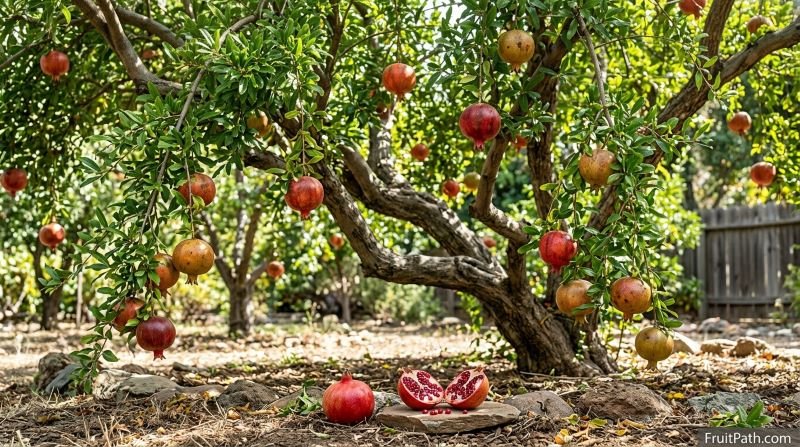
Many people grow their own pomegranates. Here are the basics from the California Rare Fruit Growers:
Climate: It prefers a semi-arid, mild-temperate to subtropical climate. Hot weather during fruiting gives the best flavor, and very humid climates hurt fruit formation.
Cold: Temperatures below about 12°F (−11°C) can badly damage the tree.
Soil and sun: It likes the sunniest, warmest spot and well-drained soil.
Fruiting: Trees can bear fruit one year after planting, but 2½ to 3 years is more common.
Size: Trees typically reach 12 to 16 feet, though dwarf types exist.
Pollination: It pollinates itself, but insects can help fruit set.
Splitting: Overripe fruit tends to crack, especially after rain. Pick it on time.
Wikipedia adds that the plant is drought-tolerant, but wet areas risk root rot from fungal disease. For a full guide, see our upcoming article on how to grow a pomegranate tree.
Fun Facts About Pomegranate Fruit:
Carolus Linnaeus gave it the scientific name Punica granatum in 1753, according to Simple Wikipedia. Granatum comes from a word meaning “seeded.”
The only other species in the Punica group is the Socotra pomegranate, which grows on islands in the Arabian Sea. It has pink flowers and smaller, less sweet fruit.
In Persia and Armenia, the fruit stands for fertility, abundance, and royal power. In Judaism, it is one of the Seven Species and appears at Rosh Hashanah. In Greek myth, it is linked to Persephone’s story.
People have used pomegranate peels to dye wool and silk.
Frequently Asked Questions About Pomegranate Fruit:
What is pomegranate fruit?
Pomegranate fruit is the round, red fruit of the Punica granatum shrub. Inside are hundreds of juicy seed pockets called arils, each with a small crunchy seed. The fruit tastes sweet and tart. You eat the arils and skip the tough rind and bitter white pith.
Can you eat the seeds in pomegranate fruit?
Yes. The arils and the small, crunchy seeds inside them are both edible, and the seeds are rich in fiber. You can also spit out the seeds if you prefer a smoother texture. Skip the rind and the white membranes, which are bitter.
When is pomegranate fruit in season?
In the Northern Hemisphere, pomegranates are in season from about September to February. In the Southern Hemisphere, the season runs from about March to May. Buying in season usually gives you fresher, juicier fruit.
How do you know when pomegranate fruit is ripe?
A ripe pomegranate feels heavy for its size and has firm, tight skin. Its sides look slightly flat or squared. Color helps but changes by variety, so do not rely on it alone. A dense, metallic tap sound is a good backup test.
How long does pomegranate fruit last?
A whole pomegranate lasts several days to about two weeks on the counter and about one to three months in the fridge. Loose seeds last about three to five days in the fridge. For longer storage, freeze the seeds in a single layer first, then bag them.
Is pomegranate fruit good for you?
Yes, it is a healthy choice for most people. It is low in fat and rich in fiber, with vitamin K, vitamin C, folate, and potassium. Research on specific health benefits, like blood pressure, is still growing. It also has natural sugar, so keep portions reasonable.
Is pomegranate fruit high in sugar?
It has about 13.7 grams of natural sugar per 100 grams, which is moderate for a fruit. That sugar comes with fiber and water. If you watch your sugar, stick to about half a cup of seeds, and ask your doctor or dietitian how it fits your diet.
How many types of pomegranate fruit are there?
Wikipedia says there are more than 500 named varieties, though many are the same fruit under different names. Wonderful is the most common in U.S. stores. Others include Eversweet, Angel Red, Utah Sweet, and Bhagwa. See our guide topomegranate varieties for more.
Final Thoughts: Make Pomegranate Fruit Part of Your Kitchen:
Pomegranate fruit has a long history, a beautiful look, and a taste that is hard to beat. Once you know how to pick one, cut it mess-free, and store it properly, it becomes an easy fruit to enjoy all season.
Start simple. Pick a heavy fruit with firm skin, cut it underwater, and sprinkle the seeds on yogurt or a salad. You may find it becomes a fall and winter favorite.