
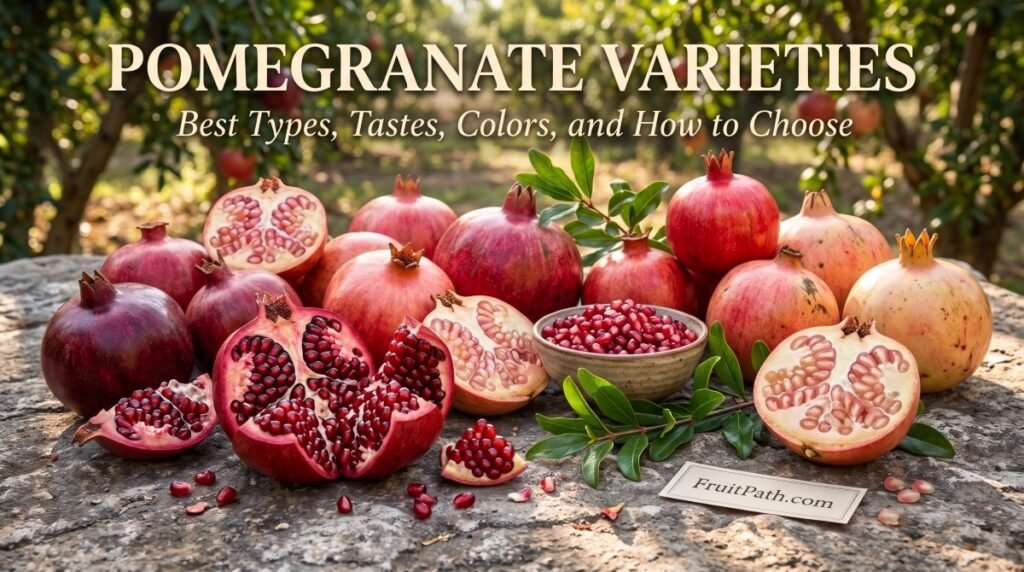
You pick up a pomegranate at the store. It is deep red, heavy, and a little tart. Then a friend shares one from her garden. It has pale pink seeds, soft seeds, and a very sweet taste. Is it even the same fruit?
Yes, it is. But it is a different pomegranate variety. Pomegranates come in many types. They differ in color, sweetness, seed hardness, size, and how well they grow in different places.
In this guide, you will learn how many pomegranate varieties there are, which ones are best for different jobs, and how to pick the right one. You will meet the sweetest types, the soft-seeded types, the white ones, and the ones that grow in cold weather.
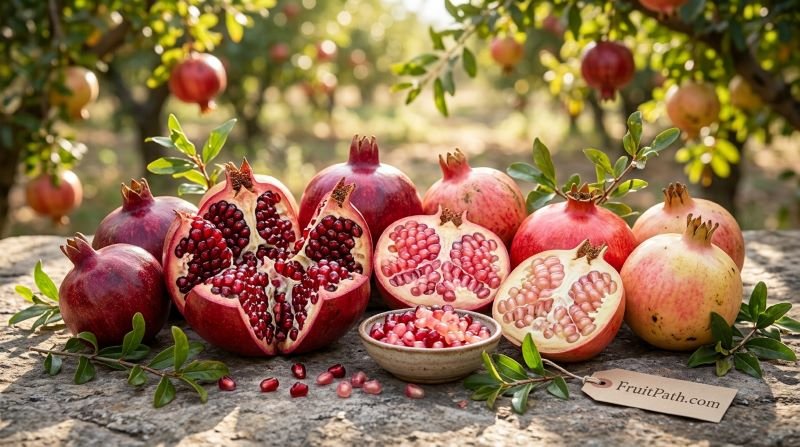
Quick answer: There are more than 500 named pomegranate varieties, but only a handful are common. Wonderful is the main variety sold in U.S. stores. Eversweet, Utah Sweet, and Angel Red are known for sweet taste and soft seeds. Salavatski and Kazake handle cold weather well. Bhagwa leads in India.
- How Many Varieties of Pomegranate Are There?
- Quick Comparison of Popular Pomegranate Varieties:
- Eversweet Pomegranate: The Sweet, Soft-Seeded Favorite:
- White Pomegranate Varieties:
- Soft Seed Pomegranate Varieties:
- Which Pomegranate Variety Is Best for You?
- What Variety Are the Pomegranates at the Store?
- Growing Pomegranate Varieties at Home:
- Frequently Asked Questions About Pomegranate Varieties:
- Final Thoughts: Try More Than One Pomegranate Variety:
How Many Varieties of Pomegranate Are There?
Wikipedia says the pomegranate has more than 500 named cultivars. A cultivar is a variety made or chosen by people. But the same page adds a catch. The same variety is often given different names in different parts of the world. So the real number of truly different types is smaller.
Here are two more facts that show how big the pomegranate family is:
- The U.S. Department of Agriculture keeps a collection of around 300 varieties in its National Clonal Germplasm Repository, according to a University of California, Riverside article.
- Even with all that choice, one type dominates. The same article says Wonderful makes up over 90 percent of U.S. commercial production.
So you may have eaten pomegranate your whole life and tasted only one variety—time to change that.
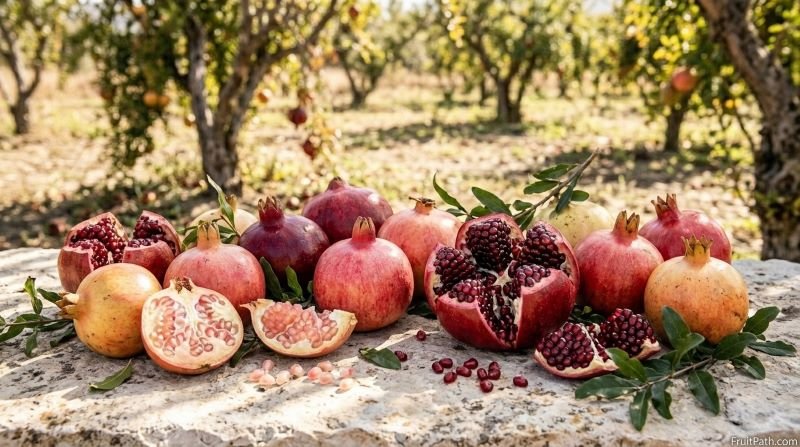
One more thing to know: Experts do not always agree on how to describe each variety. Seed hardness, ripening time, and hardiness often differ from one source to the next. Even the same variety can taste different when it grows in a different climate. The UC Riverside article reports that Wonderful grown near the coast was rated lower for sweetness, tartness, bitterness, and seed hardness than Wonderful grown elsewhere. So use the notes below as a guide, not a promise.
Quick Comparison of Popular Pomegranate Varieties:
Here is a closer look at the types worth knowing. We start with the most common and move to the specialty ones.
| Variety | Look | Taste | Seeds | Best for |
|---|---|---|---|---|
| Wonderful | Large, deep purple-red | Rich, sweet-tart | Firm (sources differ) | Juicing; store-bought favorite |
| Early Wonderful | Large, deep red, thin skin | Delicious | Not stated | Earlier harvest |
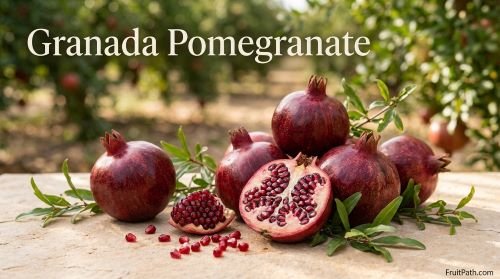
| Granada | Darker red than Wonderful | Less tart | Not stated | Earlier harvest |
| Eversweet | Red skin, pale arils | Very sweet | Soft | People who dislike tart fruit |
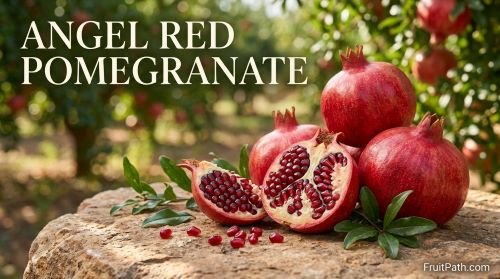
| Angel Red | Vivid red | Very juicy | Soft, chewable | Eating fresh |
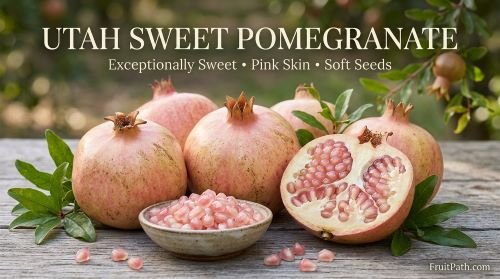
| Utah Sweet | Pink skin and pulp | Very sweet | Softer than Wonderful | Sweet eating |
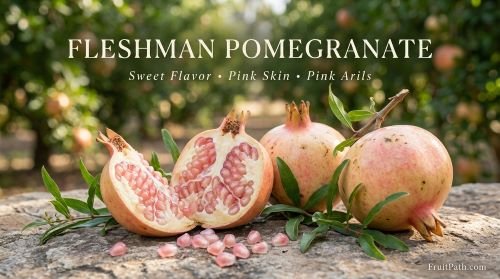
| Fleshman | Pink outside and inside | Very sweet | Fairly soft | Sweet eating |
| Surh-Anor | Pale skin, clear to pale pink arils | Sweet, slightly tart | Mixed (sources differ) | A “white” pomegranate |
| Kazake | Yellow-orange to light red | Sweet-tart | Rather hard | Cold climates |
| Salavatski | Large, orange-red | Semi-sweet | Hard | Very cold climates |
| Parfianka | Ruby-red arils | Sweet and juicy | Not stated | Long storage; small spaces |
| Bhagwa | Bright red arils | Balanced sweet-sour | Soft | India’s top variety |
Wonderful (The Store Favorite)
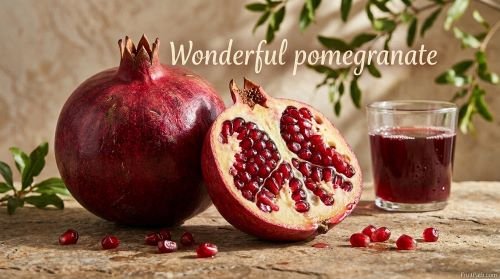
Wonderful is the pomegranate most people know. It is large with deep purple-red skin and deep crimson, juicy flesh. The California Rare Fruit Growers say it came from Florida and was first grown in California in 1896. The taste is described as “vinous,” which means rich and a bit wine-like, with a sweet-tart balance. Utah State University says it is better for juicing than for eating fresh. Some sources call its seeds not very hard, while others say they are hard, so expect firm seeds.
Early Wonderful
This one is a close cousin. It is large and deep red with thin skin. It ripens about two weeks before Wonderful and is very productive, according to Utah State University.

Granada
Granada is a bud mutation of Wonderful. That means it popped up as a change on a Wonderful tree. It is darker red, a little less tart, and ripens earlier than Wonderful. The California Rare Fruit Growers say it ripens about a month earlier. Other growers say only slightly earlier, so timing depends on where you live.
Eversweet (The Sweet One)
Eversweet is a favorite for people who think pomegranates are too tart. It gets its own section below.
Angel Red (The Soft-Seeded Pick)
Angel Red has a vivid red color and very juicy arils. Epic Gardening describes its seeds as soft and chewable. It has spring blooms and is drought-tolerant once established.
Utah Sweet
The name says it all. Utah Sweet is very sweet and good quality, with pink skin and pink pulp. The seeds are notably softer than Wonderful and other standard types. Utah State University also lists it as “Dixie Sweet.”
Fleshman
Fleshman started in Fallbrook, California. The fruit is large, about 3 inches wide, and pink both outside and inside. It is very sweet, and the seeds are relatively soft.
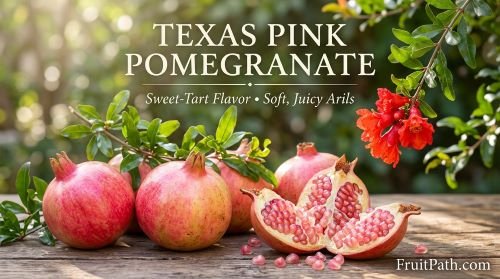
Texas Pink
This is a bright pink pomegranate with juicy arils. Gardener’s Path says the arils are soft and the taste is sweet with a little tartness. It has bright red flowers, so it works as a pretty garden plant too.
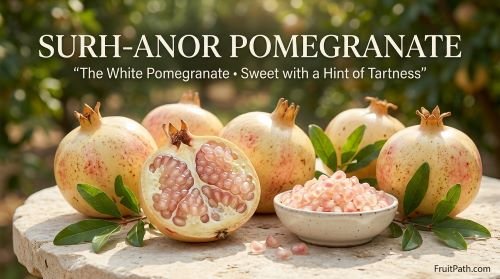
Surh-Anor (The “White” Pomegranate)
Surh-Anor has pale yellow to pinkish-red skin. Its arils are almost clear to pale pink. Gardener’s Path says it is often called a “white” pomegranate. It is sweeter than darker types with a slight tartness—more on this in the white pomegranate section below.
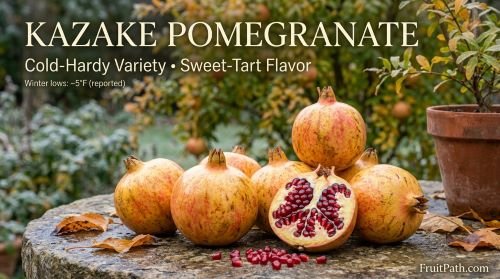
Kazake (The Cold-Hardy Pick)
Kazake has yellow-orange to light red skin and deep red arils with a sweet-tart taste. The seeds are rather hard. Gardener’s Path says it survives winter lows of −5°F, and potted plants moved indoors can be grown as far north as Zone 4.
Salavatski (Also Called Russian Red)
Salavatski is large and orange-red, with deep red, juicy arils and a hard texture, like the pomegranates in a grocery store. It tastes semi-sweet. Gardener’s Path says it has withstood 0°F in tests, which makes it one of the most cold-hardy types.

Parfianka Pomegranate Variety
Parfianka has large, ruby-red arils that are sweet and juicy. Epic Gardening says it keeps well through the winter and tops out around 12 feet, so it works in small spaces or large pots with pruning.

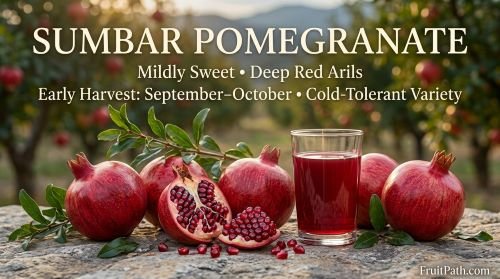
Sumbar Pomegranate Variety
Sumbar has vibrant red skin and deep red arils that keep their color when juiced. It tastes sweet but mild and ripens early, in September to October. Epic Gardening calls it cold-tolerant.
Red Silk Pomegranate Variety
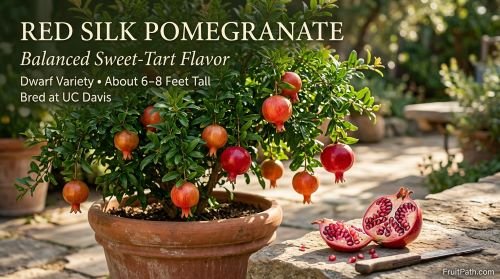
Red Silk is a dwarf type, about 6 to 8 feet tall, bred at the University of California, Davis. It makes balanced sweet-tart fruit and is a heavy producer for its size, according to Gardener’s Path.
Bhagwa (India’s Leading Variety)
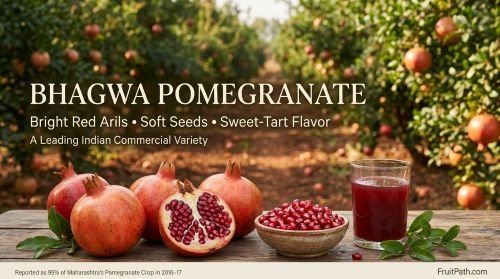
Bhagwa is the star of Indian pomegranate farming. A 2017 news article in The Better India says it has become the leading variety for both domestic and export markets. It credits Bhagwa’s bright red arils, soft seeds, and a pleasing sweet-sour balance. The article also says 95 percent of Maharashtra’s 2016–17 pomegranate crop was Bhagwa. Note that this is a news report, not a scientific study.
Kandhari
Kandhari is well known in South Asia. A study of ten pomegranate varieties in Kashmir Valley found that Kandhari had the highest total soluble solids and total sugars. It also had a thinner rind and little cracking. The researchers named Kandhari and Bedana the best performers for growing in Kashmir’s Karewa belt. A related type, Kabuli Kandhari, had the highest vitamin C.

Eversweet Pomegranate: The Sweet, Soft-Seeded Favorite:
If you want a pomegranate that is sweet and easy to eat, Eversweet pomegranate is the one to know. The University of California, Riverside article lists it among notable varieties.
What makes it special:
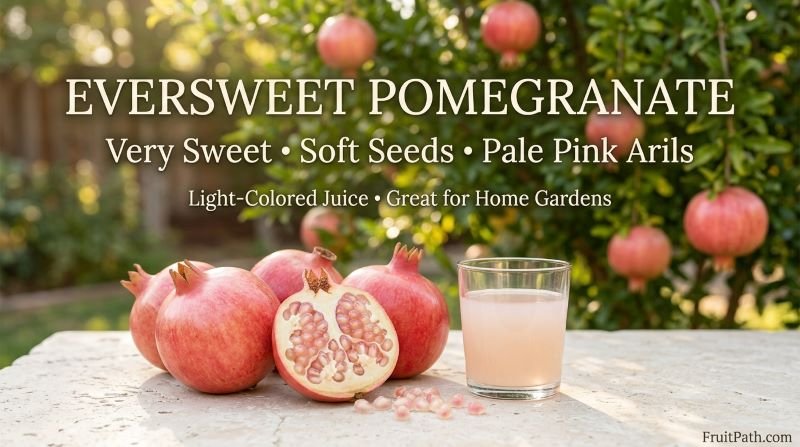
- Pale, nearly clear arils. Gardener’s Path describes them as pinkish and almost see-through, with very small seeds.
- Soft seeds. A GrowOrganic listing describes red-skinned fruit with pale arils, soft seeds, and a very sweet flavor.
- Clear juice that doesn’t stain. The same listing says the juice is clear and less likely to stain than deeply colored pomegranate juice. That is great news for your shirt.
- Sweet even when not fully ripe. Gardener’s Path says even unripe fruit tastes sweet, so it suits cooler places.
If you want to grow it:
- It grows as a shrub about 8 to 10 feet tall and can be trained as a small tree.
- It is self-fruitful, meaning one plant can make fruit alone. Bees or another variety nearby may give you more.
- It usually starts bearing in 2 to 3 years, with a bigger harvest in 3 to 5 years.
- It likes full sun and well-drained soil.
- Zones differ by source. GrowOrganic lists USDA Zones 8–10, and Epic Gardening lists 7–10. Check with a local nursery before buying.
Harvest comes in late summer through fall, with Gardener’s Path giving August to October.
White Pomegranate Varieties:
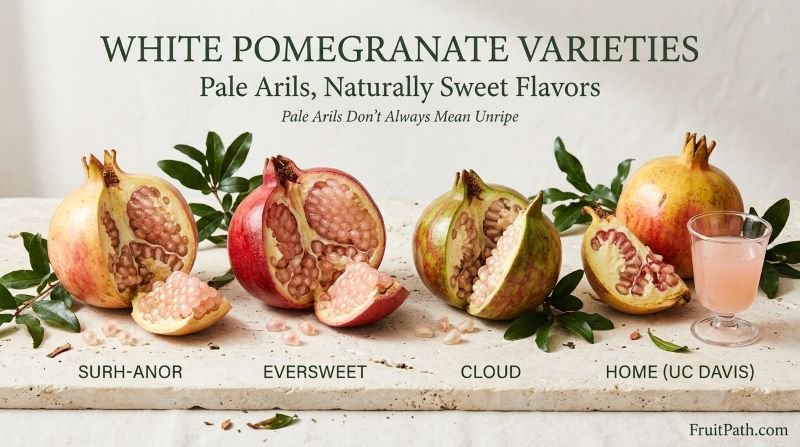
Here is a surprise: a “white pomegranate” is not usually a snow-white fruit. The word “white” most often describes pale or clear arils inside. The skin may be red, pink, or pale yellow.
Wikipedia notes that seed coat color in pomegranates ranges from white to red, so pale arils are a natural part of the family. Here are the main ones:
- Surh-Anor: Pale yellow to pinkish-red skin with clear to pale pink arils. This is the one most often called a white pomegranate.
- Eversweet: Red skin with pale, nearly clear arils.
- Cloud: A UC Davis variety. The California Rare Fruit Growers describe a medium fruit with green-red skin and white, sweet juice.
- Home (UC Davis): Variable yellow-red skin with light pink juice that is sweet and rich, with some bitterness.
Pale arils are also a lesson for shopping. Pale seeds do not always mean an unripe pomegranate. They can be the variety. If you are checking ripeness, read our guide on how to see if a pomegranate is ripe, because color alone can fool you.
Soft Seed Pomegranate Varieties:
Some people do not like the crunch of pomegranate seeds. If that sounds like you, look for soft seed pomegranate varieties. The seed inside each aril is easier to chew.
Here are varieties described as having soft or softer seeds:
- Angel Red: Soft and chewable (Epic Gardening)
- Eversweet: Soft seeds (GrowOrganic and Gardener’s Path)
- Utah Sweet: Notably softer than Wonderful (California Rare Fruit Growers)
- Fleshman: Relatively soft (California Rare Fruit Growers)
- Texas Pink: Soft arils (Gardener’s Path)
- Bhagwa: Soft seeds, according to The Better India news article
Remember: Seed hardness is partly a matter of taste, and it changes with climate and ripeness. Treat “soft” as a hint, not a rule. Also, the seeds are good for you. They are where much of the fiber comes from. See our pomegranate nutrition facts for the numbers.
Which Pomegranate Variety Is Best for You?
There is no single best variety. It depends on what you want. Here is a quick guide.
- If you want the most common, easy-to-find type: Wonderful
- Suppose you want the sweetest, mildest taste: Eversweet, Utah Sweet, or Fleshman. Many sources describe these as very sweet.
- If you want soft seeds: Angel Red or Eversweet
- If you want pale or white arils: Surh-Anor or Eversweet
- If you want a tart, rich flavor: Wonderful, or Crab, which the California Rare Fruit Growers call tart with a rich flavor
- If you want juice: Wonderful (Utah State University) or Sumbar, whose arils keep their color when juiced
- If you live where winters are cold: Salavatski or Kazake
- If you have a small space or a large pot: Red Silk or Parfianka
- If you want an early harvest: Early Wonderful, Granada, or Sumbar.

What Variety Are the Pomegranates at the Store?
Most of the time, you are buying Wonderful. It is the most common grocery-store variety, and the University of California article says it makes up over 90 percent of U.S. commercial production. Stores often do not label the variety, though.
If you want to try other types, try these tricks:
- Visit a farmers’ market. Growers often know and share the variety name.
- Ask a specialty grocer. Some stock imported types, especially in fall and winter.
- Grow your own. This is the best way to try soft-seeded and white types, because they are rare in stores.
Once you bring one home, learn how to cut a pomegranate without the mess, and how to store a pomegranate so it lasts. If you are curious about the season, see our guide to pomegranate season.
Growing Pomegranate Varieties at Home:
Pomegranates are shrubs or small trees. Wikipedia says the plant can grow between 5 and 10 meters (16 to 33 feet) tall, but many garden varieties stay much smaller, especially when kept in pots.
A few easy rules:
- Pick for your climate. Check the hardiness zone. Sources give different zones for the same variety, so ask a local nursery.
- Choose for your space. Dwarf types like Red Silk or compact types like Kazake fit small yards.
- Give it sun—most varieties like full sun and well-drained soil.
- Be patient. Many pomegranates take two to five years to give a real harvest.
We will cover this in more detail in our guide to growing a pomegranate tree.
Frequently Asked Questions About Pomegranate Varieties:
How many varieties of pomegranate are there?
As Wikipedia says, there are more than 500 named cultivars. But the same variety often goes by different names in different places, so the number of truly different types is lower. The USDA keeps around 300 varieties in its collection. Only a small number are common in stores and gardens.
What is the sweetest pomegranate variety?
There is no single winner. Several are called very sweet, including Eversweet, Utah Sweet, Fleshman, Balegal, and King. Eversweet is often named among the sweetest, and Gardener’s Path says even unripe fruit tastes sweet. Taste also depends on climate and ripeness, so try a few.
Which pomegranate has soft seeds?
Angel Red, Eversweet, Utah Sweet, Fleshman, and Texas Pink are described as having soft or softer seeds. Bhagwa is also credited with soft seeds in a news report. Soft is relative, and the same variety can feel different when grown in different places.
What is a white pomegranate?
Usually it means a variety with pale or clear arils, not a fully white fruit. Surh-Anor is the one most often called white. Eversweet also has pale, nearly clear arils. The skin of these fruits may be pale yellow, pink, or red.
What type of pomegranate is sold in stores?
Most likely Wonderful. It is the main commercial variety in the United States, making up over 90 percent of production, according to a University of California article. Stores often do not label the variety, so ask at a farmers’ market if you want to try something different.
Which pomegranate variety is best for juice?
Utah State University says Wonderful is better for juicing than for eating fresh. Gardener’s Path calls Tom’s Red ideal for juicing. Sumbar’s deep red arils keep their color when juiced. Pick based on whether you want tart, sweet, or deep color.
Final Thoughts: Try More Than One Pomegranate Variety:
There are hundreds of pomegranate varieties, and each has its own look and taste. Wonderful is the one most of us know. But there is a whole world beyond it, from sweet, soft-seeded Eversweet to pale Surh-Anor, cold-hardy Kazake, and India’s popular Bhagwa.
Next time you see a pomegranate at a farmers’ market or in a friend’s garden, ask what kind it is. You might find a new favorite. And if you want to grow your own, pick the type that fits your climate and your taste.
Want to learn more about this fruit? Read our full pomegranate fruit guide for nutrition, benefits, and ways to enjoy it.