
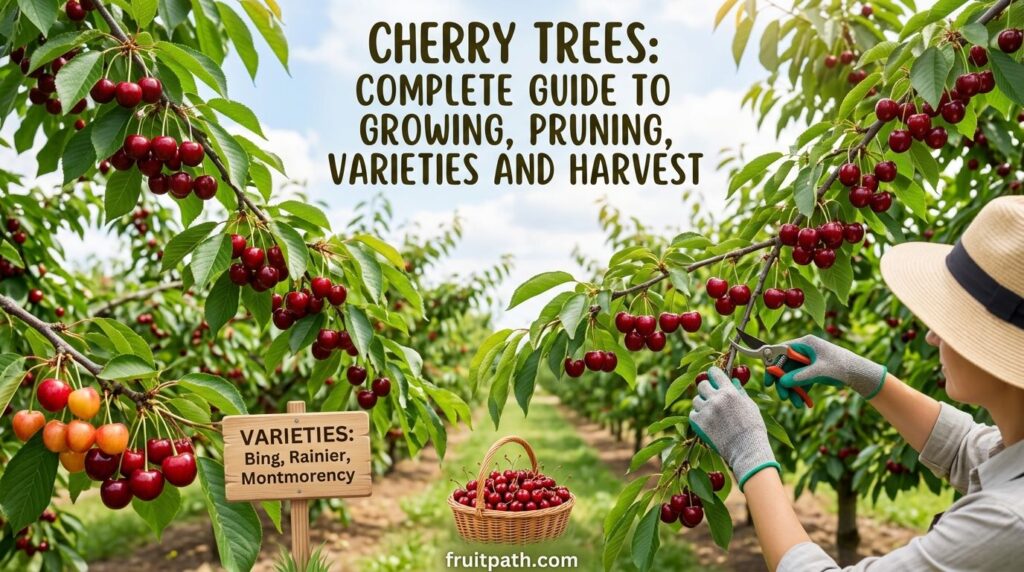
Cherry trees are one of the most rewarding fruit trees you can grow in your backyard. Imagine stepping outside on a warm summer day, reaching up, and popping a handful of sweet, juicy cherries straight from the branch. This complete guide makes growing cherry trees simple and fun, even if you are a total beginner. We will cover everything from picking the right cherry tree varieties to pruning cherry trees the smart way, when to harvest, and how to fix common problems.
Whether you dream of fresh, sweet cherries for snacks or tart ones for pies, this guide will help you succeed. You will learn the full cherry tree lifecycle, the best spots to plant, step-by-step growing tips, and pro secrets for bigger yields. By the end, you will feel confident to plant, care for, and enjoy your own cherry trees year after year.
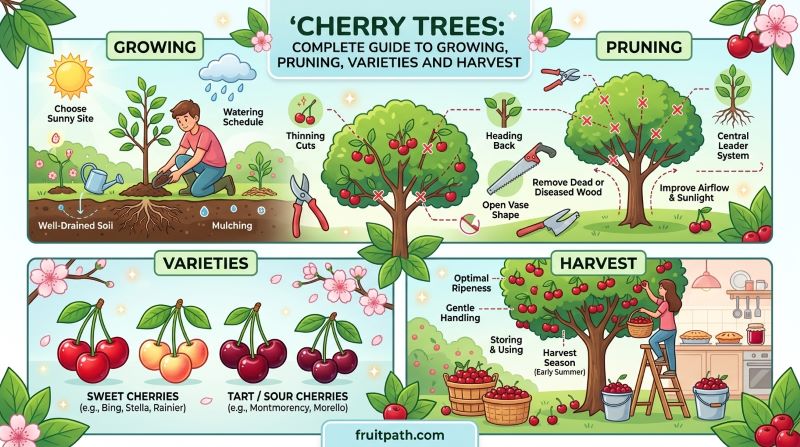
Our one reader from California shared its nebiour story that he planted a beautiful cherry tree five years ago. In spring, it exploded with gorgeous pink and white cherry blossom flowers that made the whole street stop and stare. But when summer came… almost no fruit. Just a few tiny, sad cherries. He was heartbroken. That “flowers but no fruit” problem is super common, and it happens to almost every new grower. The good news? This guide fixes that exact issue with easy steps, real stories, and practical advice that works.
Ready to turn your yard into a cherry paradise? Let’s dive in and grow some delicious fruit together!
- First, we have to know about Cherry Trees:
- Types of Cherry Trees:
- Cherry Tree Lifecycle (Bloom to Fruit):
- Where Do Cherry Trees Grow Best?
- How to Grow Cherry Trees (Step-by-Step):
- Why and How to Prune Cherry Trees:
- Common Cherry Tree Problems & Solutions:
- Popular Cherry Varieties (Taste & Uses):
- When Are Cherries in Season?
- Harvesting Cherries (Simple Guide)
- Health Benefits of Cherries:
- Tools & Products You May Consider:
- Beginner Mistakes to Avoid (Simple Guide)
- Pro Tips for Maximum Cherry Yield:
- FAQ Section:
- Last but not least:
First, we have to know about Cherry Trees:
Cherry trees belong to the Prunus family, which is the same group as peaches, plums, and apricots. They are deciduous trees, meaning they lose their leaves in winter and wake up fresh every spring. Most grow 15 to 30 feet tall, but dwarf varieties stay small enough for tiny gardens or even big pots.
Why are cherry trees so popular worldwide? Definitely, the cherry fruit tastes delicious, with a sweet or tangy taste, which is perfect for eating fresh, baking, or making jam. Second, the spring cherry blossom show is breathtaking. People travel thousands of miles just to see those fluffy pink clouds of flowers. Third, cherry trees are tough once established and can produce fruit for 20, 30, or even 50 years with the right care.
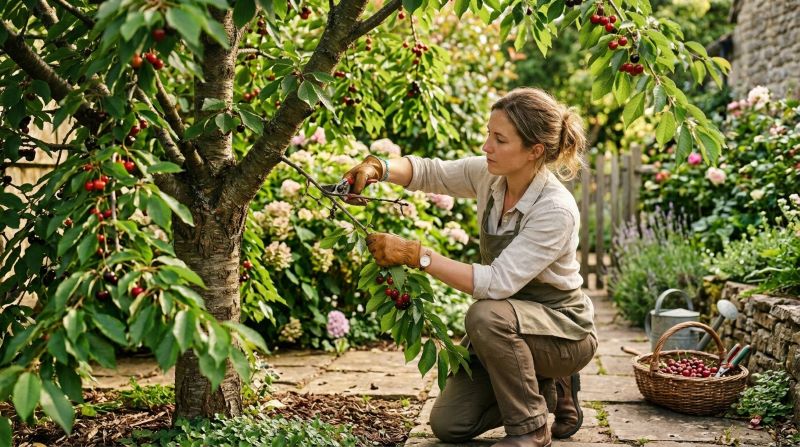
But you know what, here is the truth: most beginner gardeners learn the hard way: beautiful flowers do not always mean a big harvest. That is exactly what happened to my neighbor. His tree bloomed like crazy but gave almost nothing to eat. Why? Poor pollination, wrong variety, or no pruning. This guide teaches you how to avoid that disappointment and get baskets full of cherries instead.
In the pages ahead, you will discover the different cherry tree varieties, the full cherry blossom fruiting cycle, exactly how to grow cherry trees step by step, when and how to prune cherry trees, common problems and fixes, the best time to harvest, how to store your crop, and even the amazing health perks of eating cherries. Plus, we will recommend the exact tools and products that make everything easier, so you can buy with total confidence.
Let’s start by meeting the different types of cherry trees so you can choose the perfect one for your yard.
Types of Cherry Trees:
Not all cherry tree varieties are the same. Picking the right one is like choosing the perfect pair of shoes; it has to fit your climate, space, and what you want to eat. Here is a simple breakdown anyone can understand.
Delightful Cherry Trees:
Sweet cherry trees produce the large, juicy, dark cherries you purchase for eating. They have a solid bite and are quite sweet, just like candy. Bing verity is a well-known example, but we will discuss popular choices like Chelan, Black Pearl, and Coral Champagne later. Sweet cherries prefer colder winters but detest extremely hot summers, and they typically require a pollinator tree.
Sour Cherry Trees for Tart flavor lovers:
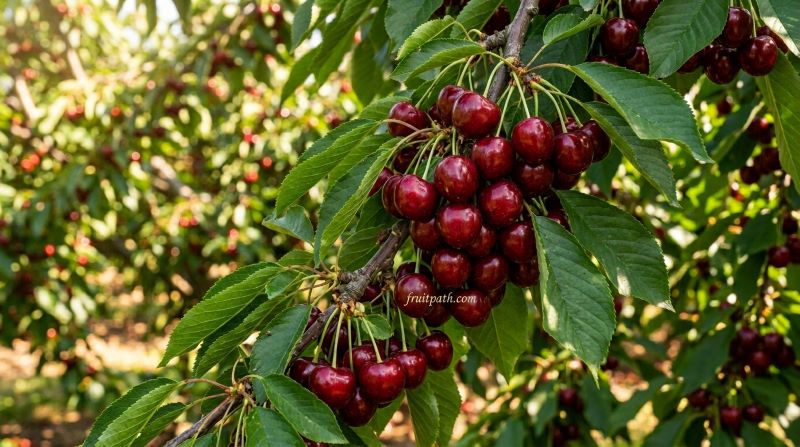
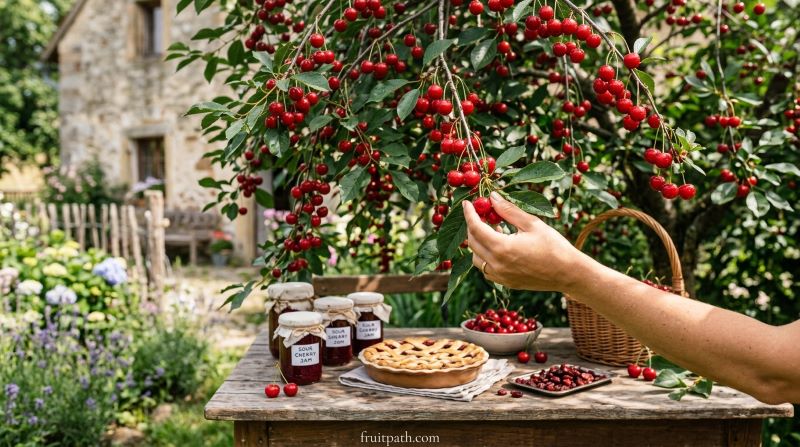
Sour cherry trees (also called tart cherries) give smaller, bright red fruit that is too tangy to eat raw, but you know what its realy perfect for? Cooking purposes. Just think cherry pie, jam, juice, or dried snacks. The classic Montmorency variety is the superstar here. Sour cherries are easier for beginners because many are self-pollinating (one tree is enough), and they handle colder weather better. Home cooks love them because one tree can fill your freezer with pie filling for the whole year.
Ornamental Cherry Trees:
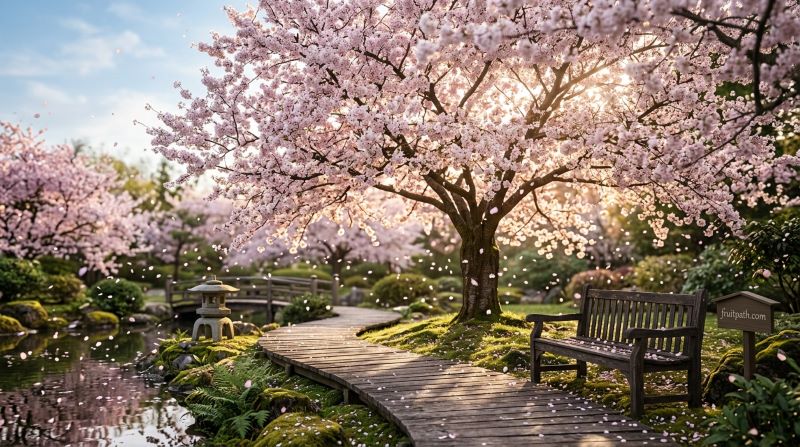
These are the famous cherry blossom trees you see in parks and photos from Japan. They put on a stunning flower show every spring, but most ornamental cherry trees produce little or no edible fruit. The cherries, if any, are tiny and not worth picking. Plant them if you want beauty and shade, not baskets of fruit. Do cherry blossom trees produce fruit? Usually just a few small ones, but they are not enough to eat.
Tropical Cherry Trees:
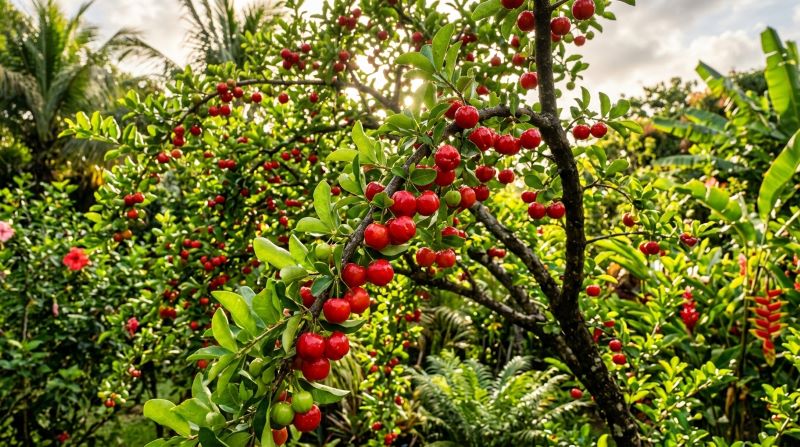
Yes, you can grow cherries in hot places! Tropical cherry trees such as the Barbados cherry (also called acerola) thrive in warm, humid climates where regular cherries would struggle. They produce small, bright red, vitamin-packed fruit that tastes like a mix of cherry and apple. If you live in a hot area like Southern California, these are your best bet. They grow fast, stay smaller, and give fruit multiple times a year.
No matter which type you choose, understanding the cherry tree lifecycle helps you give the right care at the right time.
Cherry Tree Lifecycle (Bloom to Fruit):
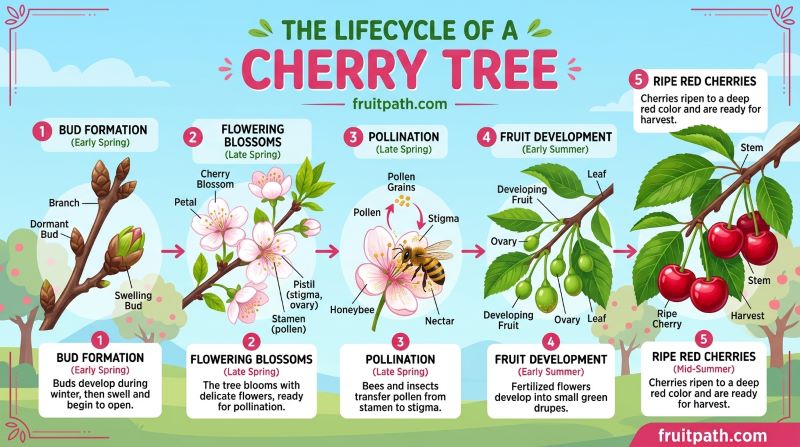
Every cherry tree follows the same exciting journey from bare branches to ripe fruit. Knowing the cherry blossom fruiting stages takes the guesswork out of caring for your tree.
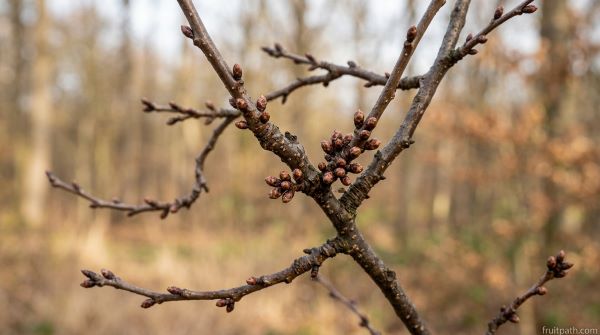
Bud Formation in Cherry Trees:
In late summer and fall, the tree quietly forms flower and leaf buds for next year. These tiny bumps stay protected through winter.
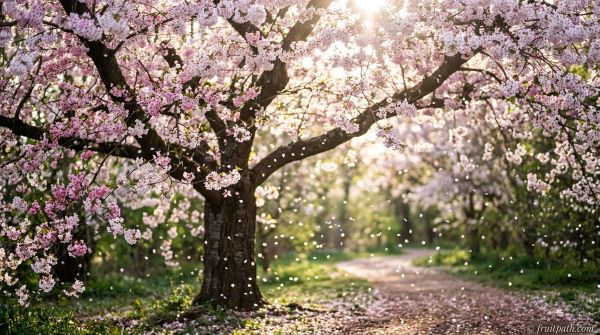
Flowering Stage of Cherry Tree:
Spring warmth wakes the buds. Suddenly, beautiful white or pink cherry blossom flowers cover the branches. Flowering usually happens in March to May, depending on your climate.
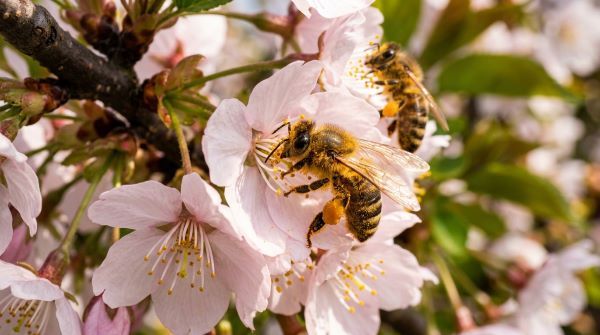
Pollination Process:
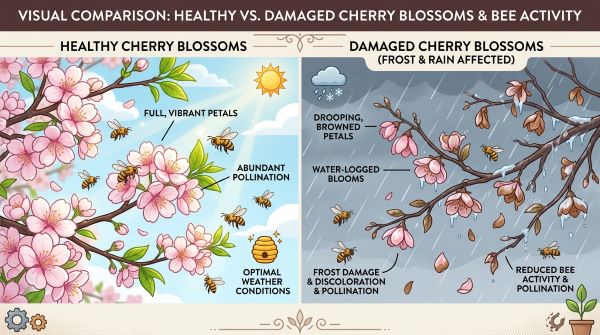
Bees and other insects do the heavy lifting. They carry pollen from one flower to another. Some trees need a second variety nearby (pollinator partner); others are self-fertile. Without good pollination, you get flowers but no cherries.
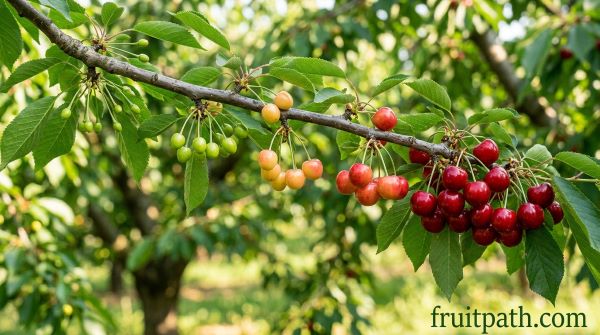
Fruit Development in Cherry Trees:
After pollination, petals fall, and tiny green cherries appear. Over 60 to 70 days, the fruit goes through three growth spurts: cells multiply, the pit hardens, and the cherry swells with sugar and turns red. That is when the magic happens!
Why Flowers Don’t Become Fruit:
Consider it the number one question I hear. Common reasons include:
- Bad weather (late frost kills flowers or rain ruins pollination)
- Not enough bees.
- Only one variety was planted (no pollen partner).
- Poor pruning that blocks sunlight.
The fix? Plant the right cherry tree varieties, add a pollinator tree, and follow our pruning steps below.
Where Do Cherry Trees Grow Best?
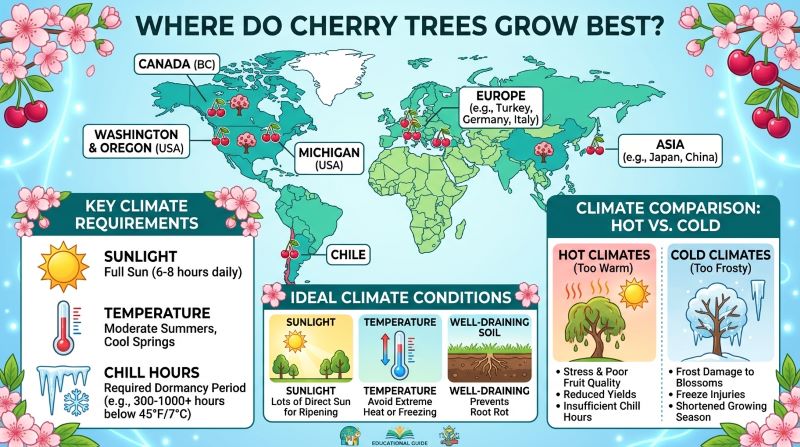
Cherry growing regions prove that location matters a lot. Pick the wrong spot and your tree struggles.
Ideal Climate Conditions:
Cherry trees love temperate weather with four clear seasons. They need 800 to 1,500 “chill hours” (cold time below 45°F/7°C) to wake up properly in spring. Full sunlight (at least 6-8 hours daily) and well-drained soil keep them happy. Temperatures between 60 and 80°F in summer are perfect. Too much heat or humidity without air flow invites diseases.
Top Cherry Growing Regions:
- Oregon and Washington (USA): The sweet cherry capital. Cool nights and warm days create huge, sweet fruit.
- Michigan (USA): Famous for both sweet and sour cherries. Lake Michigan keeps temperatures steady.
- Chile: Southern hemisphere superstar. When it is winter up north, Chile ships fresh cherries to stores worldwide. The central valleys have the perfect Mediterranean climate.
Why Climate Matters:
Mismatched climate means weak trees, small fruit, or no harvest. In hot places, choose low-chill or tropical varieties. In cold spots, pick hardy sour types.
Learn more about matching your yard to the right region in our article on cherry-growing regions.
How to Grow Cherry Trees (Step-by-Step):
Growing cherry trees is easier than most people think. Follow these steps and your tree will thrive.
1 – Choose the Right Location:
Choosing the right place is the first and most important step if you want a healthy tree and lots of fruit.
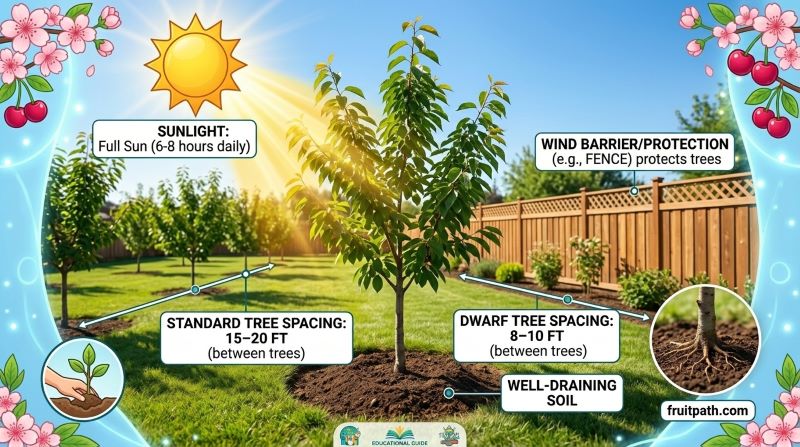
Your tree needs full sunlight to grow strong and produce sweet fruit. Try to pick a spot that gets at least 6 to 8 hours of direct sunlight every day. More sunlight means better growth and more fruit.
Also, protect your tree from strong winds. Heavy winds can break branches, damage flowers, and reduce fruit production. If possible, plant your tree near a fence, wall, or other trees that can act as a wind barrier.
Make sure to give your tree enough space to grow. Trees need room for their roots and branches to spread.
- Standard trees: leave about 15 to 20 feet apart.
- Dwarf trees: leave about 8 to 10 feet apart.
If trees are planted too close, they will compete for sunlight, water, and nutrients. This can lead to weak growth and fewer fruits.
Tip: Always check the mature size of your tree before planting so you can plan the spacing correctly.
2 – Soil Preparation:
Good soil is the secret to a strong and productive tree. Before planting, it’s important to prepare your soil in the right way. Start by checking your soil’s pH level. Most fruit trees grow best in slightly acidic to neutral soil, with a pH between 6.0 and 7.0. You can use a simple soil testing kit to find out your soil pH.
Next, improve your soil by adding organic matter like compost or well-rotted manure. This helps the soil become rich in nutrients and improves its structure. Another important thing is drainage. Your soil should not hold too much water. If water stays around the roots for too long, it can cause root rot and kill the tree.
- If your soil is too hard or clay-like, mix in sand and compost.
- If water collects easily, consider making a raised bed.
Raised beds are a great solution because they allow water to drain properly and give roots more space to grow.
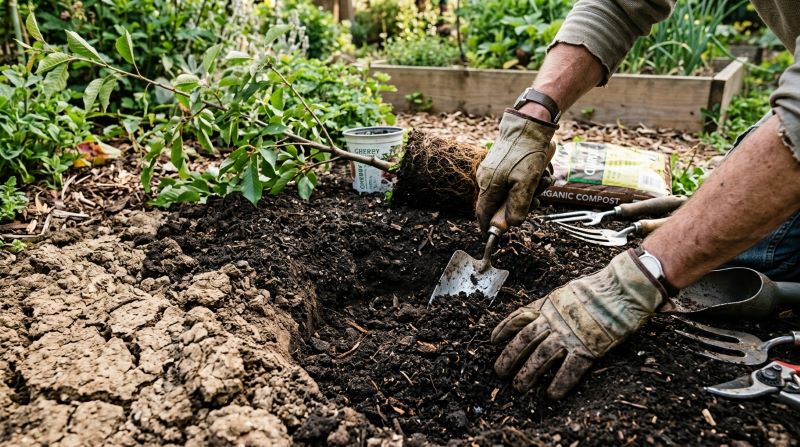
Tip: Loose, well-drained soil helps roots grow faster and stronger, which leads to a healthier tree and better fruit production.
3 – Planting the Cherry Tree:
Planting your tree correctly helps it grow faster and stay healthy for years.
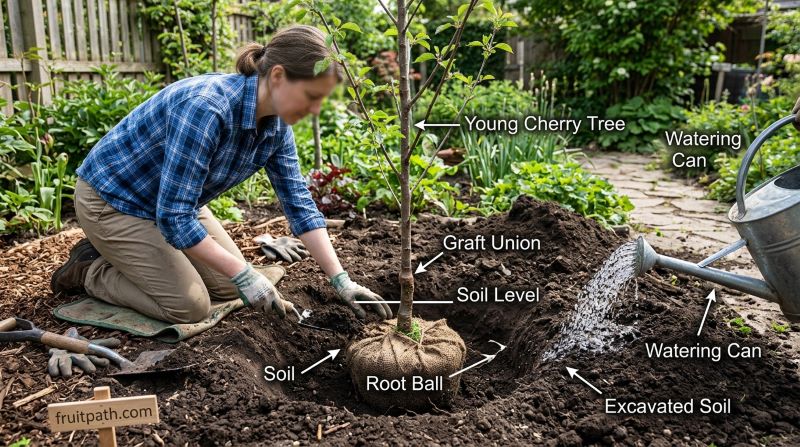
The best time to plant is early spring or fall when the weather is mild. This gives the roots time to settle before extreme heat or cold. Start by digging a hole that is twice as wide as the root ball but not deeper than it. A wide hole helps roots spread easily.
Place the tree in the hole carefully. Make sure the graft union (the small bump on the trunk) sits about 2 inches above the soil level. This is very important for proper growth. Fill the hole with soil, press it gently, and remove any air pockets. Then water the tree deeply right after planting to help the roots settle.
4 – Watering Cherry Trees:
Watering is key, especially when your tree is still young.
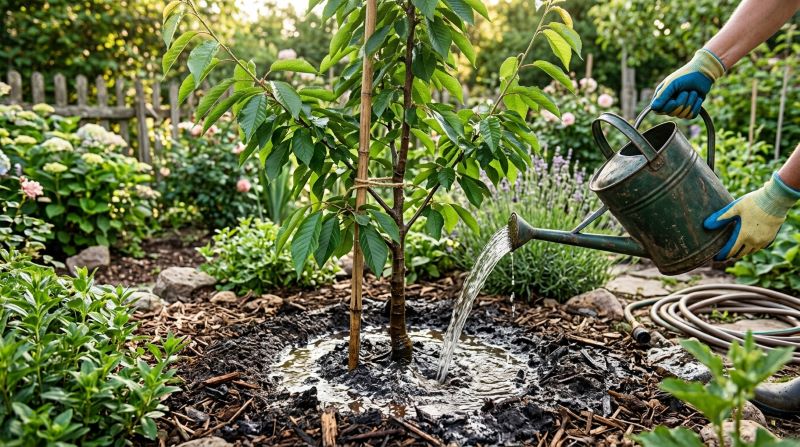
Young cherry trees need about 1 to 2 inches of water every week. Instead of watering a little every day, it’s better to water deeply but less often. This helps roots grow deeper and stronger. Always check the soil before watering. If the top 2–3 inches of soil feel dry, it’s time to water.
Adding mulch (like wood chips or straw) around the base of the tree helps keep moisture in the soil and protects the roots from heat. Just keep the mulch a few inches away from the trunk.
5 – Fertilizing Trees:
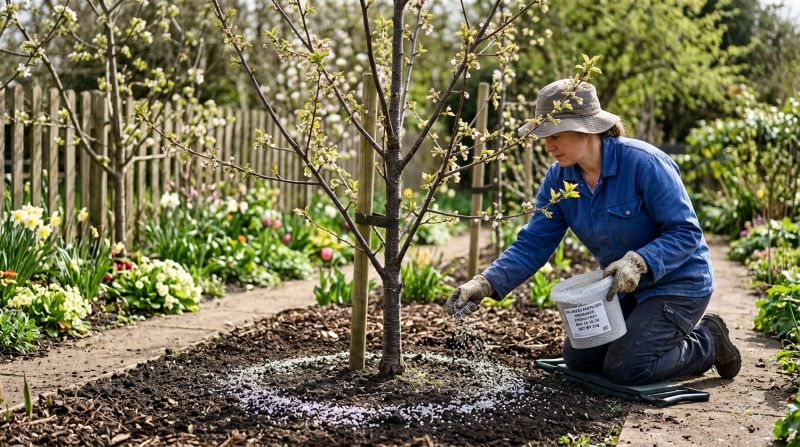
Fertilizer gives your tree the nutrients it needs to grow and produce fruit. Use a balanced fruit tree fertilizer once a year in early spring, just before new growth starts. This supports healthy leaves, flowers, and fruit.
Be careful not to over-fertilize. Too much fertilizer, especially nitrogen, can cause the tree to grow lots of leaves but very little fruit. Always follow the instructions on the fertilizer package for the best results.
Beginner Tips for Faster Growth:
- Stake young trees for the first year.
- Prune the first two years lightly to build a strong shape.
- Watch for weeds—they steal water and food.
These steps set you up for success from day one.
Why and How to Prune Cherry Trees:
Pruning is the secret sauce for healthy, productive trees. Our full how to prune cherry trees guide has every detail, but here is the quick version.
Why Pruning Is Important:
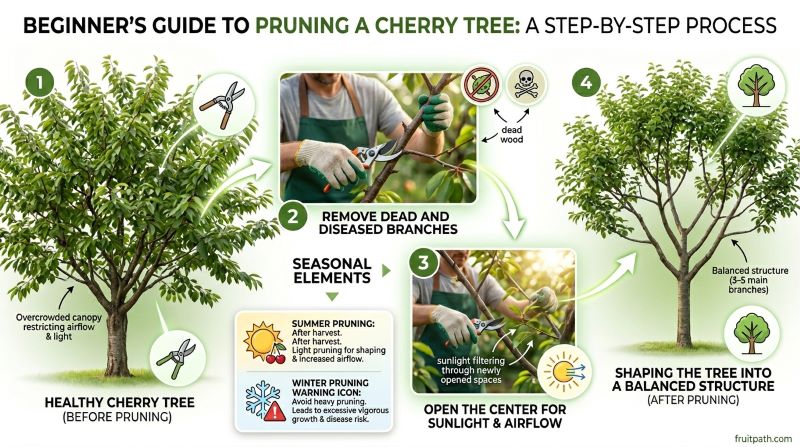
Pruning lets sunlight and air reach every branch. It means bigger fruit, fewer diseases, and an easy-to-pick tree. Without it, you get a tangled mess with tiny cherries.
Best Time to Prune:
Summer (right after harvest) is safest for sweet cherries. Late winter works for sour cherries in dry climates. Never prune in wet, cold weather.
Basic Pruning Steps:
- Remove dead, damaged, or diseased branches.
- Open the center for better airflow and light.
- Shape the tree, keep 3-5 strong main branches.
Follow our complete guide for pictures and pro tips that boost your harvest dramatically.
Common Cherry Tree Problems & Solutions:
Even the best trees hit bumps. Here is how to fix the big ones.
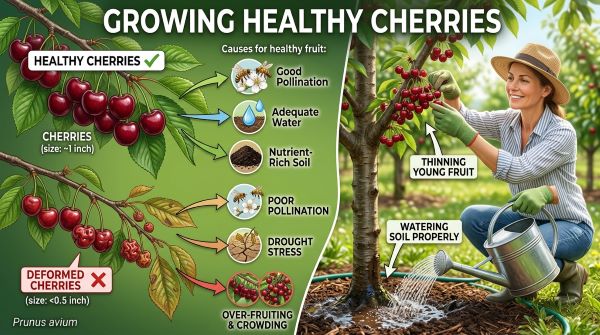
Deformed Cherries:
If your cherries look small, uneven, or misshapen, don’t worry—this is a common problem and usually easy to fix.
The main causes are:
- Poor pollination – Not enough bees or pollen means fruit doesn’t develop properly
- Lack of water (drought stress) – Dry soil can stop fruit from growing evenly
- Too many fruits on the tree – The tree cannot support all of them, so some grow poorly
To fix this problem, start by thinning the fruit early in the season. Remove some small fruits so the remaining ones have more space and nutrients to grow bigger and healthier.
Also, make sure your tree gets consistent watering, especially during fruit development. Keep the soil moist but not waterlogged.
Pests and Diseases in Cherry Trees:
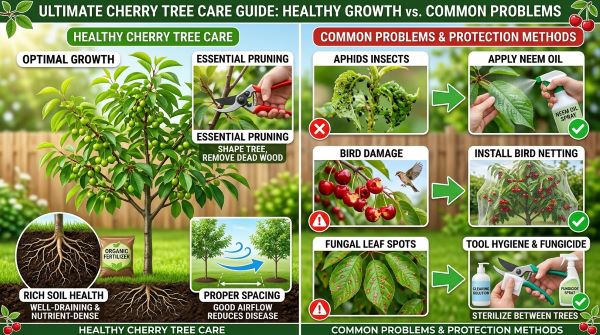
Cherry trees can sometimes face problems from pests and diseases, but with a little care, you can keep them healthy.
Common issues include:
- Aphids – Small insects that suck sap from leaves and weaken the tree.
- Birds – They love eating ripe cherries before you can harvest them.
- Fungal diseases – These can cause spots on leaves and reduce tree health.
To protect your tree:
- Always clean your tools after pruning to stop diseases from spreading
- Use neem oil spray to control insects like aphids naturally
- Make sure your tree has good airflow by not planting too close and pruning regularly
- Cover your tree with bird netting when the fruits start to ripen.
Poor Fruit Production: Why It Happens:
If your cherry tree is not producing many fruits, there are usually a few simple reasons behind it.
The most common causes are:
- No pollinator nearby – Some cherry trees need another tree to produce fruit.
- Wrong or no pruning – This can reduce flower and fruit growth.
- Not enough sunlight – Trees need full sun to produce good-quality fruit.
To improve fruit production:
- Plant a second compatible cherry tree for better pollination.
- Prune your tree every year to keep it healthy and productive.
- Make sure your tree gets 6–8 hours of direct sunlight daily.
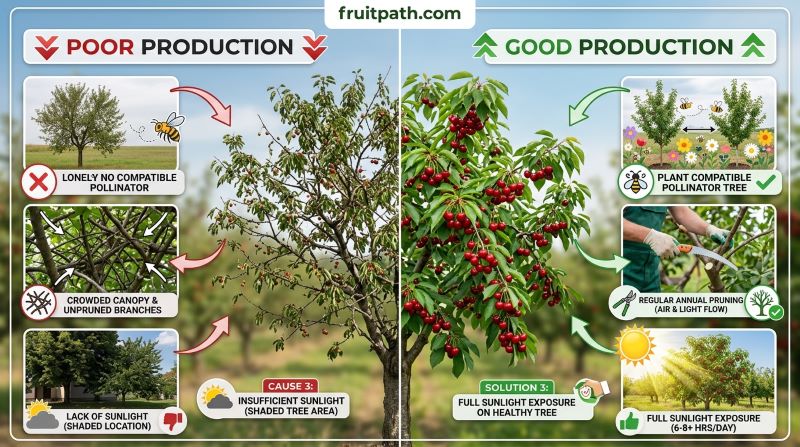
👉 Tip: More sunlight and proper care lead to more flowers and more cherries!
Popular Cherry Varieties (Taste & Uses):
Choosing the right cherry tree varieties is one of the most important decisions you will make. The wrong choice can mean beautiful flowers but little fruit, while the right ones can give you heavy crops of delicious cherries for decades. Here is a clear, practical guide to the best sweet, sour, and special varieties for home gardeners.
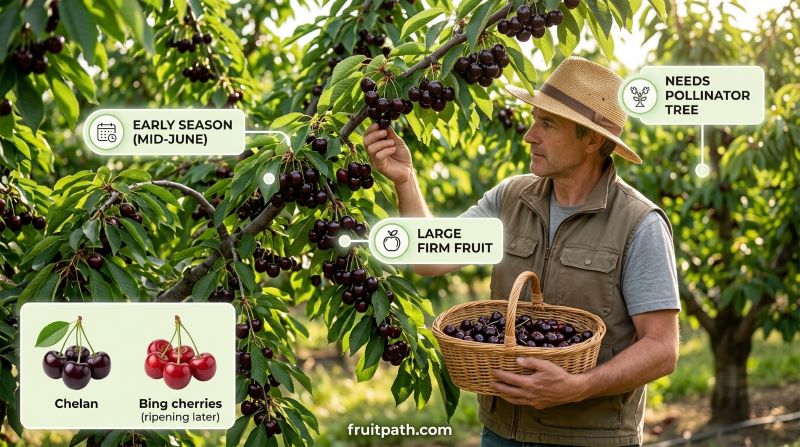
Chelan Cherry:
Chelan is a superstar early-season sweet cherry. It ripens 10–12 days before the famous Bing variety, usually in mid-June in most areas. The fruit is large, dark red to almost black, very firm, and has excellent sweet flavor with a nice balance of sugar.
Best uses: Fresh eating right off the tree, in fruit salads, or as a premium snack. Because it is so firm and stores well, it is also great for shipping or gifting.
Pros: Early harvest, crack-resistant compared to many others, and productive.
Con: Needs a compatible pollinator tree, so it cannot produce fruit on its own.
Pollination: Needs a partner (good with Bing, Lapins, or Sweetheart).
If you want the first sweet cherries of the season, plant Chelan; it often feels like a reward after waiting all winter!
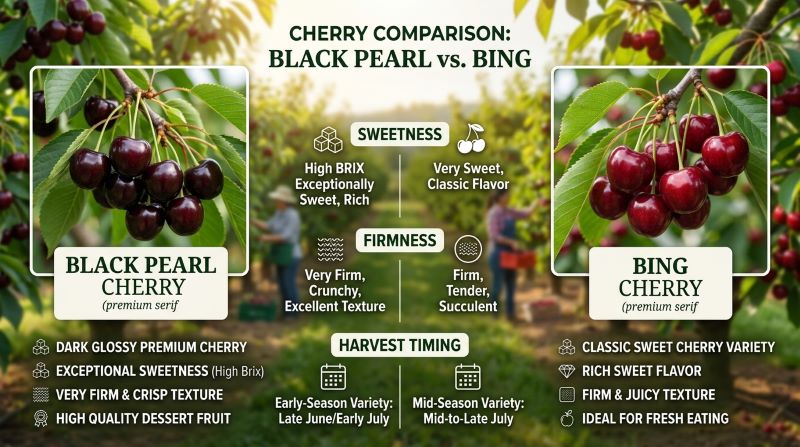
Black Pearl Cherry:
Black Pearl is a fantastic mid-early sweet cherry developed for home and small orchards. It produces large, glossy, dark cherries with rich, sweet flavor and excellent firmness. Many gardeners say it has one of the best eating qualities among modern varieties.
Best uses: Straight from the tree, in desserts, or dried into chewy snacks.
Pros: Great taste, good disease resistance, reliable producer.
Con: Needs a compatible pollinator and can crack in heavy rain, which may reduce fruit quality.
Pollination: Needs a pollinator like Chelan or Bing cherry varieties.
This variety is perfect if you want big, juicy, restaurant-quality cherries in your backyard.
Coral Champagne Cherry:
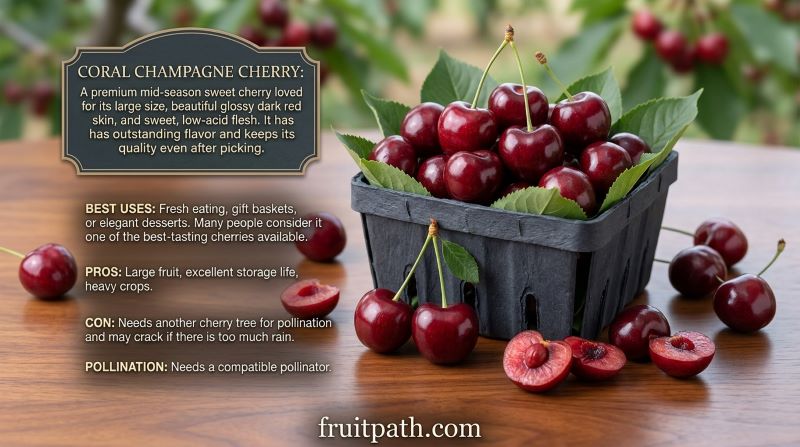
Coral Champagne is a premium mid-season sweet cherry loved for its large size, beautiful glossy dark red skin, and sweet, low-acid flesh. It has outstanding flavor and keeps its quality even after picking.
Best uses: Fresh eating, gift baskets, or elegant desserts. Many people consider it one of the best-tasting cherries available.
Pros: Large fruit, excellent storage life, heavy crops.
Con: Needs another cherry tree for pollination and may crack if there is too much rain.
Pollination: Needs a compatible pollinator.
If you want cherries that look and taste like they came from a fancy market, Coral Champagne is a fantastic choice.
Bing Cherry:
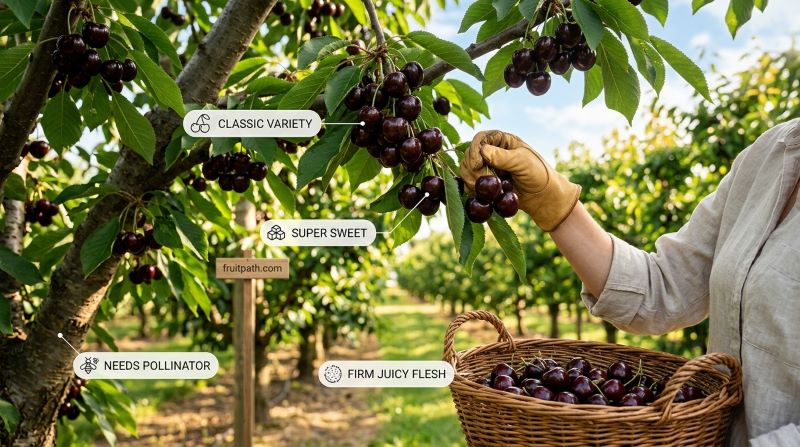
No list of cherry tree varieties is complete without the classic Bing because the Bing cherry is the most famous sweet cherry in the world. The Bing cherry is large, heart-shaped, deep mahogany to black, with firm, juicy, super-sweet flesh.
Best uses: Fresh eating, canning, baking, and freezing.
Pros: Excellent flavor, great for shipping.
Cons: Susceptible to rain cracking in wet climates and needs a pollinator.
Bing is still a top performer for many home gardeners and a reliable benchmark for comparing other varieties.
Rainier Cherry:
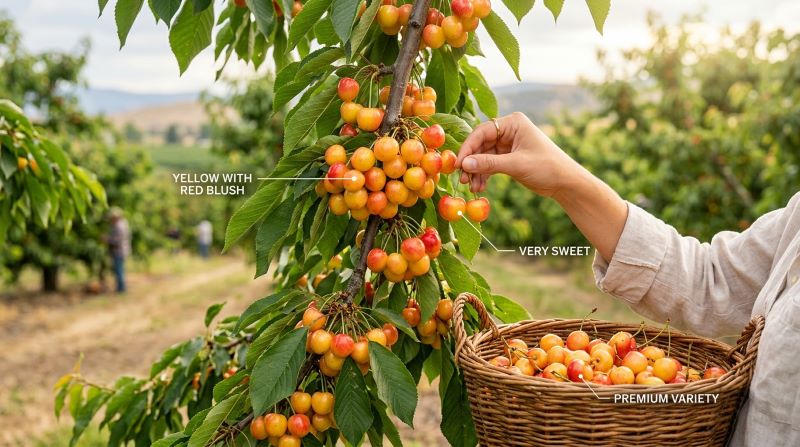
Rainier is the beautiful “blush” cherry everyone recognizes; it has bright yellow skin with a red blush on top. The flesh is clear to light yellow, crisp, and exceptionally sweet with a delicate flavor.
Best uses: Fresh eating (they feel like candy), fruit platters, and salads.
Pros: Unique appearance, very sweet, premium market price.
Cons: More sensitive to rain cracking, and birds love them.
Plant Rainier if you want something special and different from the usual dark cherries.
Montmorency Sour Cherry:
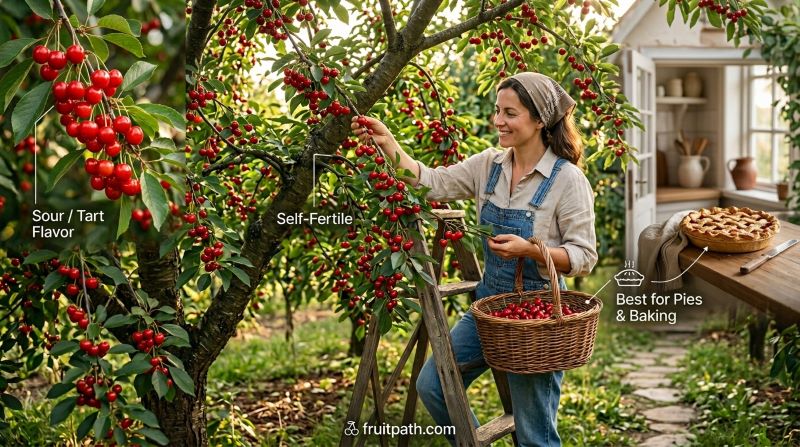
The king of sour cherries! Montmorency is the classic cherry for pie. Bright red, juicy, and nicely tart. It is self-fertile, so one tree is enough.
Best uses: Cherry pies, jams, sauces, juice, and baking. Also excellent when dried or frozen.
Pros: Very productive, cold-hardy, easy for beginners.
Con: The fruit is quite tart, so it is not ideal for eating fresh without sugar.
Many home cooks say homemade Montmorency cherry pie tastes far better than anything from a store.
Other Excellent Varieties Worth Considering
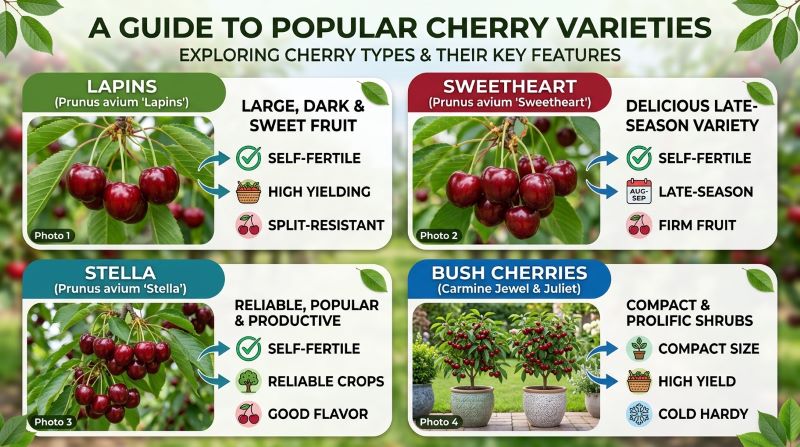
- Lapins: Self-fertile sweet cherry, large, dark, sweet, and productive. Great for small yards.
- Sweetheart: Late-season, self-fertile, sweet, and firm. Excellent for extending your harvest.
- Stella: Another reliable self-fertile sweet cherry with dark fruit.
- Carmine Jewel or Juliet (Bush/Dwarf sour cherries): Perfect for small spaces or containers. Sweet-tart flavor and heavy producers.
How to Choose the Best Variety for Your Garden:
Here is a quick checklist to help you decide:
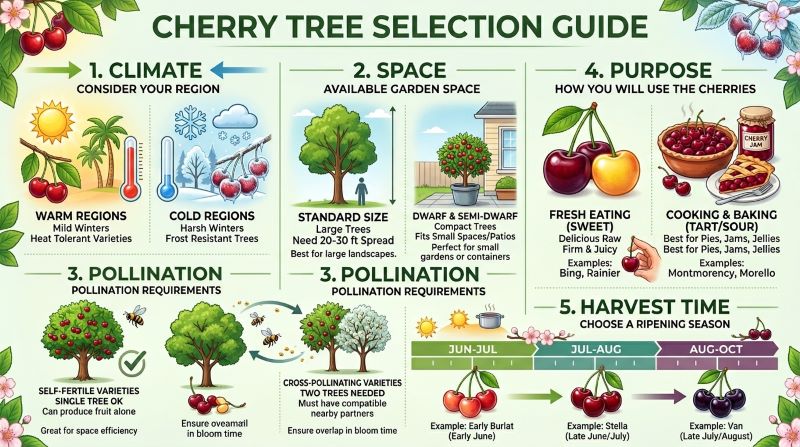
- Climate: Choose low-chill varieties (like Minnie Royal or Royal Lee) if you live in a warm area with mild winters. Pick cold-hardy ones like Montmorency for colder zones.
- Space: Dwarf or bush types for patios and small yards.
- Pollination: Self-fertile varieties (Lapins, Stella, Montmorency) are easiest for beginners. Others need at least one compatible partner tree nearby.
- Purpose: Sweet for fresh eating, sour for cooking and preserving.
- Harvest time: Mix early, mid, and late varieties so you can enjoy cherries for many weeks instead of just a few days.
Local nurseries or local government extension services(USDA National Agricultural Library (NAL)) can tell you which varieties perform best in your exact area. Many gardeners start with 2–3 different cherry tree varieties to ensure good pollination and a longer picking season.
With the right choices, your trees will reward you with beautiful spring blossoms and delicious fruit every summer. Which variety excites you most? Many people begin with a Bing or Montmorency and then add something special like Rainier or Chelan the next year.
When Are Cherries in Season?
Knowing when cherries are in season helps you plan picking and buying.
Cherry Season by Region:
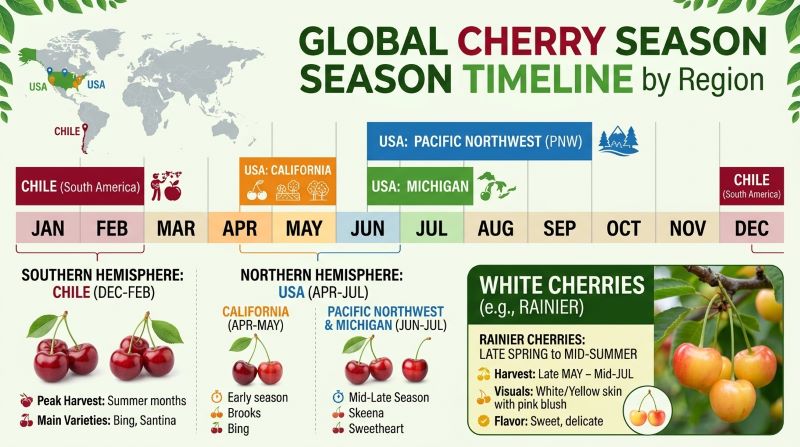
- USA: California starts mid-April, the Pacific Northwest peaks in June-July, and Michigan has a short, sweet burst in July.
- Chile: December to February—perfect off-season supply for northern countries.
White Cherry Season:
White cherries usually come in late spring to midsummer. They include light-colored or pink types like Rainier cherries. These cherries are sweet, juicy, and very popular in the USA. They follow the same growing season as other sweet cherries. You can enjoy them fresh when they are fully ripe in summer.
Michigan Cherry Season:
Michigan cherry season is short but very famous. It usually happens in June and July each year. Both sweet and tart cherries are harvested during this time. The season is busy because farmers pick fresh, ripe cherries quickly.
It is one of the best cherry-growing regions in the USA.
Harvesting Cherries (Simple Guide)
Harvesting your own cherries is one of the most rewarding moments in gardening. After months of waiting, watching blossoms turn into tiny green fruits and then plump red jewels, it is finally time to pick! Doing it right means you get sweeter, fresher, and longer-lasting cherries. Here is your complete, easy-to-follow guide to cherry harvest tips.
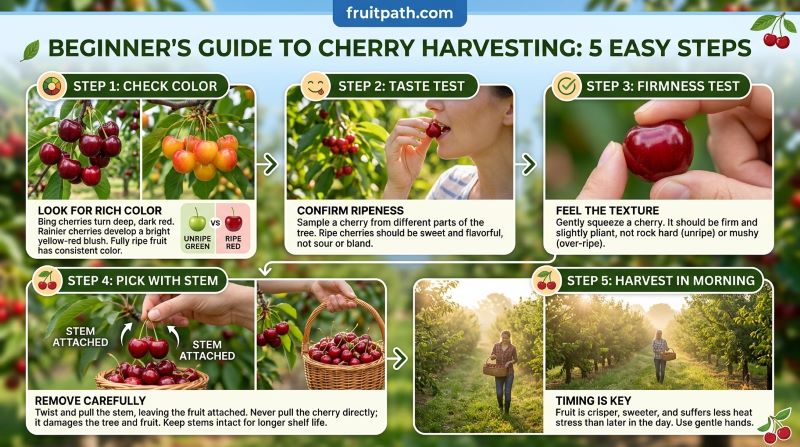
When to Harvest Cherries:
Timing is everything. Cherries do not ripen after you pick them, so you must wait until they are fully ripe.
- Sweet cherries: Pick when they are deep red (or yellow-red for varieties like Rainier), slightly soft when gently squeezed, and taste sweet. If they still taste tart, leave them a few more days.
- Sour (tart) cherries: Harvest when they turn bright red and feel soft. They should taste pleasantly tangy, not green or bitter.
- Best time of day: Always harvest in the early morning when the fruit is cool. So harvesting in the morning keeps the cherries firm and helps them last longer in your fridge.
Look at the whole cluster. Usually, cherries on the same branch ripen at the same time, but check each one. A good rule: if more than half the cherries in a cluster look ready, it is harvest time.
Pro tip: Taste-test a few cherries every couple of days once they start changing color. Your tongue is the best judge!
How to Pick Cherries the Right Way:
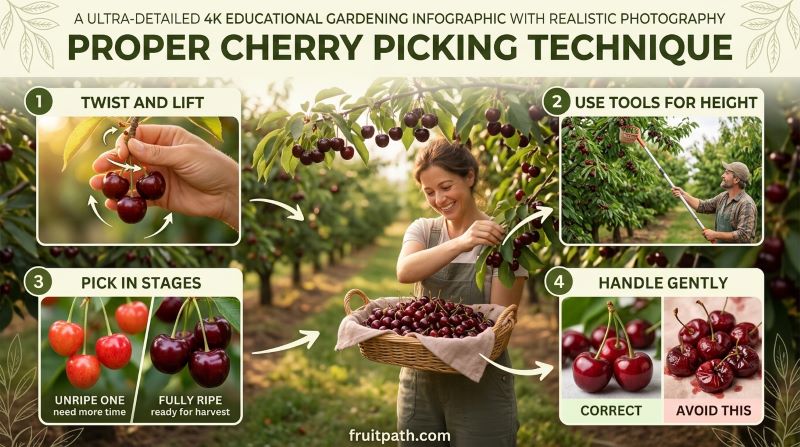
- Use the right technique: Never yank or pull hard. Hold the cherry gently between your fingers and give it a slight twist and upward pull. It should come off easily with the stem attached. Keeping the stem on helps the cherry stay fresh longer.
- Use tools for tall trees: For high branches, use a cherry picker tool (a long pole with a soft basket) or a sturdy step ladder. Never climb the tree because cherry branches are brittle and can break easily.
- Harvest in stages: Pick only the ripe ones and come back in 2 to 3 days for the rest. This way, you get the best quality from every branch.
- Handle with care: Place picked cherries gently into a shallow basket or bucket lined with a soft cloth. Do not pile them too deep; the ones at the bottom can get crushed.
I still remember the first time I harvested from my own sweet cherry tree. The cherries were so dark and shiny they looked like jewels. I ate at least ten straight from the tree before I even filled my basket. The warm, sweet juice running down my chin was pure joy. That moment made all the pruning and watering worth it!
Common Harvest Mistakes to Avoid:
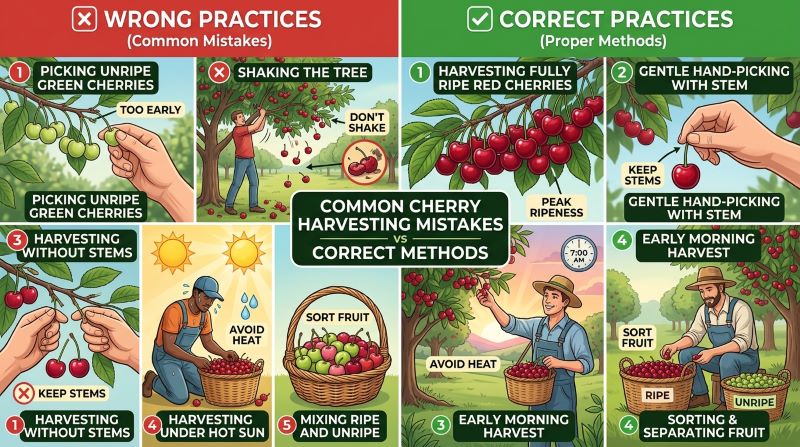
- Picking too early: Cherries picked before they are fully ripe stay sour and never sweeten. Be patient!
- Shaking or beating the tree: Some people try to shake the branches to make cherries fall. This bruises the fruit and can damage next year’s buds. Always pick by hand.
- Leaving stems behind: Cherries without stems spoil much faster.
- Harvesting in the heat of the day: Hot cherries get soft quickly and rot sooner in storage.
- Not sorting: Mix ripe and unripe cherries, and the whole batch spoils faster.
After Harvest – Quick Handling Tips:
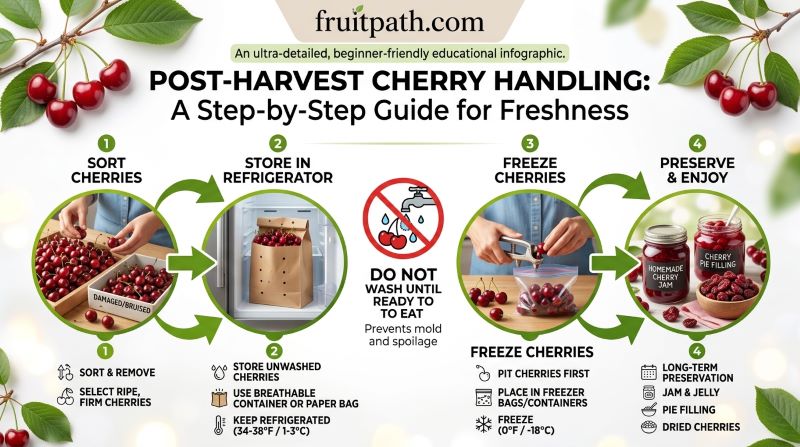
- Sort your cherries right away. Remove any damaged or bird-pecked ones.
- Do not wash them until you are ready to eat. Moisture causes mold.
- Store unwashed cherries in the refrigerator in a breathable container or paper bag. They can stay fresh for 7–10 days.
- For longer storage, freeze them (pit them first) or turn extras into jam, pie filling, or dried cherries.
Mastering cherry harvest tips like these will give you the highest quality fruit and reduce waste. A well-harvested tree not only tastes better but also stays healthier because you remove ripe fruit before pests or diseases settle in.
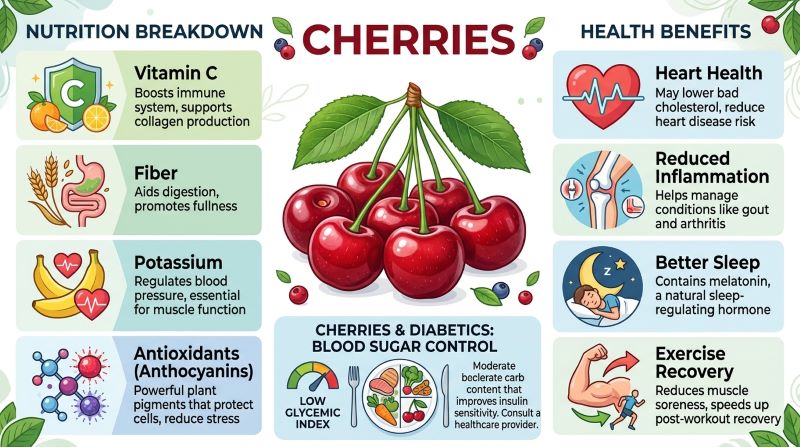
Health Benefits of Cherries:
Cherry benefits go way beyond taste.
Nutritional Value:
Loaded with vitamin C, fiber, potassium, and antioxidants called anthocyanins.
Health Benefits:
Reduce inflammation, support heart health, improve sleep (natural melatonin), and ease exercise soreness.
Are Cherries Good for Diabetics?
Yes! Low glycemic index, high fiber, and antioxidants help control blood sugar. Studies show they may lower inflammation linked to diabetes complications. Enjoy in moderation as part of a balanced diet. Read more in our diabetes and cherries Article.
Tools & Products You May Consider:
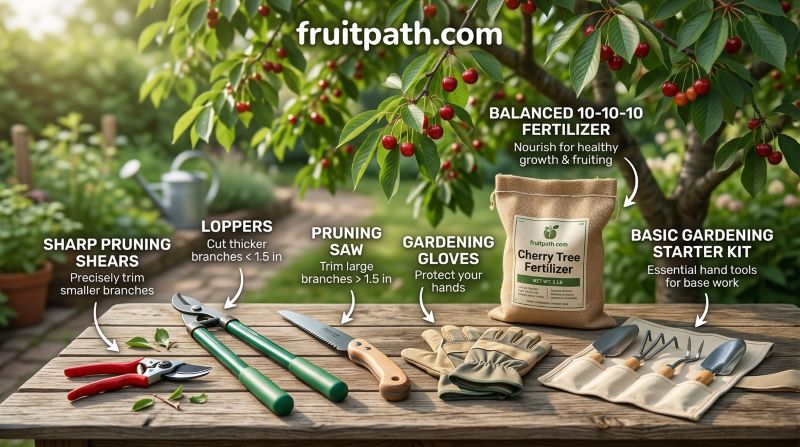
Having the right tools can make cherry tree care easier and more efficient. There are many good options available, so you can choose what fits your needs and budget. Here are some commonly recommended types of tools and products:
Pruning shears:
Look for sharp, comfortable, and durable pruning shears that make clean cuts. Clean cuts help the tree heal faster and stay healthy. A well-made pair can last for many years if cared for properly.
Loppers and pruning saws:
For thicker branches, loppers or pruning saws are useful. Choose tools that feel sturdy and easy to handle. Many reliable and affordable brands offer good options.
Fertilizers:
Fruit trees benefit from balanced fertilizers. You can use organic options or standard balanced formulas like 10-10-10 slow-release fertilizers. The best choice depends on your soil and tree needs.
Gardening kits:
Starter kits often include basic tools like shears, gloves, and other essentials. These can be a convenient option if you’re just getting started.
Different gardeners prefer different tools, so it’s a good idea to compare features, read reviews, and pick what works best for you. The right tools can make caring for your cherry trees simpler and more enjoyable.
Beginner Mistakes to Avoid (Simple Guide)
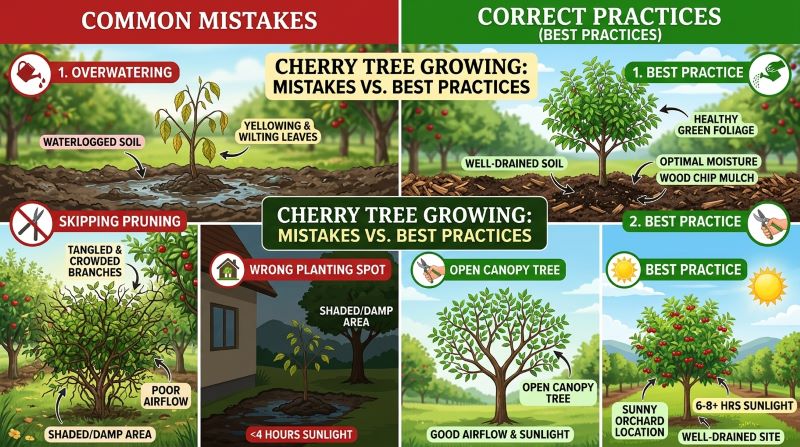
When growing a cherry tree, small mistakes can lead to big problems. Here are some common ones to watch out for, explained easily:
1. Overwatering (too much water):
Cherry trees do not like soggy soil. If you water too often, the roots can’t breathe and may start to rot. We can said its root rot, and it can kill the tree.
Tip: Water only when the topsoil feels dry. Make sure water can drain away easily.
2. Skipping pruning (not cutting branches):
If you don’t prune your tree, branches can grow in messy ways. They may block sunlight and air, which leads to fewer fruits and more diseases.
Tip: Trim dead or crowded branches once a year to keep the tree open and healthy.
3. Planting in the wrong spot:
Cherry trees need plenty of sunlight and well-drained soil. If you plant them in a shady or wet area, they may grow slowly or not produce fruit at all.
Tip: Choose a sunny place (at least 6–8 hours of sunlight daily) with soil that doesn’t stay wet.
Avoiding these simple mistakes can help your cherry tree grow strong and produce better fruit.
Pro Tips for Maximum Cherry Yield:
- Prune every year.
- Manage sunlight by thinning the canopy.
- Space trees properly for airflow.
- Add compost yearly and watch for pollinators.
Follow these, and you will harvest more cherries than you can eat.
FAQ Section:
How long does a cherry tree take to grow?
Grafted trees usually bear fruit in 3 to 5 years. Full production takes 5 to 7 years.
Do cherry trees need full sun?
Yes, cherry trees need 6 to 8 hours daily for the best fruit and health.
Why is my cherry tree not fruiting?
Most often lack a pollination partner, experience late frost, or have no pruning. Check our guide for fixes.
Can cherry trees grow in pots?
Absolutely! Dwarf varieties in large containers work great on patios or balconies.
Last but not least:
You now have the complete roadmap to cherry trees: from choosing varieties and how to grow cherry trees to pruning cherry trees, harvesting, and enjoying the health benefits. A few smart choices and simple yearly care will give you beautiful blossoms and buckets of delicious fruit for decades.
Start today, pick your favorite variety, grab those recommended tools (they really work), and plant your first tree. You will love watching it grow, bloom, and reward you with sweet cherries. Your backyard (or even balcony) can become a mini orchard full of joy and fresh fruit.
Happy growing, happy harvesting, and happy eating! Drop a comment below with your cherry story. We would love to cheer you on.