
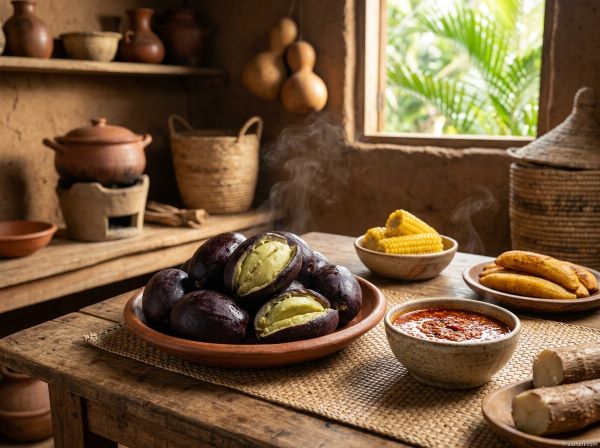
If you only ever try one way of eating Safou (African Butter Pear), make it this one. Boiling Safou in lightly salted water and serving it with a warm palm oil sauce is the most traditional preparation across Nigeria and Central Africa — and it’s also the easiest way for beginners to fall in love with this fruit.
This recipe takes under 20 minutes, needs no fancy equipment, and turns a tart, firm fruit into something soft, buttery, and deeply comforting.
Why You’ll Love This Recipe:
- Beginner-friendly — no special skills required, just a pot of water
- Ready in under 20 minutes
- Naturally rich and buttery once cooked, with zero added dairy
- A true taste of West African home cooking
Ingredients
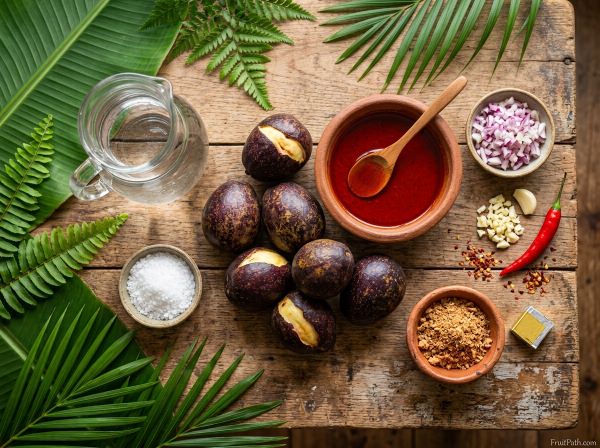
- 6–8 ripe Safou fruits (deep purple or brown skin)
- 1 liter water
- 1 tsp salt (plus a pinch more for serving)
- 2 tbsp palm oil
- 1 small onion, finely chopped
- 1 clove garlic, minced
- 1 small chili or dash of chili flakes (optional)
- A pinch of ground crayfish or stock cube (optional, for extra depth)
Step-by-Step Instructions:
Step 1: Rinse the fruit. Wash the Safou fruits thoroughly under running water to remove any dirt from the skin.
Step 2: Boil the Safou. Bring 1 liter of water to a boil in a medium pot, add 1 tsp of salt, then gently lower the whole fruits in. Boil for 8–10 minutes, until the flesh softens and gives slightly when pressed.
Step 3: Make the palm oil sauce. While the fruit boils, heat the palm oil in a small pan over medium heat. Add the chopped onion and garlic, and sauté for 2–3 minutes until fragrant. Stir in the chili and crayfish or stock cube, if using, and cook for another minute.
Step 4: Drain and prepare the fruit. Remove the boiled Safou from the water and let it cool for a minute or two. Slice each fruit open lengthwise and remove the large central seed — it is not edible.
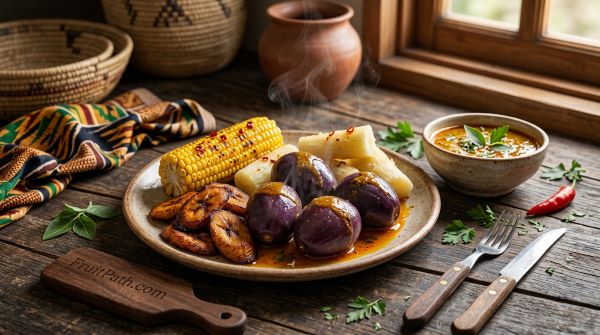
Step 5: Combine and serve. Spoon the warm palm oil sauce generously over the softened Safou flesh. Serve immediately while warm, with a side of boiled corn, plantain, or cassava.
Tips for the Best Boiled Safou:
- Don’t overcook — once the skin softens and the flesh yields to gentle pressure, it’s ready. Overboiling can make the texture mushy.
- Always remove the seed before eating; it’s large, firm, and not meant to be consumed.
- If you like a spicier kick, add extra chili directly into the sauce rather than on top, so the heat blends evenly.
What to Serve It With:
Boiled Safou with palm oil sauce pairs beautifully with roasted or boiled corn, ripe plantain, or a side of cassava. It also works well as a light lunch on its own, especially when you are new to the fruit and want to taste it in its purest, most traditional form.
FAQ:
Can I use unripe Safou for this recipe? It is best to use ripe, deep-purple or brown fruit. Unripe Safou is much more sour and firmer, and boiling won’t soften it as much.
Can I make the sauce without palm oil? Palm oil gives this dish its authentic flavor and color, but in a pinch, a neutral cooking oil with a little extra seasoning will still work — it just won’t taste quite the same.
Want to learn more about this fruit first? Check out our complete guide to Safou (African Butter Pear) for nutrition facts, health benefits, and everything else you need to know before you cook.