
- Description
- Can This High Protein Raspberry Cheesecake Support Weight Loss Goals?
- Does This High Protein Raspberry Cheesecake Fit a High Protein Lifestyle?
- My Personal Experience
- Perfect For
- Why You’ll Love This Recipe
- Common Mistakes to Avoid
- Required Equipment
- Storage Instructions
- Recipe Details
- Short Description 📝
- 📝 Ingredients
- Directions
- Nutrition Facts (Per Serving – Approximate)
- Notes
- Frequently Asked Questions
Description
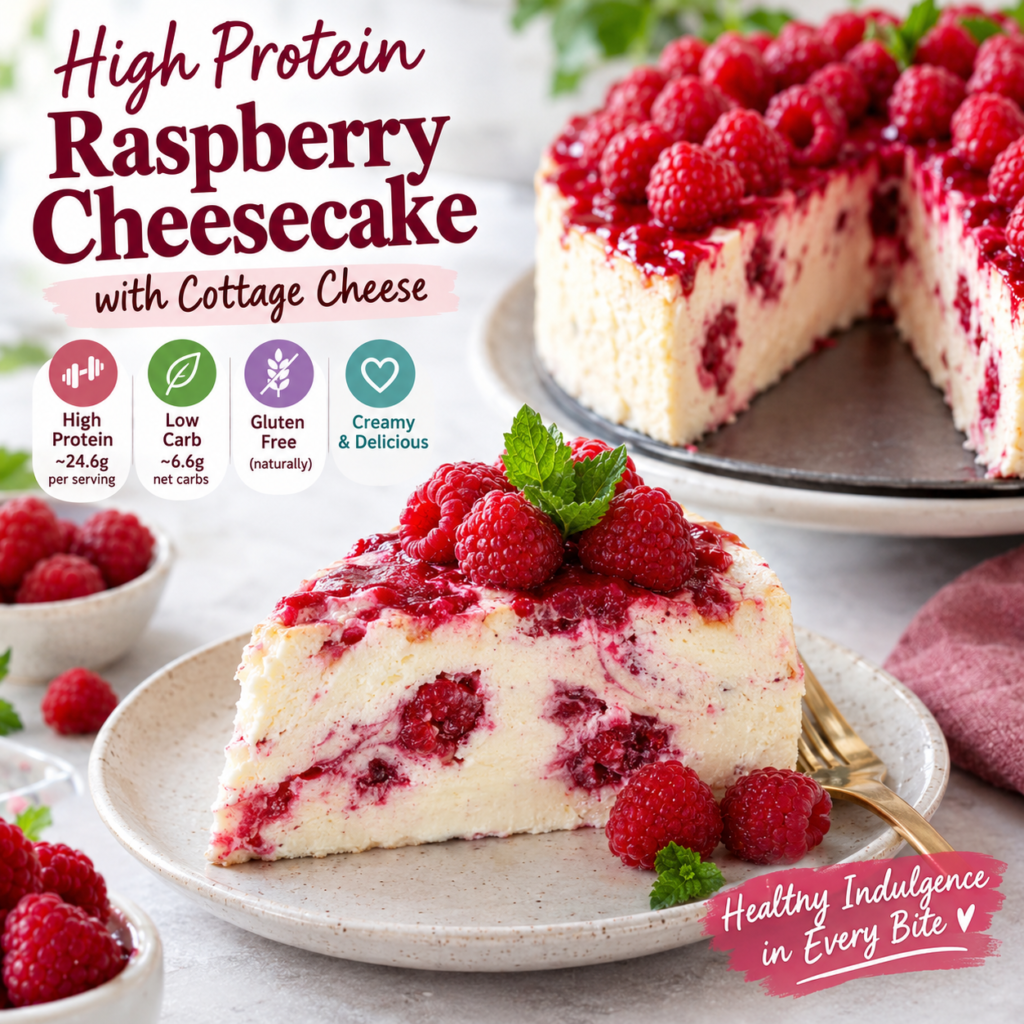
This High Protein Raspberry Cheesecake is creamy, lightly tangy, and bursting with bright raspberry flavor in every bite. Cottage cheese and Greek yogurt create a smooth, satisfying texture, while vanilla protein powder helps make this a protein-rich dessert without relying on a traditional heavy cheesecake filling.
With no traditional crust and only a modest amount of carbohydrates, this high protein, low carb cheesecake is an easy option for anyone looking for a satisfying high protein dessert, snack, or breakfast. The raspberry topping adds natural sweetness and a beautiful pop of color without overwhelming the creamy cheesecake base.
Can This High Protein Raspberry Cheesecake Support Weight Loss Goals?
It can fit into a weight-conscious eating pattern when enjoyed as part of an overall balanced diet. The recipe provides a substantial amount of protein per serving, which can make a dessert more satisfying than many conventional cheesecake options.
It is also relatively moderate in calories and carbohydrates for a cheesecake because it uses cottage cheese, Greek yogurt, and protein powder instead of relying mainly on cream cheese and sugar. Portion size and your overall daily food intake still matter, so this recipe works best as one component of a balanced eating pattern rather than as a special weight-loss food.
Does This High Protein Raspberry Cheesecake Fit a High Protein Lifestyle?
Yes, this cheesecake can fit comfortably into a high protein lifestyle. Cottage cheese, Greek yogurt, eggs, and whey protein provide the main protein sources, while raspberries contribute fiber and natural flavor. With approximately 5.2 g net carbs per serving, it is relatively low in carbohydrates compared with traditional cheesecake. Its approximately 24.6 g of protein per serving makes it particularly suitable as a high protein dessert or filling snack.
My Personal Experience
- The cottage cheese blends into an incredibly creamy base.
Once blended thoroughly, there are no noticeable curds, and the finished cheesecake has a smooth, soft texture. - The raspberry flavor keeps the cheesecake from feeling too heavy.
The berries add a naturally tart contrast that balances the sweet vanilla filling beautifully. - I especially like it chilled overnight.
The texture becomes firmer and more cheesecake-like after several hours in the refrigerator. - The protein powder works best when blended completely.
This helps prevent dry pockets and gives the filling a more uniform, creamy consistency.
Perfect For
- High protein recipes — A protein-rich dessert using cottage cheese, Greek yogurt, eggs, and whey protein.
- Low carb recipes — The crustless design helps keep carbohydrates lower than many traditional cheesecake recipes.
- High protein snacks — A chilled slice makes a convenient, satisfying snack between meals.
- High protein desserts — It delivers cheesecake flavor while providing considerably more protein than a typical dessert.
- High protein breakfast — Pair a small slice with fresh berries or Greek yogurt for a protein-focused breakfast.
- Keto-inspired meal plans — Its carbohydrate profile can work for some lower-carb approaches, although strict keto plans should account for individual daily carb limits and ingredient labels.
- Meal prep — The cheesecake stores well in the refrigerator, making it useful for preparing several portions ahead of time.
Why You’ll Love This Recipe
- Creamy without a traditional heavy cheesecake base.
Cottage cheese and Greek yogurt create a rich, silky filling while keeping the recipe protein-focused. - Packed with protein from multiple ingredients.
Cottage cheese, yogurt, eggs, and whey protein work together to provide approximately 24.6 g protein per serving. - Bright raspberry flavor in every bite.
Raspberries add tartness and natural fruit flavor that cuts through the creamy vanilla filling. - No complicated crust required.
Baking the cheesecake without a crust keeps preparation simple and helps reduce the overall carbohydrate load. - Great for make-ahead eating.
It tastes even better once thoroughly chilled, so you can prepare it the day before serving.
Common Mistakes to Avoid
- Not blending the cottage cheese enough — Blend until completely smooth; otherwise, small curds can remain in the cheesecake.
- Overbaking the cheesecake — Remove it when the edges are set but the center still has a gentle jiggle.
- Adding frozen raspberries directly to the batter — Excess water can affect the texture, so thaw and drain them first if using frozen berries.
- Slicing before chilling — The cheesecake needs refrigerator time to firm up and develop its best texture.
Required Equipment
- 8-inch springform pan — Makes removing and slicing the cheesecake easier.
- Blender or food processor — Creates a completely smooth cottage cheese filling.
- Mixing bowl — Provides space for combining and finishing the cheesecake mixture.
- Rubber spatula — Helps scrape the blender clean and fold in the raspberries gently.
- Parchment paper — Helps prevent the cheesecake from sticking to the pan base.
- Wire cooling rack — Allows the cheesecake to cool evenly before refrigeration.
Storage Instructions
Refrigerator: Allow the cheesecake to cool completely, then cover it tightly or place individual slices in airtight containers. Refrigerate for up to 4–5 days while maintaining good texture and protein quality.
Freezer: Wrap individual slices tightly in plastic wrap or freezer-safe paper and place them in an airtight freezer container or bag. Freeze for up to 2 months for best quality.
To thaw: Transfer a frozen slice to the refrigerator and let it thaw overnight. Avoid thawing at room temperature for extended periods.
Best container: Airtight glass food-storage containers are ideal for individual portions because they help protect the cheesecake from refrigerator odors and excess moisture.
Recipe Details
- Preparation Time: 15 minutes
- Cooking Time: 45–55 minutes
- Total Time: About 1 hour 10 minutes, plus chilling time
- Servings: 6
- Best Season for This Recipe: All-season
- Total Calories (Per Serving): Approximately 192 calories
Note: Nutrition and calorie values are approximate estimates and can change depending on the brands and varieties of cottage cheese, Greek yogurt, protein powder, and sweetener used.
Short Description 📝
Creamy cottage cheese cheesecake meets bright, juicy raspberries in this easy high protein dessert.
Greek yogurt and whey protein add extra protein while keeping the texture soft and satisfying.
With approximately 5.2 g net carbs per serving, it’s a delicious lower-carb alternative to traditional cheesecake.
📝 Ingredients
Cheesecake Filling
- 750 g low-fat cottage cheese — Use well-drained cottage cheese for a thicker filling.
- 150 g plain nonfat Greek yogurt — Adds creaminess and a mild tang.
- 2 large eggs — Helps bind and set the cheesecake.
- 45 g vanilla whey protein powder — Adds protein and vanilla flavor.
- 60 g granulated erythritol or allulose — Adjust sweetness to taste.
- 1 teaspoon pure vanilla extract
- 1 tablespoon fresh lemon juice
- 10 g cornstarch — Helps the cheesecake set; omit if preferred, but the texture may be slightly softer.
- Pinch of salt
Raspberry Layer
- 100 g fresh raspberries
- 1 teaspoon granulated erythritol or allulose, optional
Note: If using frozen raspberries, thaw them completely and drain excess liquid before adding them.
Directions
- Preheat the oven to 325°F (165°C).
Lightly grease an 8-inch springform pan and line the bottom with parchment paper. This moderate oven temperature helps the cheesecake cook gently without excessive browning. - Blend the cottage cheese.
Add the cottage cheese, Greek yogurt, eggs, protein powder, sweetener, vanilla, lemon juice, cornstarch, and salt to a blender or food processor. Blend for 60–90 seconds, scraping the sides once if necessary, until completely smooth. - Check the consistency.
The batter should be thick but pourable, similar to a smooth yogurt or thick cream. Blending thoroughly is an important high-protein cooking tip because it prevents cottage cheese curds and protein-powder lumps. - Prepare the raspberries.
Reserve about ⅓ of the raspberries for the top. Lightly mash the remaining berries with a fork. If desired, mix them with 1 teaspoon sweetener. - Fill the pan.
Pour about half of the cheesecake batter into the prepared pan. Spoon over some of the mashed raspberries, then add the remaining batter. Gently swirl the raspberry mixture through the top using a knife or skewer. - Add the remaining raspberries.
Arrange the reserved fresh raspberries over the surface. Press them very lightly into the batter so they remain visible after baking. - Bake at 325°F (165°C) for 45–55 minutes.
The edges should look set while the center should still have a slight, gentle jiggle when the pan is carefully moved. Avoid baking until the center is completely firm, as overbaking can make a high-protein cheesecake dry or rubbery. - Cool gradually.
Turn off the oven, crack the oven door open, and leave the cheesecake inside for 10–15 minutes. This gentle cooling can help reduce sudden temperature changes. - Cool and chill.
Remove the cheesecake and cool at room temperature for about 30–45 minutes. Cover and refrigerate for at least 4 hours, preferably overnight. - Slice and serve.
Run a sharp knife under warm water, wipe it dry, and slice the chilled cheesecake. Serve cold with a few fresh raspberries.
High-protein tip: Avoid adding significantly more protein powder to increase the protein content. Too much powder can absorb moisture and make the cheesecake dense or dry.
Nutrition Facts (Per Serving – Approximate)
Based on 6 servings:
- Calories: 192 kcal
- Protein: 24.6 g
- Fat: 5.1 g
- Cholesterol: 84 mg
- Sodium: 488 mg
- Potassium: 249 mg
- Total Carbohydrates: 8.4 g
- Fiber: 1.8 g
- Net Carbs: 6.6 g
- Sugars: 4.5 g
- Calcium: 174 mg
Nutrition is an approximate estimate and will vary according to the specific brands and varieties of ingredients used. Sugar and carbohydrate values can also vary significantly between cottage cheese, yogurt, protein powder, and sweetener brands.
Notes
- Storage: Keep covered in the refrigerator for 4–5 days or freeze individual slices for up to 2 months.
- Reheating: This cheesecake is best served chilled. If you prefer it slightly less cold, let a slice sit at room temperature for 10–15 minutes rather than microwaving it.
- Allergy notes: Contains dairy and eggs. Whey protein is milk-derived; check your protein powder label for additional allergens.
- Gluten: The ingredients listed are naturally gluten-free, but check protein powder and other packaged ingredients for certified gluten-free labeling if required.
- Flavor boost: Add extra lemon zest for a brighter citrus flavor or a small amount of almond extract for a bakery-style raspberry cheesecake note.
- Berry variation: Blackberries or strawberries can replace some or all of the raspberries, although the carbohydrate and calorie values will change.
- Texture: For the smoothest result, use a blender rather than simply stirring the cottage cheese into the batter.
Frequently Asked Questions
1. Can I taste the cottage cheese?
When blended thoroughly, the cottage cheese becomes smooth and its flavor is largely softened by the vanilla, lemon, sweetener, and raspberries.
2. Can I use frozen raspberries?
Yes, but thaw and drain them first to prevent excess liquid from making the cheesecake watery.
3. Can I make this cheesecake without protein powder?
Yes, although removing the whey protein will reduce the protein content and may slightly change the texture.
4. Why does my high protein cheesecake look soft after baking?
The center should remain slightly jiggly when it comes out of the oven because it continues setting as it cools and chills.
5. Can I make this recipe keto-friendly?
It can fit some lower-carbohydrate eating plans, but strict keto diets should account for the complete ingredient labels and individual daily carbohydrate limits.
6. How long should I chill the cheesecake before slicing?
For the cleanest slices and firmest texture, chill it for at least 4 hours, with overnight chilling giving the best result.