
Description
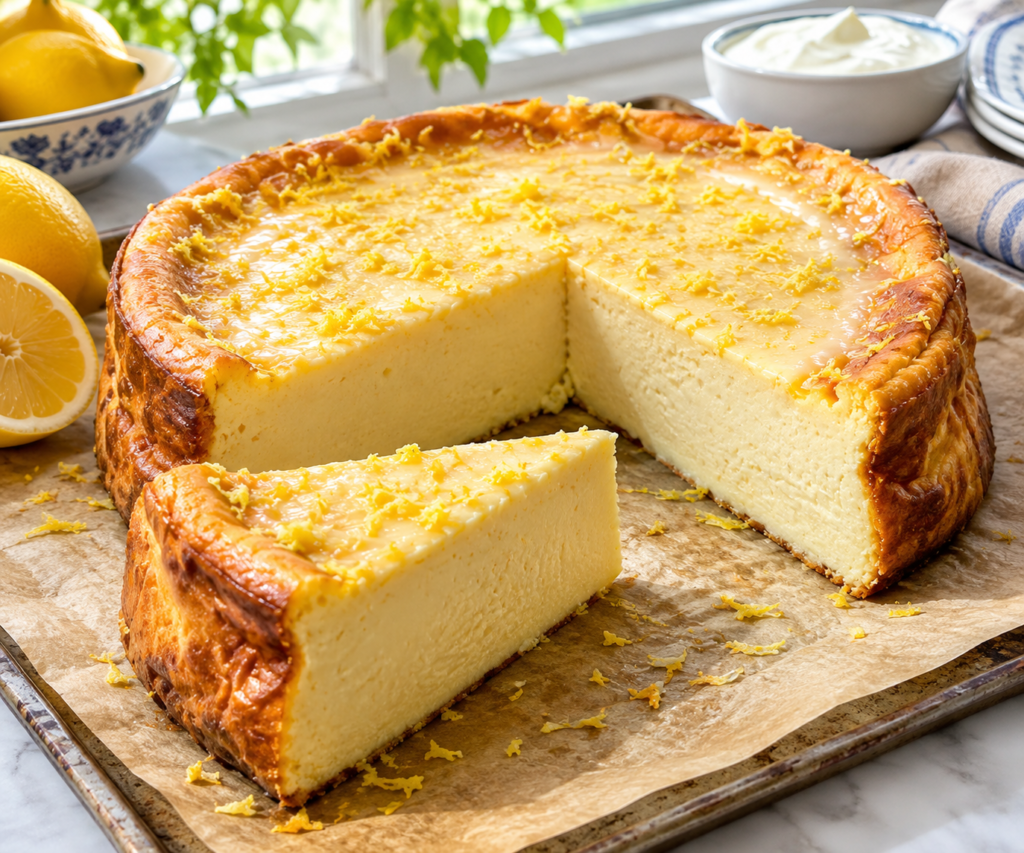
This Flourless Lemon Yogurt Cake is wonderfully creamy, rich, and silky in the center with a beautifully golden, slightly caramelized edge. Made without traditional flour, it has a cheesecake-like texture while fresh lemon juice and zest give every bite a bright, refreshing flavor.
Greek yogurt and eggs provide a naturally protein-rich base, making this a satisfying option when you’re looking for a high-protein dessert. It can also be adapted into a lower-carb recipe by using a suitable zero-calorie sweetener instead of regular sugar.
The result is an elegant cake that looks impressive but requires simple ingredients and no complicated decorating.
Can This Flourless Lemon Yogurt Cake Support Weight Loss Goals?
This cake can fit into a balanced eating plan when enjoyed in an appropriate portion. Greek yogurt and eggs provide protein, which can make a dessert more satisfying than many flour-based sweets, while the absence of traditional flour keeps the recipe relatively simple.
For a lower-calorie or lower-carb version, you can reduce the sweetener or use a suitable granulated sugar substitute. Keep in mind that the standard recipe still contains calories and carbohydrates from sugar and dairy, so portion size remains important.
Does Flourless Lemon Yogurt Cake Fit a High-Protein Lifestyle?
Yes, this cake uses Greek yogurt and eggs as its main protein-rich ingredients, making it more protein-focused than many traditional cakes. Depending on the exact yogurt and serving size, each slice provides a useful amount of protein. The standard recipe contains carbohydrates primarily from sugar and dairy, while using a granulated sugar substitute can lower the net carbs considerably. It is a particularly good option for a high-protein breakfast, snack, or lighter dessert when portioned appropriately.
My Personal Experience
- The texture is the star of this cake:
The Greek yogurt creates a soft, creamy center that feels almost cheesecake-like without needing a crust.
After chilling, the texture becomes even firmer and slices beautifully. - Fresh lemon makes a huge difference:
Lemon zest gives the cake an intense citrus aroma while fresh juice adds just enough tanginess.
I recommend using freshly grated zest rather than bottled lemon flavoring for the brightest taste. - The edges become beautifully golden:
Baking at the correct temperature allows the outside to develop a lightly browned finish while the center stays tender.
Don’t worry if the middle looks slightly soft when it first comes out of the oven. - It is surprisingly simple to prepare:
There is no flour to sift and no complicated cake layers or frosting to prepare.
A few mixing steps and one baking dish are enough to create this elegant dessert.
Perfect For
- High-protein desserts — Greek yogurt and eggs provide the recipe’s main protein sources.
- High-protein breakfasts — A chilled slice pairs nicely with berries and coffee for a satisfying morning option.
- High-protein snacks — Cut the cake into smaller portions for an easy afternoon snack.
- Low-carb recipes — Use a suitable granulated sugar substitute and a lower-carb Greek yogurt to reduce carbohydrates.
- Keto-style meal plans — A sugar-free version can be adapted for lower-carb eating, depending on the yogurt and sweetener used.
- Lemon dessert lovers — Fresh lemon zest and juice create a bright flavor without heavy frosting.
- Special occasions — The golden top and creamy interior make it attractive enough for brunches, gatherings, and celebrations.
Why You’ll Love This Recipe
- No traditional flour required
You don’t need all-purpose flour, almond flour, or a complicated crust for this cake.
The yogurt and eggs create its soft, creamy structure. - Creamy cheesecake-like center
The center becomes wonderfully smooth and tender as it cools.
Chilling it before slicing makes the texture especially luxurious. - Fresh lemon flavor
Both lemon juice and zest are used to create a balanced citrus taste.
The zest adds fragrance while the juice provides natural brightness. - Protein-rich ingredients
Greek yogurt and eggs contribute substantial protein to the recipe.
Choosing strained Greek yogurt with a higher protein content can increase the protein per serving. - Easy one-bowl preparation
Most of the ingredients can be mixed together without complicated techniques.
That makes this an approachable dessert even for beginner bakers.
Common Mistakes to Avoid
- Overbaking the cake — The center should still have a gentle wobble when the cake is removed from the oven; overbaking can make it dry and rubbery.
- Using cold ingredients — Very cold yogurt and eggs can make the batter less smooth. Let them sit at room temperature for about 20–30 minutes before mixing.
- Skipping the lemon zest — Lemon juice provides acidity, but most of the fragrant citrus aroma comes from the zest.
- Cutting it while hot — The center needs time to set. Cool completely and preferably refrigerate before slicing for clean pieces.
Required Equipment
- 9-inch round cake pan — Provides an even shape and consistent baking depth.
- Parchment paper — Makes releasing the delicate flourless cake much easier.
- Large mixing bowl — Gives enough room to combine the batter smoothly.
- Whisk — Helps incorporate the eggs without creating large lumps.
- Fine citrus zester — Produces finely grated lemon zest for even flavor distribution.
- Rubber spatula — Scrapes the bowl clean and helps fold ingredients gently.
- Cooling rack — Allows air to circulate around the pan as the cake cools.
Storage Instructions
Allow the cake to cool completely before storing.
Place leftover slices in an airtight food container and refrigerate for up to 4 days. Because this cake contains Greek yogurt and eggs, refrigeration is important.
For freezing, wrap individual slices tightly in plastic wrap and place them inside a freezer-safe container or zip-top freezer bag. Freeze for up to 2 months for the best texture.
Thaw frozen slices overnight in the refrigerator. The cake is delicious chilled and generally does not need reheating.
Recipe Details
Preparation Time: 15 minutes
Cooking Time: 45–55 minutes
Cooling Time: 1 hour
Chilling Time: 2–4 hours
Total Time: About 4 hours 30 minutes including chilling
Servings: 10 slices
Best Season: All-season
Calories: Approximately 210 calories per serving
Nutrition information is an approximate estimate and will vary according to the brands and ingredients used.
Short 3-Line Description
Creamy, bright, and delicately sweet, this flourless lemon yogurt cake tastes like a lighter cheesecake.
Greek yogurt and eggs make it naturally protein-rich while fresh lemon adds a beautiful citrus finish.
Serve it chilled with berries, extra lemon zest, or a light dusting of powdered sweetener.
📝 Ingredients
For the Flourless Lemon Cake
- 2 cups (450 g) plain Greek yogurt
- 4 large eggs
- ½ cup (100 g) granulated sugar
- ¼ cup (60 ml) fresh lemon juice
- 2 tablespoons finely grated lemon zest
- 2 tablespoons cornstarch
- 1 teaspoon vanilla extract
- ½ teaspoon baking powder
- ¼ teaspoon salt
For the Top
- 1 tablespoon lemon zest
- 1 tablespoon powdered sugar or powdered sugar substitute, optional
Ingredient note: For a lower-carb version, use a granulated sweetener designed for baking in place of the sugar. Check the sweetener’s conversion instructions because sweetness varies between brands.
Directions
1. Prepare the Pan
Preheat the oven to 350°F (175°C).
Line a 9-inch round cake pan with parchment paper, leaving some paper extending above the sides if possible.
Lightly grease the parchment.
Texture tip: The parchment is important because this cake is naturally soft and delicate when warm.
2. Bring Ingredients to Room Temperature
Allow the Greek yogurt and eggs to sit at room temperature for approximately 20–30 minutes.
This helps the ingredients combine more smoothly and evenly.
3. Whisk the Eggs and Sugar
Add the eggs and sugar to a large mixing bowl.
Whisk for approximately 1–2 minutes, until the mixture becomes smooth and slightly lighter.
Don’t whip aggressively for several minutes—the goal is a smooth batter rather than a heavily aerated sponge cake.
4. Add the Yogurt
Add the Greek yogurt and vanilla extract.
Whisk gently until completely smooth.
High-protein tip: Use thick, strained Greek yogurt with a high protein content for the best structure and protein contribution.
5. Add Lemon
Pour in the fresh lemon juice and add the finely grated lemon zest.
Mix gently until the citrus is evenly distributed throughout the batter.
The batter should smell strongly lemony and have a smooth, creamy consistency.
6. Add the Dry Ingredients
Add cornstarch, baking powder, and salt.
Whisk gently until there are no visible lumps.
Avoid overmixing once the dry ingredients are incorporated.
7. Pour Into the Pan
Pour the batter into the prepared cake pan.
Gently tap the pan against the countertop once or twice to release any large air bubbles.
Sprinkle an additional tablespoon of lemon zest over the top.
8. Bake
Place the cake on the center rack of the 350°F (175°C) oven.
Bake for approximately 45–55 minutes.
The edges should appear golden brown and set, while the center should have a slight gentle wobble when the pan is moved.
If the top begins browning too quickly, loosely cover it with aluminum foil during the final 10–15 minutes.
9. Cool Slowly
Turn off the oven and leave the cake inside with the door slightly open for approximately 10 minutes.
Remove the pan and place it on a cooling rack.
Allow the cake to cool at room temperature for about 1 hour.
A slight sinking in the center as it cools is completely normal for this style of flourless yogurt cake.
10. Chill Before Slicing
Once cooled, cover the cake and refrigerate for at least 2 hours, preferably longer.
The chilled cake will become firmer and easier to cut.
Run a sharp knife under warm water, wipe it dry, and slice the cake for cleaner cuts.
11. Serve
Add a little extra lemon zest immediately before serving.
Optional toppings include fresh strawberries, blueberries, raspberries, a spoonful of Greek yogurt, or a light dusting of powdered sweetener.
Serve chilled for the creamiest texture.
Nutrition Facts — Per Serving, Approximate
| Nutrient | Amount |
|---|---|
| Calories | ~210 kcal |
| Fats | ~6 g |
| Cholesterol | ~90 mg |
| Sodium | ~170 mg |
| Potassium | ~180 mg |
| Total Carbohydrates | ~25 g |
| Fiber | ~0.5 g |
| Net Carbs | ~24.5 g |
| Sugars | ~20 g |
| Protein | ~12 g |
| Calcium | ~130 mg |
Nutrition note: These figures are estimates based on typical plain Greek yogurt and regular sugar. Using a high-protein Greek yogurt or sugar substitute will change the nutritional values.
Notes
- For a stronger lemon flavor: Add another teaspoon of lemon zest rather than significantly increasing the lemon juice.
- For a lower-carb version: Replace sugar with a suitable baking sweetener and use unsweetened Greek yogurt with a low carbohydrate count.
- For extra protein: Choose strained Greek yogurt containing approximately 15–20 g protein per serving.
- Storage: Keep refrigerated in an airtight container for up to 4 days.
- Freezing: Freeze individual slices for up to 2 months.
- Reheating: This cake is best served chilled; reheating isn’t necessary and can affect its creamy texture.
- Allergy note: Contains dairy and eggs. Cornstarch is also used in the standard recipe.
- Gluten note: The listed ingredients contain no wheat flour, but check ingredient labels for certified gluten-free requirements.
- Flavor boost: Fresh berries, lemon zest, vanilla, or a small amount of fresh whipped Greek yogurt make excellent toppings.
Frequently Asked Questions
1. Is this cake really flourless?
Yes, the recipe contains no wheat or traditional all-purpose flour.
2. Does flourless mean the cake is low-carb?
Not automatically, because the standard recipe contains sugar and dairy carbohydrates, although it can be adapted to be much lower in carbs.
3. Can I use regular yogurt instead of Greek yogurt?
Yes, but regular yogurt is thinner and may produce a softer cake with a different protein content.
4. Why does the cake wobble after baking?
A slight center wobble is normal because the yogurt-based center continues setting as the cake cools and chills.
5. Can I make this cake without sugar?
Yes, a suitable granulated baking sweetener can replace the sugar, although the taste and texture may vary slightly.
6. Should I serve it warm or cold?
For the firmest, creamiest cheesecake-like texture, serve it well chilled after at least 2 hours in the refrigerator.