Description
These high-protein pancakes are soft, fluffy, lightly golden, and perfect for anyone who loves a satisfying homemade breakfast. Cottage cheese, eggs, and Greek yogurt give them a protein-rich base while blended oats provide a tender texture without using traditional white flour.
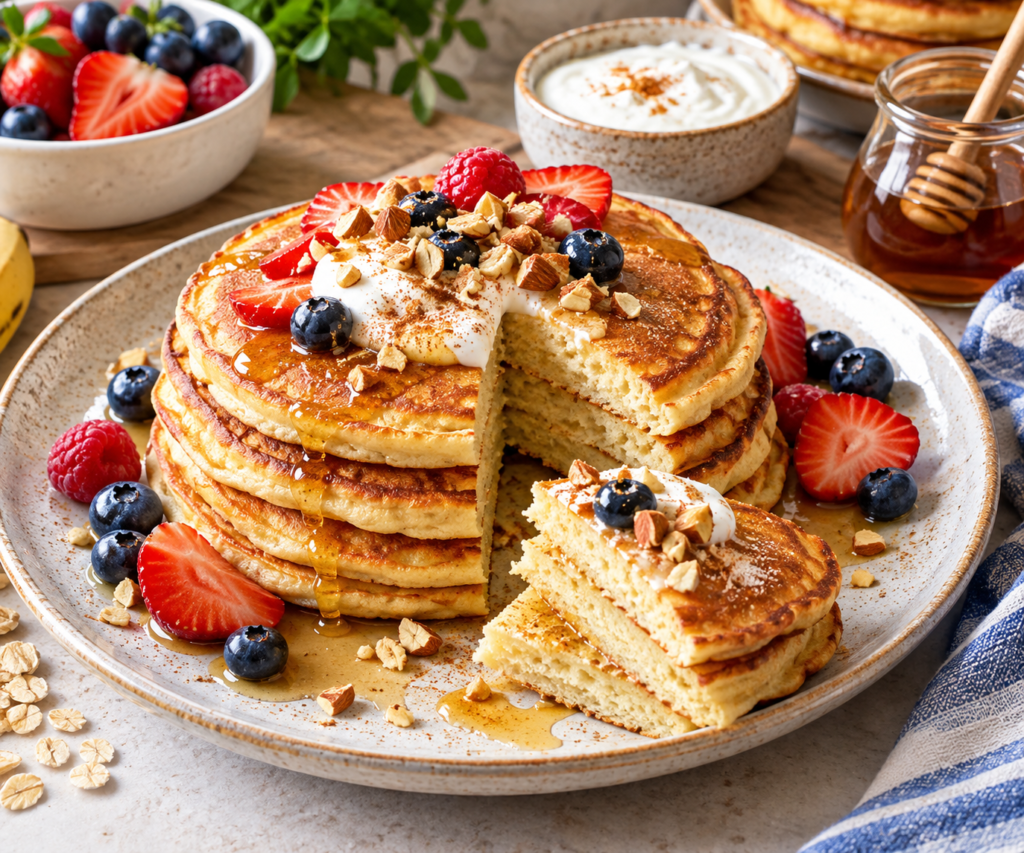
The goal is that beautiful golden-brown “Level 4–5” pancake from the picture—not pale, undercooked, or burnt. Serve them with berries, Greek yogurt, or a light drizzle of maple syrup for a delicious breakfast.
For a lower-carb version, reduce the oats and use a suitable low-carb flour alternative while keeping the protein-rich dairy and eggs.
Can This High-Protein Pancake Support Weight Loss Goals?
These pancakes can fit into a balanced weight-conscious eating plan because they combine protein-rich cottage cheese, Greek yogurt, and eggs with a controlled amount of oats. Protein can help make a meal more satisfying, while measuring toppings such as syrup, butter, or chocolate helps control the overall calorie content.
For a lower-carb option, you can modify the oat portion and choose toppings such as berries and unsweetened Greek yogurt.
Does This Pancake Fit a High-Protein Lifestyle?
Yes, these pancakes are built around protein-rich ingredients including cottage cheese, Greek yogurt, and eggs. Two pancakes provide approximately 27g of protein, depending on the brands used. The oats and banana contribute most of the carbohydrates, so the standard recipe isn’t a strict low-carb recipe, but the ingredients can be adjusted to reduce net carbs. They work especially well as a high-protein breakfast or filling post-workout-style meal.
My Personal Experience
- The cottage cheese creates a soft texture:
Blending the cottage cheese into the batter makes the pancakes surprisingly smooth and tender.
It also adds protein without leaving large curds throughout the finished pancakes. - Level 4–5 gives the best color:
Cooking over medium-low to medium heat allows the center to cook before the outside becomes too dark.
Look for a warm golden-brown surface rather than the very dark Level 7–9 appearance. - They are filling without being complicated:
Eggs, cottage cheese, Greek yogurt, and oats make these pancakes more substantial than basic pancakes.
A serving with fresh berries makes an especially satisfying breakfast. - Fresh toppings make them even better:
A spoonful of Greek yogurt and fresh berries adds freshness and contrast to the warm pancakes.
A small drizzle of maple syrup can be added when you want extra sweetness.
Perfect For
- High-protein breakfast — Cottage cheese, eggs, and Greek yogurt make these pancakes protein-focused.
- Healthy breakfast meal prep — Make a batch and refrigerate individual portions for busy mornings.
- High-protein snacks — Smaller pancakes work well as a protein-rich snack.
- Low-carb adaptations — Modify the oats and banana and use suitable low-carb ingredients.
- Keto-style adaptations — A keto version can be made with an appropriate low-carb flour and sweetener.
- Weekend brunch — Stack the golden pancakes with berries and yogurt for a beautiful brunch plate.
- Family breakfast — The mild flavor makes them easy to customize with different toppings.
Why You’ll Love This Recipe
- High in protein
Cottage cheese, eggs, and Greek yogurt provide the main protein sources.
This makes the pancakes more substantial than many traditional breakfast pancakes. - Fluffy and tender
Blended cottage cheese creates a smooth batter and soft interior.
Baking powder helps the pancakes puff as they cook. - Beautiful golden color
Medium-low heat gives you time to cook the center without burning the outside.
Aim for the golden Level 4–5 appearance shown in the reference image. - Simple ingredients
Everything can be found in a typical kitchen without specialty ingredients.
The batter comes together quickly in a blender or food processor. - Customizable toppings
Add berries, Greek yogurt, cinnamon, nut butter, or a small amount of maple syrup.
You can easily change the flavor without changing the basic pancake method.
Common Mistakes to Avoid
- Cooking over very high heat — The outside can become dark or burnt while the center remains raw; medium-low to medium heat works better.
- Flipping too early — Wait until bubbles appear across the surface and the edges look set before flipping.
- Making the batter too thin — Excess liquid can create flat pancakes that spread too much in the pan.
- Overmixing after adding dry ingredients — Mix only until combined to keep the finished pancakes tender.
Required Equipment
- Blender or food processor — Creates a smooth cottage-cheese pancake batter.
- Non-stick skillet — Helps pancakes release easily and brown evenly.
- Flexible spatula — Makes flipping delicate pancakes easier.
- Measuring cups and spoons — Keeps the ingredient ratios consistent.
- Large spoon or scoop — Helps create evenly sized pancakes.
- Wire rack — Prevents cooked pancakes from becoming soggy underneath.
Storage Instructions
Allow cooked pancakes to cool completely before storing.
Place them in an airtight container with parchment paper between layers and refrigerate for 3–4 days.
For longer storage, freeze pancakes individually on a tray for about 1 hour, then transfer them to a freezer-safe bag or container. They can be frozen for approximately 2 months.
Reheat refrigerated pancakes in a skillet over low heat for 1–2 minutes per side or microwave them for about 20–30 seconds. Frozen pancakes can be reheated directly in a toaster, skillet, or microwave.
Recipe Details
Preparation Time: 10 minutes
Cooking Time: 15 minutes
Total Time: 25 minutes
Servings: 2
Yield: Approximately 6 medium pancakes
Best Season: All-season
Calories: Approximately 300 calories per serving
Calories and nutrition are approximate estimates and vary according to the specific brands and toppings used.
Short 3-Line Description
Fluffy, golden, and satisfying, these cottage cheese pancakes are made for a protein-rich breakfast.
Eggs, Greek yogurt, and cottage cheese give them approximately 27g of protein per serving.
Cook them to a beautiful Level 4–5 golden brown and serve with berries and yogurt.
📝 Ingredients
Pancake Batter
- 1 cup (225 g) low-fat cottage cheese
- 2 large eggs
- ½ cup (120 g) plain Greek yogurt
- ½ cup (45 g) rolled oats
- ½ medium ripe banana
- 1 teaspoon vanilla extract
- 1 teaspoon baking powder
- ½ teaspoon ground cinnamon
- 1–2 teaspoons honey or maple syrup, optional
- Pinch of salt
- 1 teaspoon butter or cooking oil, for the pan
Toppings — Optional
- ½ cup fresh strawberries or blueberries
- ¼ cup Greek yogurt
- 1 tablespoon chopped nuts
- 1–2 teaspoons maple syrup
- Extra cinnamon
Ingredient note: For a lower-carb version, replace the oats and banana with suitable low-carb alternatives and use a low-carb sweetener.
Directions
1. Blend the Wet Ingredients
Add cottage cheese, eggs, Greek yogurt, banana, and vanilla to a blender.
Blend for approximately 20–30 seconds until smooth and creamy.
High-protein tip: Using strained Greek yogurt and cottage cheese with a higher protein content can increase the protein per serving.
2. Add the Oats and Seasonings
Add rolled oats, baking powder, cinnamon, salt, and optional honey or maple syrup.
Blend briefly for another 10–15 seconds, just until the ingredients are incorporated.
Don’t blend excessively after this point.
Texture cue: The batter should be thick enough to slowly pour from a spoon rather than run like milk.
3. Rest the Batter
Let the batter sit for 3–5 minutes.
This allows the oats to absorb some moisture and slightly thicken the batter.
If the batter becomes extremely thick, stir in 1 tablespoon of milk at a time until it reaches a spoonable consistency.
4. Preheat the Pan
Place a non-stick skillet over medium-low to medium heat.
Allow it to warm for approximately 2 minutes.
Lightly grease the surface with butter or cooking oil.
Important: Avoid very high heat—the goal is the golden Level 4–5 color from the reference image.
5. Cook the First Side
Pour approximately ¼ cup of batter for each pancake.
Cook for approximately 2–3 minutes.
Look for small bubbles forming across the surface and edges that appear slightly dry and set.
The underside should be golden brown, not pale or dark brown.
6. Flip Carefully
Slide a flexible spatula underneath the pancake and flip it gently.
Cook the second side for another 1½–2 minutes.
The pancake should puff slightly and feel springy when gently pressed.
Visual cue: A finished pancake should have an even golden surface similar to Level 4–5.
7. Repeat
Lightly grease the skillet again if necessary.
Continue cooking the remaining batter, adjusting the heat downward if the pancakes begin browning too quickly.
Avoid overcrowding the pan so you can flip each pancake easily.
8. Serve
Stack the warm pancakes on a plate.
Add Greek yogurt, fresh berries, cinnamon, and a small drizzle of maple syrup if desired.
Serve immediately for the softest texture.
Nutrition Facts — Per Serving, Approximate
| Nutrient | Amount |
|---|---|
| Calories | ~300 kcal |
| Fats | ~9 g |
| Cholesterol | ~195 mg |
| Sodium | ~520 mg |
| Potassium | ~430 mg |
| Total Carbohydrates | ~31 g |
| Fiber | ~3 g |
| Net Carbs | ~28 g |
| Sugars | ~9 g |
| Protein | ~27 g |
| Calcium | ~220 mg |
Nutrition is an approximate estimate before optional toppings and can vary considerably depending on the cottage cheese, Greek yogurt, and other brands used.
Notes
- For extra fluffy pancakes: Let the batter rest for a few minutes before cooking.
- For the perfect color: Keep the skillet around medium-low to medium heat rather than using high heat.
- For extra protein: Choose high-protein Greek yogurt and cottage cheese.
- For lower carbs: Replace the banana and oats with appropriate low-carb alternatives.
- Storage: Refrigerate cooked pancakes for 3–4 days in an airtight container.
- Freezing: Freeze for up to approximately 2 months.
- Reheating: Warm gently in a skillet, toaster, or microwave.
- Allergy note: Contains eggs and dairy; oats should be certified gluten-free if gluten avoidance is required.
- Flavor boost: Add lemon zest, vanilla, cinnamon, blueberries, or a tiny pinch of nutmeg.
- Topping tip: Keep high-calorie toppings such as nut butter and syrup measured if you’re tracking calories.
Frequently Asked Questions
1. What pancake level should I aim for?
For these high-protein pancakes, aim for approximately Level 4–5, where the surface is evenly golden brown without being burnt.
2. Why are my pancakes burning outside but raw inside?
Your pan is probably too hot, so reduce the heat to medium-low and give the pancakes more time to cook through.
3. Can I make these pancakes without banana?
Yes, you can omit the banana and add a small amount of milk or another suitable sweetener to adjust the texture and sweetness.
4. Can I use regular yogurt instead of Greek yogurt?
Yes, but regular yogurt is thinner and usually contains less protein, so the batter and nutrition will be slightly different.
5. Can I freeze these pancakes?
Yes, cool them completely, separate them with parchment paper, and freeze them in an airtight freezer-safe container for up to about 2 months.
6. How do I know when to flip the pancake?
Flip when bubbles appear across the surface, the edges look set, and the underside is golden brown.