
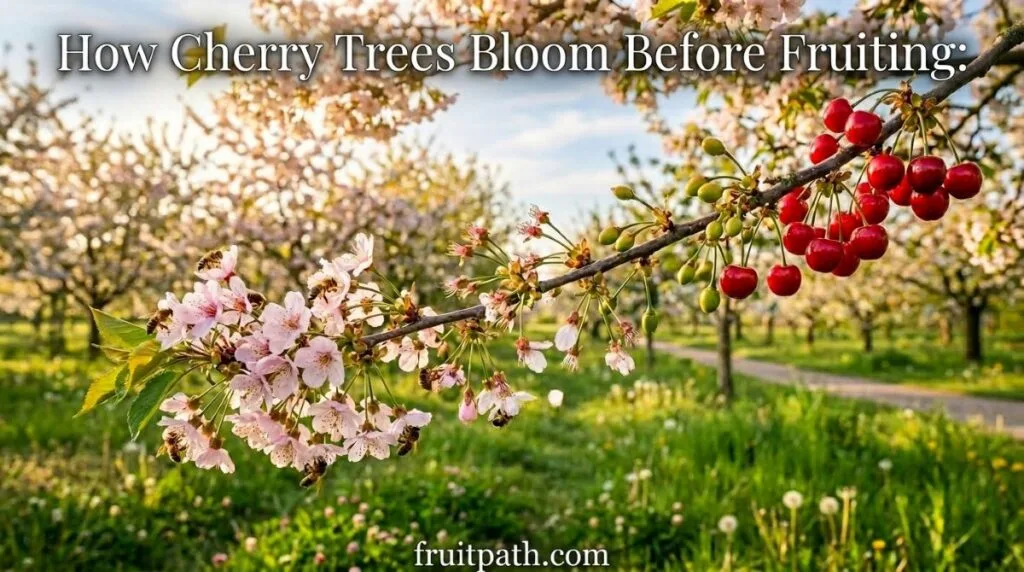
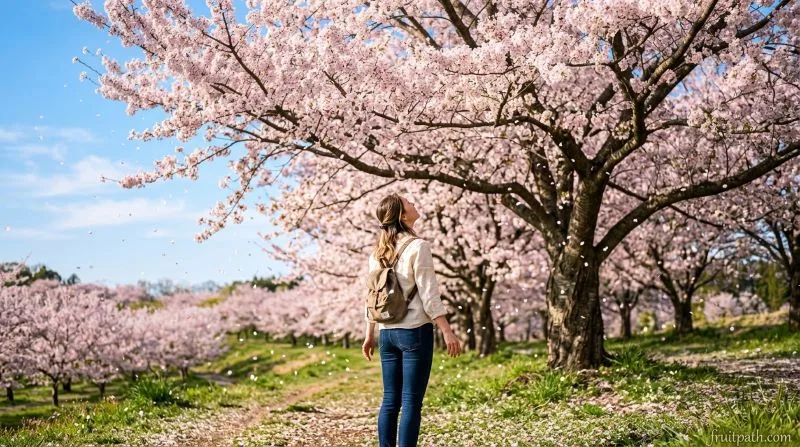
Have you ever stood under a cherry tree in spring, surrounded by soft clouds of pink and white flowers, and thought, Wait, where are all the cherries?” You are definitely not alone.
Every single year, millions of people admire the breathtaking blooms of cherry trees without realizing that those flowers are the very first step toward producing the juicy, sweet fruit we all love. The stunning display of blossoms you see in spring lasts only about 1 to 2 weeks. But what happens during those two weeks determines whether you get a full bucket of cherries or almost nothing at all by summertime.
- Why Cherry Blossoms Matter More Than You Think:
- The Complete Life Cycle of a Cherry Blossom Tree:
- Stage 1: Bud Formation — The Quiet Beginning Nobody Talks About:
- Stage 2: The Bloom Stage — When Do Cherry Trees Bloom?
- Stage 3: Pollination — The Single Most Important Step:
- Stage 4: Fruit Development — When Do Cherry Trees Fruit?
- What Do Cherry Blossoms Look Like When Not in Bloom?
- Why Some Flowers Don’t Turn Into Fruit:
- How to Improve Fruit Production — Step-by-Step:
- Frequently Asked Questions:
- Conclusion: From Bloom to Bounty:
Why Cherry Blossoms Matter More Than You Think:
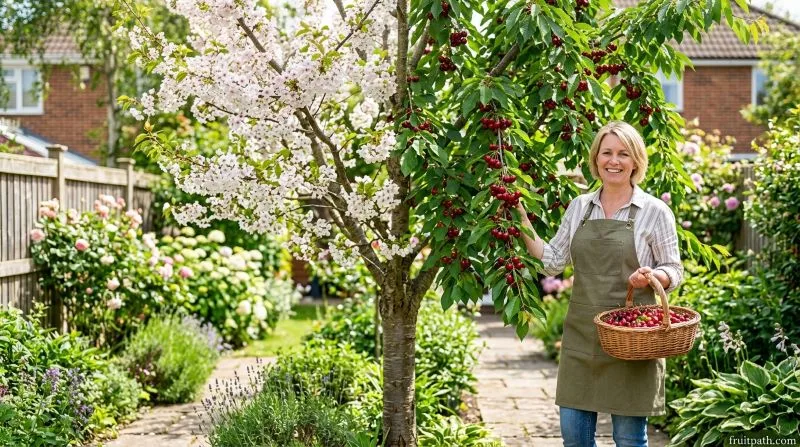
Our one reader, Linda, planted a cherry tree in her backyard about five years ago. Every spring, she would watch it burst into gorgeous white blossoms, and neighbors would come over to take photos. But every summer, barely any fruit. Maybe a handful of cherries. She thought the tree was defective.
It was not broken at all. Linda did not understand the relationship between the blossoms and the fruit. Cherry blossoms are not just pretty flowers to admire. They are the reproductive engine of the entire tree. Every single cherry that ever grows on a cherry tree starts its life as a flower.
No blooms means no cherries. Once Linda understood this, she changed how she cared for her tree during bloom season. The following summer, she harvested over eight pounds of cherries from that same tree.
Understanding the life cycle of a cherry blossom tree helps you know what is normal and what is a problem, time your care routine to match the tree’s natural rhythm, and dramatically improve your fruit harvest every single season.
The Complete Life Cycle of a Cherry Blossom Tree:
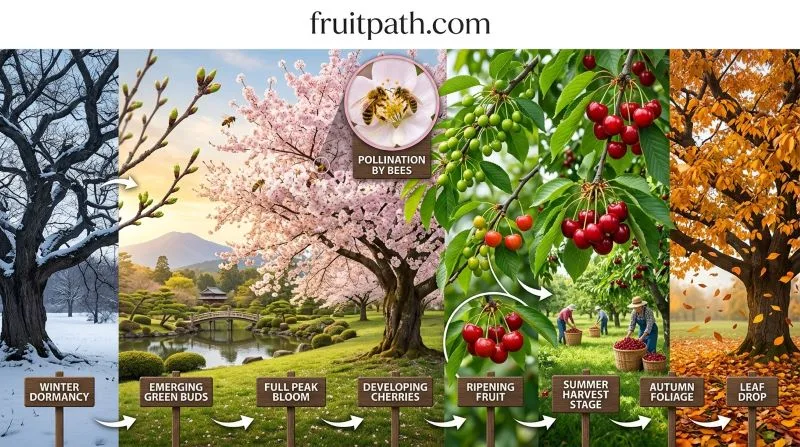
The life cycle of a cherry blossom tree follows a reliable, predictable pattern that repeats every year:
🌱 Dormancy (Winter)
↓
🌿 Bud Swell (Late Winter / Early Spring)
↓
🌸 Full Bloom (Spring: March–May)
↓
🐝 Pollination (During bloom — 7 to 10 days)
↓
🍒 Fruit Set & Development (60–90 days)
↓
🎉 Harvest (Summer: June–August)
↓
🍂 Leaf Drop → Dormancy → Cycle Repeats
Each stage has its own specific needs and timing. If one stage goes wrong due to bad weather, poor care, or a lack of pollinators, the next stage suffers or fails. Understanding each stage puts you in control.
Stage 1: Bud Formation — The Quiet Beginning Nobody Talks About:
Here is something that surprises most people: cherry tree buds begin forming long before spring arrives. The process starts all the way back in late summer and early fall of the previous year. After a cherry tree finishes fruiting, it quietly starts preparing for next year. Tiny flower buds form inside the branches and remain dormant throughout the winter, almost as if they are in a deep sleep, waiting for the warmth of spring.
That’s why winter conditions matter so much. The buds are alive the entire time, even when the tree looks completely bare and dead from the outside.
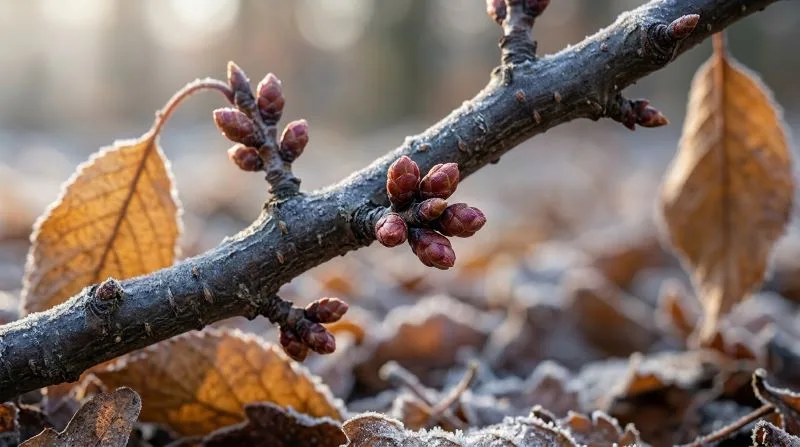
The Cherry Tree Bud Stages — Step by Step
- Dormant bud — Small, tightly closed, brownish scales. Looks almost like a tiny pinecone tip. This is the bud all through winter.
- Silver tip — Bud scales begin to separate slightly. A silvery-gray tissue becomes visible between the scales.
- Green tip — The first sign of real spring life. A tiny bit of green tissue peeks out from the bud.
- Half an inch green — The bud has grown noticeably. More green tissue is visible, and the bud is clearly swelling.
- Tight cluster — Multiple small individual flower heads are visible, clustered tightly together but still closed.
- Pink bud (or white bud, depending on variety) — Color shows through clearly now. The blooms are almost ready to open.
- First bloom — The very first flowers on the tree start to open—usually just a few at first.
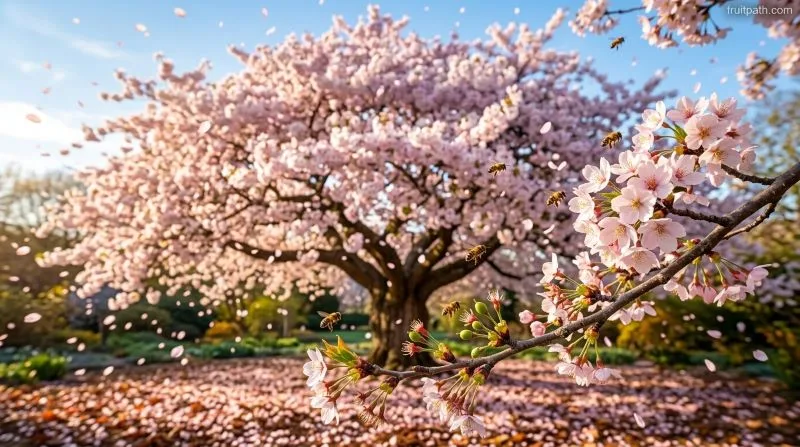
- Full bloom — The entire tree is covered in fully open flowers. Now it is the stage everyone photographs.
- Petal fall — Petals begin dropping. Pollination must happen now, or the opportunity will be lost for the year.
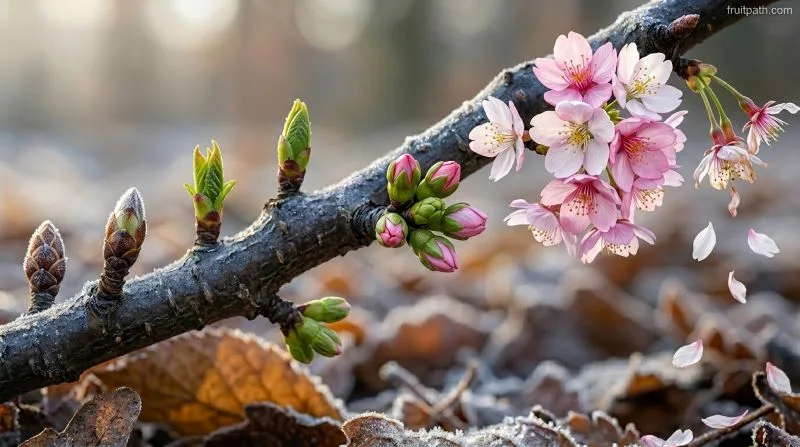
💡 Pro tip: Photograph the same branch every two to three days starting in early spring. The transformation from tight bud to full bloom to petal fall happens in less than two weeks. Watching it unfold through photos is genuinely amazing.
Stage 2: The Bloom Stage — When Do Cherry Trees Bloom?
Now is the moment everyone waits for. When do cherry trees bloom? For most varieties in the US and Europe, blooming happens between March and May. In warmer climates like California or Georgia, blooms can arrive as early as late February. In cooler northern states or higher elevations, blooming may not happen until late April or early May.
In Japan, which is home to the world-famous Sakura Festival, cherry blossoms typically peak between late March and mid-April. The Japanese even have a term for flower viewing together: hanami, a cherished cultural tradition practiced for centuries.
What do cherry blossoms look like? They are typically white or light pink, with five rounded petals per flower. They grow in small, dangling clusters along the branches and carry a faint, sweet fragrance that attracts bees from a distance. From any distance, a tree in full bloom looks like it is draped in a soft pink or white cloud. It is one of the most beautiful sights in the entire plant world.

What Do Cherry Blossoms Look Like After They Bloom?
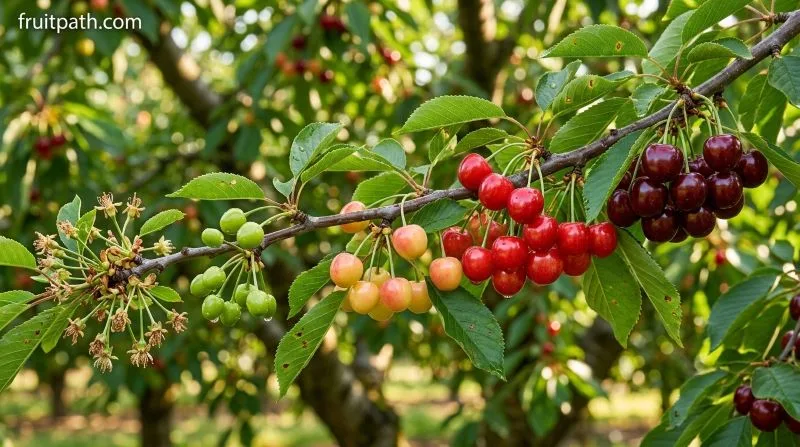
Once petals fall, a process called petal fall or shatter, the tree looks almost bare again. Many gardeners panic unnecessarily at this stage. But here is the critical thing: petal fall means pollination has happened or is happening right now. And if you look closely at where each petal was, you will notice small green nubs forming. Those nubs are your cherries beginning to develop.
Stage 3: Pollination — The Single Most Important Step:
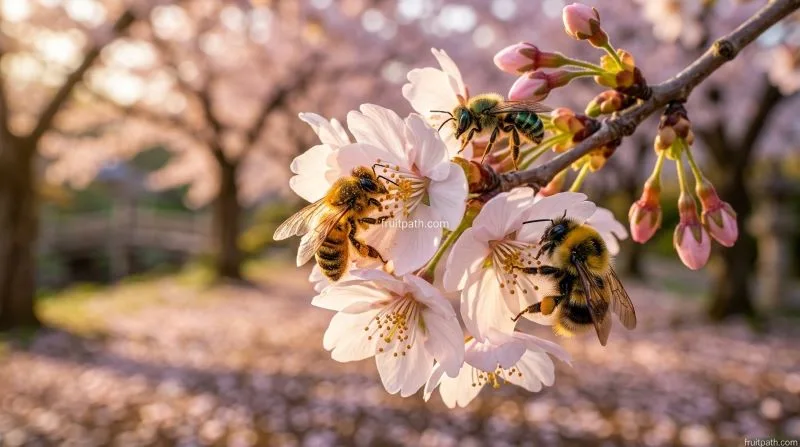
Pollination is, without any doubt, the single most important factor in whether your cherry tree produces a great harvest or almost nothing. Inside each cherry blossom, the male part (the anther) produces pollen, and the female part (the pistil) needs to receive that pollen for a fruit to form. Cherry trees cannot do this through wind alone, because they depend almost entirely on bees and other flying pollinators to carry pollen between flowers.
Honey bees, bumble bees, mason bees, and solitary bee species are all important pollinators. A single honey bee can visit hundreds of flowers per day. Without them visiting during the brief bloom window, your tree may bloom beautifully and produce almost no fruit.
Self-Fertile vs. Self-Sterile, You Know Your Variety:
Self-fertile trees can pollinate themselves; one tree is enough. Self-sterile trees absolutely need a second cherry tree of a different but compatible variety planted within 50 feet to produce any fruit at all. Most popular sweet cherry varieties, including the widely planted Bing cherry, are self-sterile. Sour cherries like Montmorency are generally self-fertile.
🌸 True story: A home gardener in Oregon had a mature, healthy Bing cherry tree that produced barely two dozen cherries despite six years of heavy blooming. After learning Bing cherries are self-sterile, she planted a compatible Stella cherry tree nearby. The very next summer, both trees produced an enormous crop. The entire solution cost $30 at the local nursery.
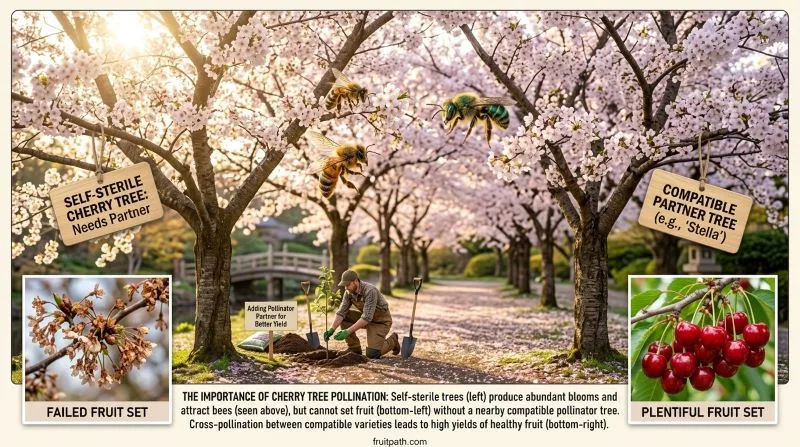
The pollination window is surprisingly short, it is just 7 to 10 days from the time flowers open until petal fall. Anything that disrupts bee activity during those days, which are commonly cold snaps, heavy rain, or pesticide spraying on trees, can cost you your entire year’s harvest.
Stage 4: Fruit Development — When Do Cherry Trees Fruit?
After successful pollination, the fertilized flower slowly transforms into a full-sized cherry over the next 60 to 90 days. Here is the week-by-week breakdown:
Week What Is Happening:
Week 1–2: All petals have fallen. A tiny green nub about the size of a pinhead has formed where the flower was.
Week 3–4: The cherry has grown to roughly the size of a small pea. Firm, entirely green, and contains almost no sugar yet.
Week 5–6: Noticeably larger. Depending on the variety, it turns a faint yellow or pale pink-red.
Week 7–8: Color development accelerates. The cherry turns bright red or deep red (yellow for golden varieties).
Week 9–10: Full size reached. Sugar content peaks. Ready for harvest, cherry is inviting you to pick me now!
When do cherry trees fruit? For most sweet cherry varieties in the US, harvest falls between June and early August. Sour cherries tend to ripen a few weeks earlier, often reaching peak ripeness in June.
How many times do cherry trees produce fruit per year? Exactly once per year. There is one bloom season, one pollination window, and one harvest. However, a well-maintained cherry tree can produce reliably for 20 to 40 years — sometimes delivering hundreds of pounds of cherries over its lifetime.
What Do Cherry Blossoms Look Like When Not in Bloom?
Since cherry trees only bloom for one to two weeks per year, it helps to know what cherry blossoms look like when not in bloom so you can understand what your tree is doing at any given time of year.
Late Spring / Summer:
Lush, deep green leaves. Cherries are visible on fruiting trees, growing and changing color through summer.
Early Fall:
Leaves turn attractive yellow, orange, and sometimes deep red before dropping. Beautiful foliage season.
Late Fall / Winter:
Completely bare. Just gray-brown branches. The tree looks dead, but is resting and quietly forming next year’s buds.
Early Spring:
Buds swell visibly. Branch tips take on a slightly fuzzy, softer appearance — the exciting preview of bloom.

Why Some Flowers Don’t Turn Into Fruit:
1. Lack of pollination:
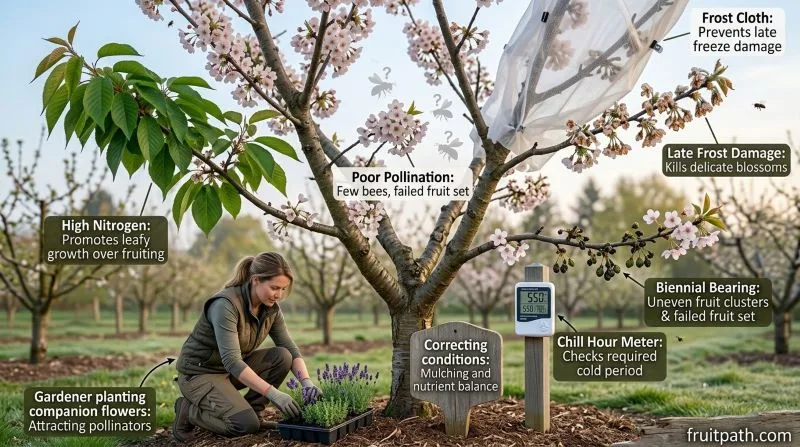
No compatible partner tree, no bees, or pesticide use during bloom — any of these prevents fruit set. This is by far the most common cause. Solutions: Plant a compatible pollinator tree within 50 feet, avoid all pesticide use during bloom, and plant bee-attracting companion flowers nearby.
2. Late spring frosts:
A single night below 29°F (-2°C) after flowers open can kill the entire year’s blossoms.
Solutions: Monitor forecasts closely, cover small trees with frost cloth overnight, and plant in locations with good cold air drainage.
3. Insufficient chill hours:
Most sweet cherries need 700 to 1,000 chill hours accumulated each winter. Warm climates may not provide enough.
Solution: Choose low-chill varieties like Minnie Royal, Royal Lee, or Lapins if you live in a warm climate.
4. Biennial bearing:
Some cherry trees naturally produce a heavy crop one year and a lighter crop the next.
Solution: Thin out excess developing fruit when cherries are still pea-sized to help the tree maintain consistent energy year to year.
5. Too much nitrogen:
Over-fertilizing with high-nitrogen products causes lush leaf growth at the direct expense of flowers and fruit.
Solution: Use a balanced fruit tree fertilizer only in early spring, and avoid high-nitrogen products after midsummer.
How to Improve Fruit Production — Step-by-Step:
- Choose the right variety for your climate. Check the USDA Plant Hardiness Zone map and select varieties rated for your specific zone. This single decision affects everything else.
- Plant in full sun with well-drained soil. At least 6–8 hours of direct sunlight daily. Cherry roots rot easily in soggy conditions. South-facing slopes are ideal in most climates.
- Plant a pollinator tree if needed. Unless you have a self-fertile variety, plant two compatible trees within 50 feet of each other. Great self-fertile options: Stella, Lapins, Sweetheart (sweet), and Montmorency (sour).
- Actively encourage pollinators. Plant lavender, borage, white clover, and phacelia nearby. Research shows diverse flowering gardens support 3–4 times more pollinators. Avoid all pesticides during bloom.
- Prune in late summer (the month of August), not spring or winter. Summer pruning naturally reduces the risk of silver leaf disease. Focus on opening the canopy and removing dead or crossing branches.
- Water deeply but infrequently. Cherry trees prefer drier soil over constant moisture. Apply balanced fruit tree fertilizer only in early spring—Mulch around the base to retain moisture and regulate temperature.
- Protect blossoms from late frosts. When frost is predicted after buds swell, cover small trees with frost cloth overnight. Running a sprinkler through the night can also help — water releases heat as it freezes, holding temperatures just above the damaging threshold.

Frequently Asked Questions:
When do cherry trees bloom?
Most cherry trees bloom between March and May, depending on your climate, variety, and the temperatures of the previous winter and early spring.
When do cherry trees fruit?
Typically, June through August. Sour cherry varieties tend to ripen a few weeks earlier than sweet varieties.
How many times do cherry trees produce fruit per year?
Exactly once per year, following a single annual bloom and fruit development cycle. A healthy tree can produce reliably for 20 to 40 years.
What do cherry blossoms look like when not in bloom?
Lush green leaves through summer, colorful foliage in fall, and entirely bare branches in winter, followed by visibly swelling buds as spring approaches.
What do cherry blossoms look like after they bloom?
After the petals fall, the tree looks temporarily bare, with small green nubs forming where each flower once was. Those nubs are the developing cherries.
Why is my cherry tree blooming but producing no fruit?
There could be several reasons, such as a lack of pollination (no compatible tree nearby or no bees), late-spring frost damage during the bloom window, or insufficient winter chill hours for the variety.
What do cherry blossom life cycle pictures typically show?
The visual experience is always very helpful for recognizing. The process in depth, Early stages show small, tight, green-brown buds. Full bloom shows delicate pink or white five-petaled flowers. After bloom, small green fruit nubs replace the petals. By summer, the tree is full and green with developing cherries hanging in clusters.

Conclusion: From Bloom to Bounty:
Take my words when you start gardening. could wetness that, The journey from cherry blossom to ripe cherry is one of the most remarkable processes in the world of natural gardening. It starts with a tiny bud forming quietly in late summer.
It passes through the breathtaking beauty of the spring bloom. It relies on the tireless work of bees during a narrow ten-day window. And then, with the right understanding and care, it delivers a harvest of sweet, deeply satisfying cherries by the height of summer.
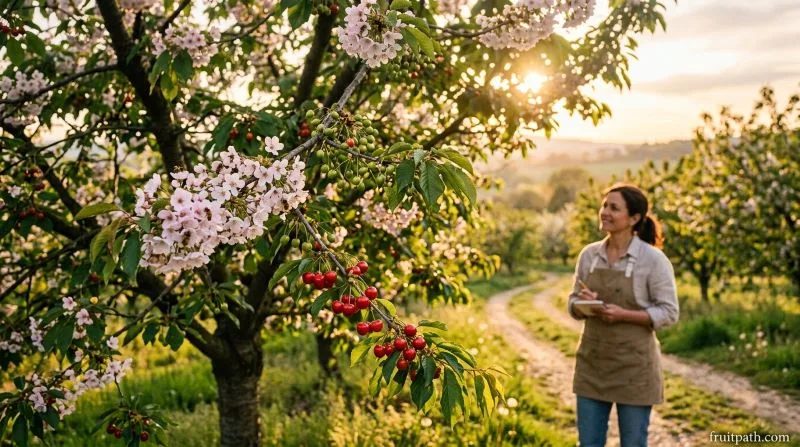
Understanding the life cycle of a cherry blossom tree from beginning to end puts you genuinely in control. You know exactly why things happen, when to act, and how to give your tree what it needs at every stage. Whether you are planting your very first cherry tree this spring, or trying to coax more fruit from a tree that has been underperforming for years, the steps and knowledge in this guide will make a real, measurable difference in your harvest.
Now look at your cherry tree with brand new eyes. Those blossoms are not just beautiful. They are the very beginning of something absolutely delicious. 🍒