Most berry plants that fail in a home garden do not die of old age. They die of root rot, wilt or a fungus that a better choice of variety would have kept away. Choosing disease-resistant berry varieties is the cheapest disease control you will ever use, and it costs nothing after the day you plant.
This guide lists the strawberry, raspberry, blackberry, blueberry and currant varieties that university extension services describe as both productive and resistant to the disease that matters most for that fruit. If you are looking for unusual berries to taste rather than grow, see our guide to rare berries.
Quick Answer
For a reliable, productive berry patch, start with these extension-tested disease-resistant berry varieties: Allstar or Cavendish strawberries (resistant to red stele and verticillium wilt), Caroline or Himbo Top raspberries (tolerant of phytophthora root rot), Ouachita or Sweetie Pie thornless blackberries, Patriot blueberries (resistant to root rot) paired with the very productive Legacy or Bluecrop, and Titania black currants (resistant to white pine blister rust). Resistance lowers disease risk but does not make a plant immune, so good drainage, sun and airflow still matter.
- What "Disease Resistant" and "High Yielding" Really Mean:
- Strawberries: Choose Resistance to Red Stele and Verticillium Wilt:
- Raspberries: Choose Tolerance to Phytophthora Root Rot
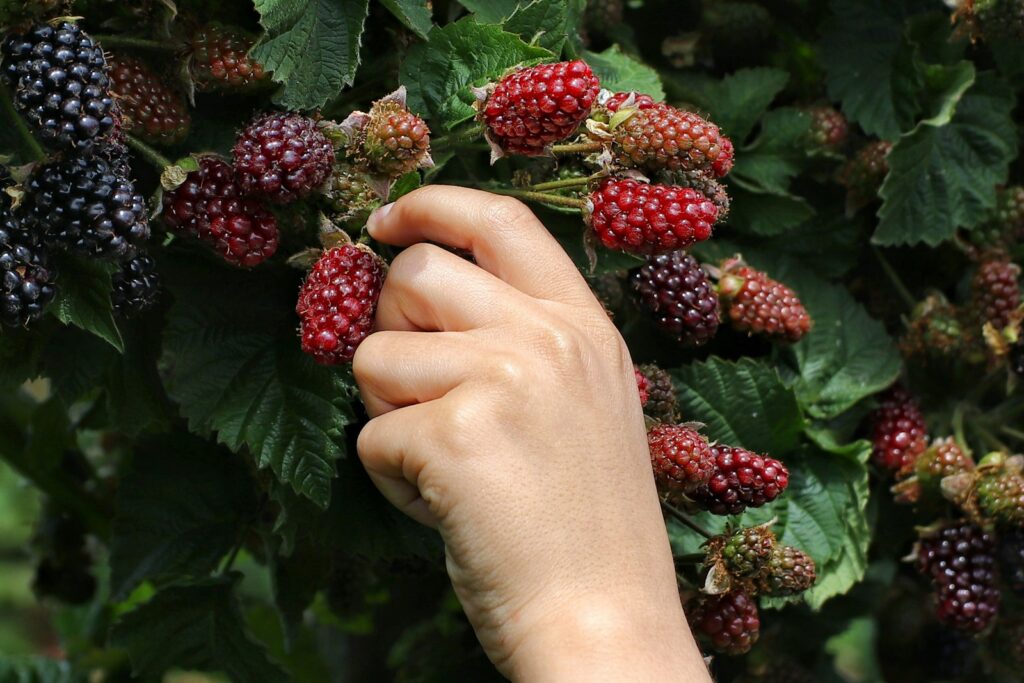
- Blackberries: Thornless Arkansas Varieties Lead on Yield and Health
- Blueberries: Soil Matters More Than Variety, but Some Varieties Help
- Black Currants: Resistance to White Pine Blister Rust
- Quick Comparison: The Top Pick for Each Berry
- How to Get the Most From a Resistant Variety
- Frequently Asked Questions
- Sources
What “Disease Resistant” and “High Yielding” Really Mean:
Disease resistant means a variety gets sick less often or less badly than others under the same conditions. It does not mean immune. On plant labels and in extension guides you will see words like resistant (rarely affected), tolerant (gets infected but keeps producing) and some resistance (better than average, still at risk in bad years).
Resistance is also disease-specific. A strawberry can resist red stele root rot and still get leaf spot. That is why each variety below names the exact disease it resists.
High yielding is relative too. Yield depends on climate, soil, pruning and plant age, so this guide uses the extension service’s own words (“very high yielding”, “consistently high”) instead of made-up kilos-per-plant figures.
The two goals support each other, which is why the best disease-resistant berry varieties are usually high yielding too. A plant that is not fighting root rot puts its energy into fruit, and the healthiest variety for your conditions is often the most productive one over five or more years.
Strawberries: Choose Resistance to Red Stele and Verticillium Wilt:
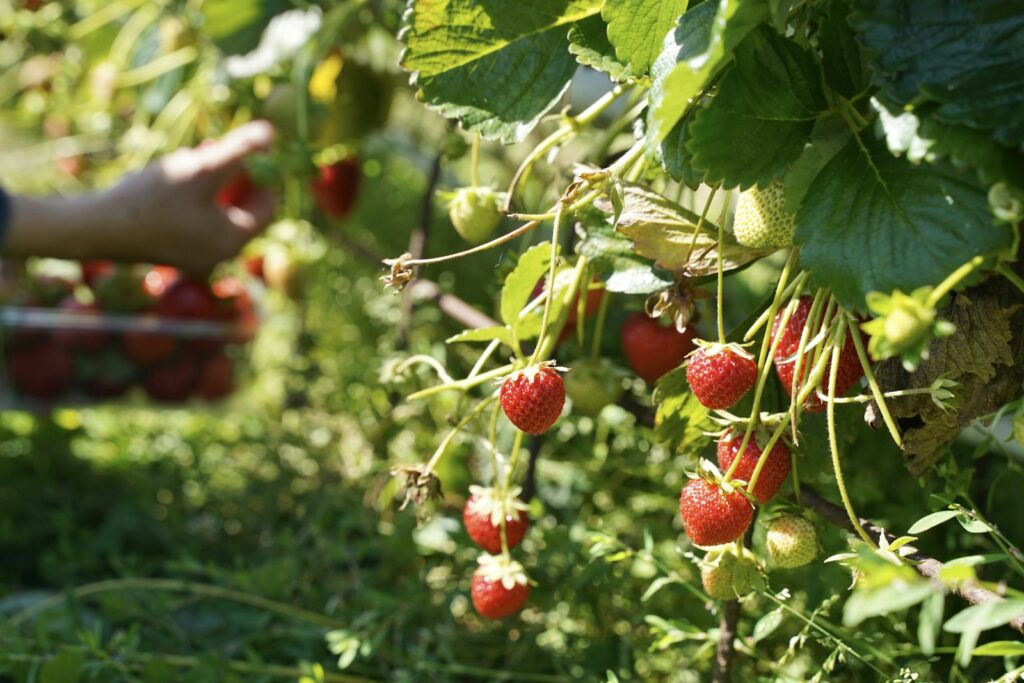
The two diseases that kill home strawberry beds are red stele (a root rot in wet soil) and verticillium wilt (a soil fungus). University of Maine Extension rates these June-bearing and day-neutral varieties:
| Variety | Type | Yield (UMaine wording) | Disease notes |
|---|---|---|---|
| Allstar | June-bearing | not stated | Resistant to red stele and verticillium wilt |
| Cavendish | June-bearing | “Productive” | Resistant to red stele and verticillium wilt |
| Brunswick | June-bearing | “Very high yielding” | Some resistance to red stele |
| Mira | June-bearing | “High yield potential” | Some resistance to red stele and leaf diseases |
| Earliglow | June-bearing | can be low in the Northeast | Resistant to red stele and verticillium wilt |
| Tribute | Day-neutral | “Fair to good” | Resistant to red stele and verticillium wilt |
| Tristar | Day-neutral | “Fair” | Resistant to red stele and verticillium wilt |
Best balance for most gardens: Allstar or Cavendish for one big June crop; Tribute if you want berries through summer. Day-neutral types give a longer season, but UMaine notes their total yield tends to be lower than June-bearers.
Avoid in wet or problem soil: Honeoye and Chandler. Both are high-yielding, but UMaine lists Honeoye as susceptible to red stele and Chandler as susceptible to root rot diseases.
In California and other warm commercial regions, UC Davis released five varieties in 2023 (UC Eclipse, UC Golden Gate, UC Keystone, UC Monarch and UC Surfline) that resist Fusarium wilt and match or beat older varieties on yield; UC Surfline and UC Monarch also resist verticillium wilt and Phytophthora crown rot. They are sold to nurseries first, so home gardeners may wait a few seasons to find them.
Raspberries: Choose Tolerance to Phytophthora Root Rot
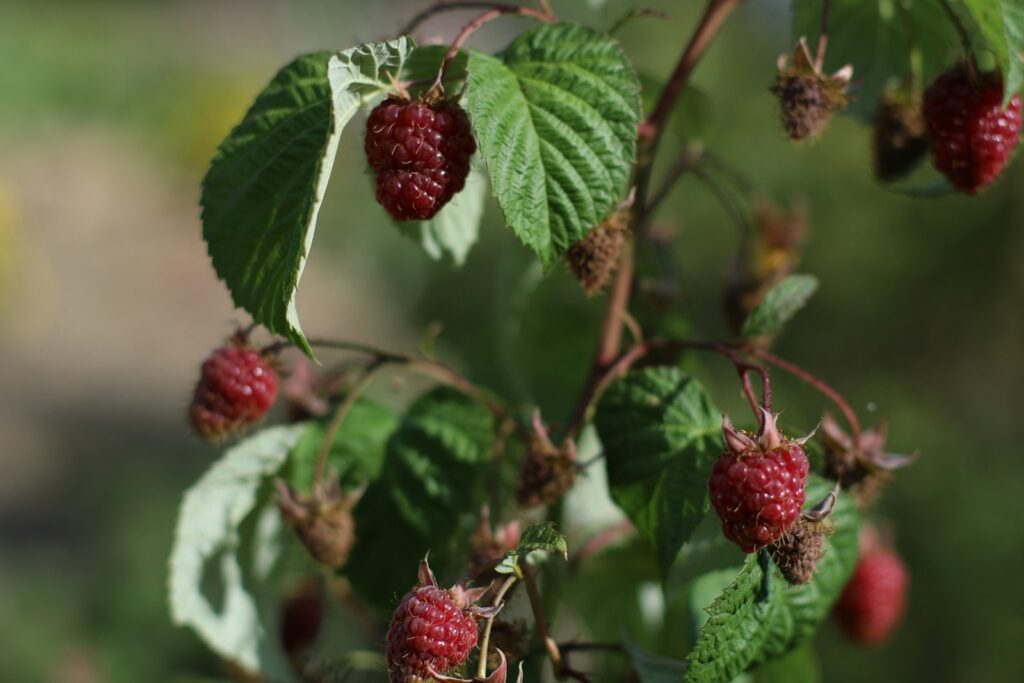
Phytophthora root rot is the main reason raspberry patches fade out after a few years, especially in heavy or wet soil. Oregon State University Extension notes that most raspberry varieties are sensitive to it, so variety choice matters more here than for any other berry.
| Variety | Fruiting | Disease notes | Source |
|---|---|---|---|
| Caroline | Fall-bearing (primocane) | Less susceptible to root rot than its parents Heritage and Autumn Bliss; rated high-to-moderate resistance in a Cornell trial | University of Minnesota; Cornell |
| Himbo Top | Fall-bearing (primocane) | High tolerance to phytophthora root rot | University of Minnesota |
| Nova | Summer-bearing (floricane) | Rated high-to-moderate resistance in a Cornell trial | Cornell |
| Prelude | Very early summer + small fall crop | Rated resistant by Cornell and Oregon State, but Ontario’s ministry lists it as very susceptible. Results vary by site | Cornell; OSU; OMAFRA |
Best balance for most gardens: Caroline. It is a fall-bearer, so you can mow every cane to the ground each winter and get one big late-summer-to-frost crop, with large, flavorful berries. Minnesota notes it is not tolerant of heat or drought.
Avoid in poorly drained soil: Encore. Minnesota warns it is more susceptible to phytophthora root rot.
One rule beats every variety: if water stands in your soil after rain, plant raspberries on a raised bed or ridge. No variety is safe in waterlogged roots.
Blackberries: Thornless Arkansas Varieties Lead on Yield and Health
In warm regions the biggest blackberry problem is rosette, also called double blossom, a fungus that turns flowers into useless witches’ brooms. Mississippi State University Extension says no thorny variety is immune to it, while thornless varieties have some tolerance.
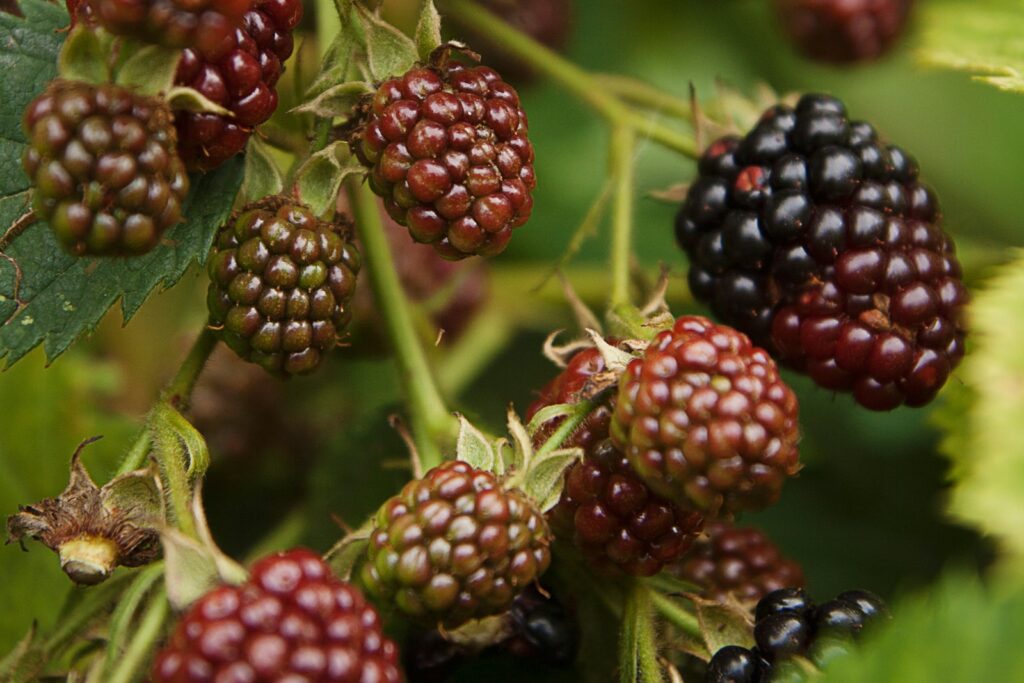
Most of the reliable thornless types come from the University of Arkansas breeding program:
| Variety | Yield (MSU wording) | Disease notes |
|---|---|---|
| Ouachita | “Yields are consistently high” | Plants and fruit “relatively disease resistant” |
| Triple Crown | “Very high yielding” (needs a trellis) | none stated |
| Osage | “High yields”, good flavor | none stated |
| Ponca | “High-yielding”, very sweet (2019 release) | none stated |
| Sweetie Pie | not stated; vigorous, large fruit | Resistant to rosette (double blossom) |
| Natchez | not stated; large, early fruit | Moderately resistant to anthracnose (US plant patent) |
Best balance for most gardens: Ouachita. It is upright, thornless, consistently productive and described as relatively disease resistant. In rosette-prone areas such as the US Gulf Coast, add Sweetie Pie.
Cold climates (USDA zone 5): Natchez and Ponca are the hardier picks in Johnny’s Selected Seeds’ chart (zones 5–9); Ouachita is listed for zones 6–9.
Thorny varieties such as Chickasaw and Kiowa can give bigger fruit, but Mississippi State notes they may not live as long because of rosette.
Blueberries: Soil Matters More Than Variety, but Some Varieties Help
Rutgers Cooperative Extension says highbush blueberries have an inherent resistance to many fruit, flower and leaf diseases, and that home plantings far from commercial farms see few pest problems. The bigger risk is soil: blueberries need acidic, well-drained soil, and most failures start there.
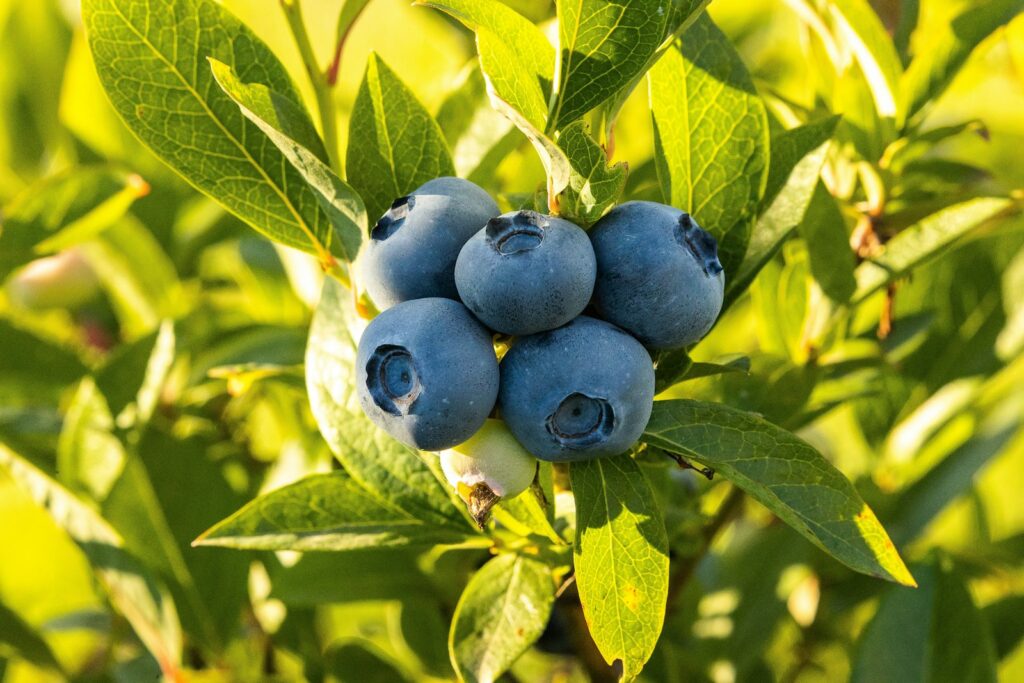
Penn State Extension describes these northern highbush varieties:
| Variety | Yield (Penn State wording) | Disease notes |
|---|---|---|
| Patriot | vigorous | “Resistant to root rot” |
| Bluejay | “Production can be erratic” | “Resistant to mummy berry and other diseases” |
| Rubel | not stated | “Relatively disease-resistant” |
| Legacy | “Productivity is high due to a long harvest season” | none stated; more prone to winter injury |
| Bluecrop | “Productivity and hardiness are consistent” | none stated |
Best balance for most gardens: Patriot for heavy or damp soil (root rot resistance), plus Bluecrop or Legacy for volume. Oregon State notes highbush blueberries are mostly self-fertile, but planting a second variety of the same type gives larger berries and better yield.
Cold climates: skip Legacy. Oregon State advises avoiding it on very cold sites because flower buds are damaged below about 0–5°F (−18 to −15°C).
Be cautious with: Duke (Penn State says young plants are susceptible to stem blight) and Berkeley (prone to fungal diseases in wet seasons).
Once the bushes are producing, turn a good harvest into our no-churn blueberry ice cream.
Black Currants: Resistance to White Pine Blister Rust
Currants and gooseberries are an alternate host for white pine blister rust, a fungus that damages currant leaves and can kill five-needle pines nearby. University of Idaho Extension notes that European black currants are especially susceptible, while many red and white currants resist it.
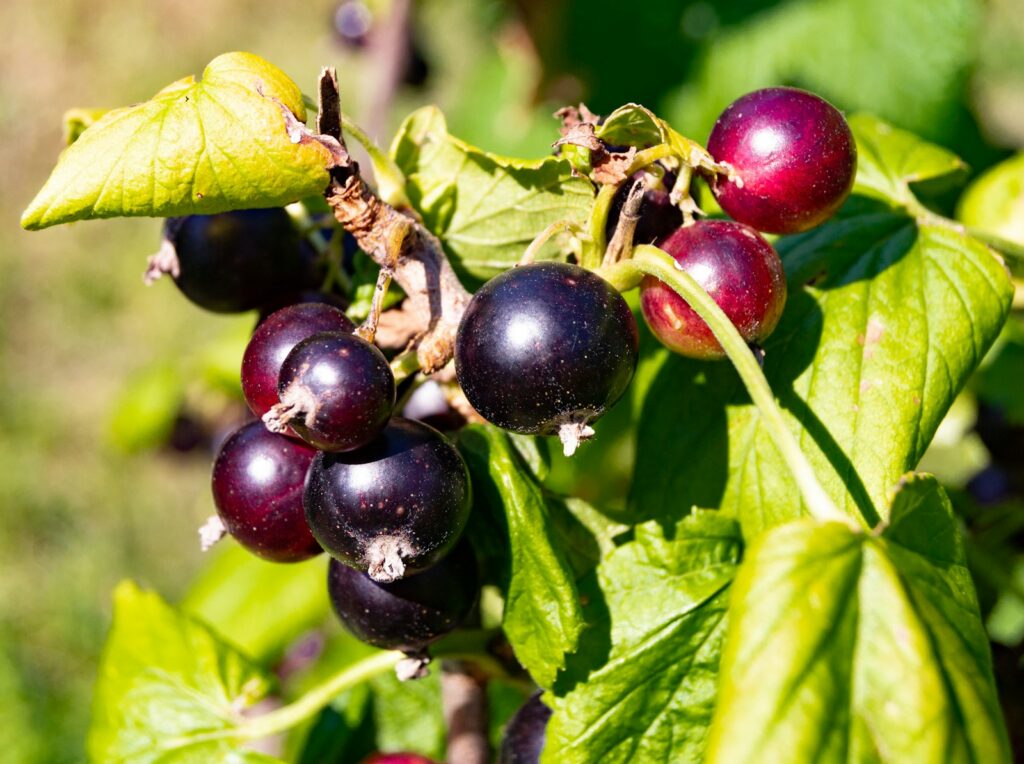
Idaho lists Titania, Consort, Coronet and Crusader as resistant black currants. Titania is the practical choice: it is the variety commonly planted in commercial orchards in Montana State University trials, while Consort, Coronet and Crusader have poor-to-fair fruit quality.
Two cautions:
- University of Minnesota research found that one nursery’s “Consort” was mislabeled and not resistant. Buy from a nursery that guarantees the variety name.
- Some US states have required blister-rust-resistant varieties. Check with your local extension office before ordering.
Idaho gives an expected yield of about 5 pounds (2.3 kg) per mature black currant bush, with plants reaching maturity in 3 to 4 years. If you like currants, you may also enjoy the jostaberry, a black currant and gooseberry hybrid; try it in our jostaberry chutney recipe.
Quick Comparison: The Top Pick for Each Berry
| Berry | Top pick | Main disease it handles | Back-up pick |
|---|---|---|---|
| Strawberry | Allstar | Red stele, verticillium wilt | Cavendish |
| Raspberry | Caroline | Phytophthora root rot | Himbo Top |
| Blackberry | Ouachita | Generally disease resistant | Sweetie Pie (rosette) |
| Blueberry | Patriot | Root rot | Bluecrop / Legacy for volume |
| Black currant | Titania | White pine blister rust | Consort (lower fruit quality) |
How to Get the Most From a Resistant Variety
New to growing fruit? Start with our step-by-step guide on how to start a fruit garden at home, and if space is tight, compare indoor vs. outdoor fruit gardening before you buy plants.
- Buy certified, disease-free plants. Resistance cannot protect a plant that arrives already infected, and most berry viruses have no cure.
- Fix drainage before planting. Root rots in raspberries and strawberries start in wet soil. Use raised beds where water stands after rain.
- Give full sun and airflow. Leaf and fruit fungi spread on wet foliage; space plants and prune for open growth.
- Rotate strawberry beds. Avoid planting where strawberries, tomatoes, potatoes or peppers grew recently, since these can carry verticillium wilt.
- Ask your local extension office. The best variety in Maine may not be the best in Texas or Pakistan. Local trials beat any national list.
Frequently Asked Questions
What is the most disease-resistant berry to grow?
Thornless blackberries such as Ouachita and highbush blueberries are among the easiest. Rutgers Extension notes highbush blueberries resist many fruit, flower and leaf diseases, as long as the soil is acidic and well drained.
Which berry gives the highest yield for a small garden?
June-bearing strawberries give the fastest return, fruiting the year after planting. For long-term volume, thornless blackberries such as Triple Crown and Ouachita are described as very high and consistently high yielding.
Are disease-resistant berry varieties immune to disease?
No. Resistance lowers the risk and slows the spread of one specific disease. Poor drainage, crowding or infected nursery stock can still cause problems.
Do disease-resistant berries taste worse?
Not necessarily. Varieties such as Caroline raspberries and Osage blackberries are praised by extension services for flavor. Older resistant black currants (Consort, Crusader) are the main exception.
Do I need two blueberry bushes?
Highbush blueberries are mostly self-fertile, but Oregon State Extension says a second variety of the same type gives larger berries.
Sources
- Raspberry cultivars for the Pacific Northwest (PNW 655), Oregon State University Extension
- Strawberry Varieties for Maine, Bulletin #2184, University of Maine Extension
- Raspberry types and varieties, University of Minnesota Extension
- Evaluation of red raspberry cultivars for resistance to phytophthora root rot, Pattison & Weber, Journal of the American Pomological Society, 2005
- Raspberry variety description, Ontario Ministry of Agriculture
- Fruit and Nut Review: Blackberries, Mississippi State University Extension
- Blackberry plant named ‘Natchez’ (USPP 20,891), US patent
- Blackberry variety comparison chart, Johnny’s Selected Seeds
- Blueberry Variety Selection in the Home Fruit Planting, Penn State Extension
- Selecting Blueberry Varieties for the Home Garden (FS419), Rutgers Cooperative Extension
- Blueberry cultivars for the Pacific Northwest (PNW 656), Oregon State University Extension
- Currant varieties, University of Idaho Extension
- Currant research, Montana State University
- Black currant update 2007–2010, North Dakota State University
- UC Davis releases 5 strawberry varieties resistant to deadly fungal disease, University of California, 2023