
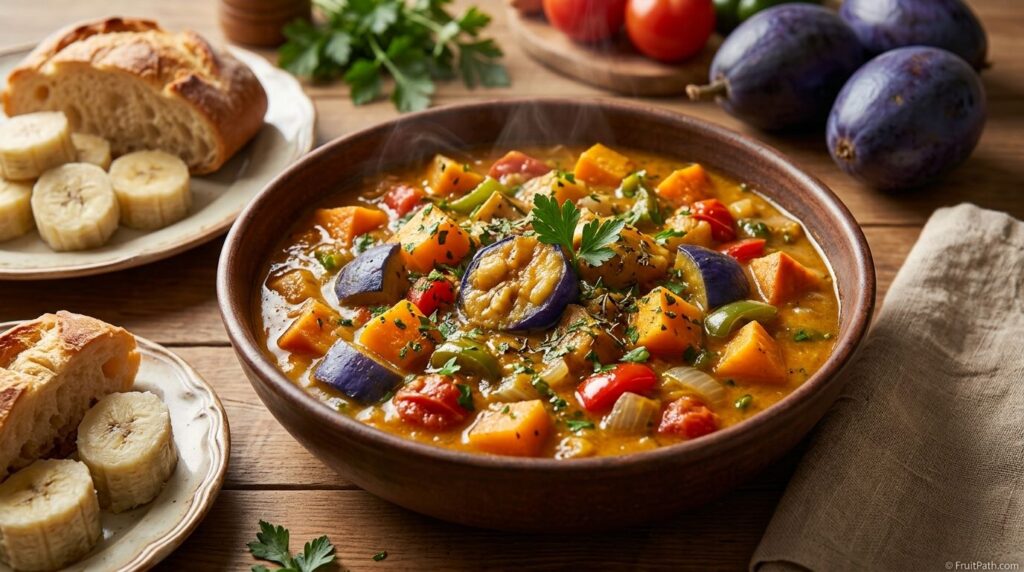
Once you’ve tried Safou boiled or roasted, this Safou and vegetable stew is the next step — a full, satisfying meal that turns the fruit’s buttery texture into the base of a rich, savory dish. It’s the kind of comfort food that works just as well on a weeknight as it does for guests.
Why You’ll Love This Recipe:
- A complete, filling meal in one pot
- Naturally thickened by the fruit itself — no cream needed
- Packed with vegetables, fiber, and healthy fats
- Easy to adapt with whatever vegetables you have on hand
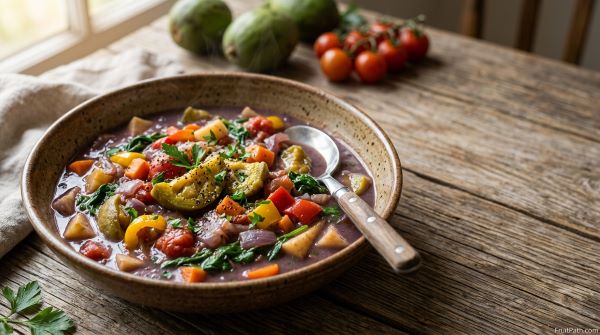
Ingredients:
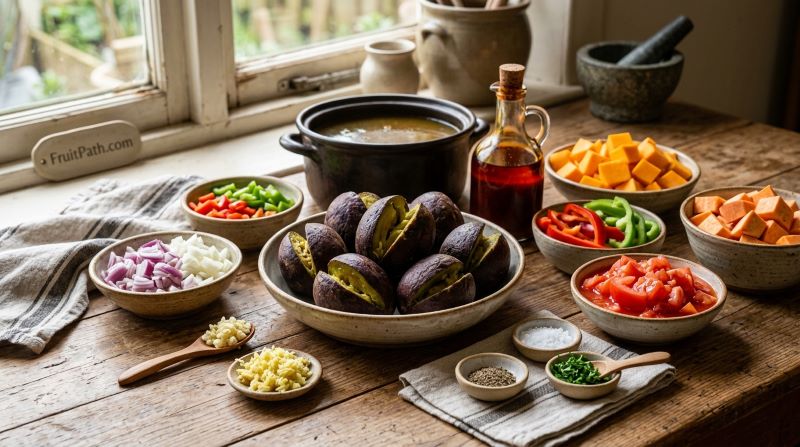
- 8 ripe Safou fruits, boiled and seeds removed
- 2 tbsp palm oil or cooking oil
- 1 onion, chopped
- 2 cloves garlic, minced
- 1-inch piece ginger, grated
- 2 tomatoes, chopped
- 1 bell pepper, sliced
- 1 cup butternut squash, cubed
- 1 cup sweet potato, cubed
- 2 cups vegetable or chicken stock
- Salt and pepper, to taste
- Fresh parsley, chopped, for garnish
Step-by-Step Instructions:
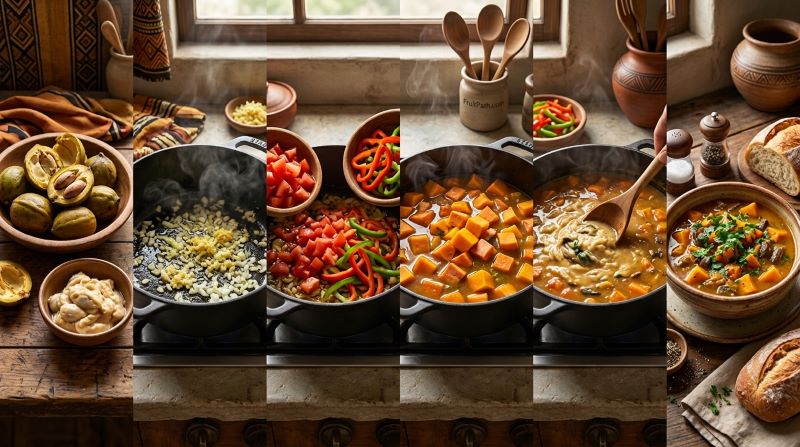
Step 1: Prep the Safou. Boil the Safou fruits for 8–10 minutes until soft, then remove the seeds and set the flesh aside.
Step 2: Build the base. Heat the oil in a large pot over medium heat. Add the onion, garlic, and ginger, and sauté for 2–3 minutes until fragrant.
Step 3: Add the vegetables. Stir in the chopped tomatoes and bell pepper, cooking for another 3–4 minutes until they soften slightly.
Step 4: Simmer. Add the butternut squash, sweet potato, and stock. Bring to a gentle boil, then reduce the heat and simmer for 15–20 minutes, until the vegetables are tender.
Step 5: Fold in the Safou. Gently stir in the cooked Safou flesh, breaking it up slightly with your spoon so it blends into the stew and thickens the broth naturally. Simmer for another 5 minutes.
Step 6: Season and serve. Taste and adjust salt and pepper as needed. Garnish with fresh parsley and serve hot.
Tips for the Best Safou Stew:
- Don’t rush the simmering step — giving the vegetables time to soften fully is what makes the stew rich and hearty.
- Mash a portion of the Safou flesh into the broth for extra creaminess, while leaving some pieces whole for texture.
- This stew tastes even better the next day, once the flavors have had time to settle.
What to Serve It With:
Serve this stew over rice, with a side of boiled plantain, or simply with warm crusty bread to soak up the broth.
FAQ:
Can I make Safou and vegetable stew vegetarian?
Yes, absolutely. To make this stew fully vegetarian, simply use vegetable stock instead of chicken stock. The Safou, sweet potato, butternut squash, tomatoes, bell pepper, onion, garlic, and ginger already provide plenty of flavor and texture, so you do not need meat to make the stew satisfying. You can also add extra vegetables such as carrots, spinach, green beans, or peas if you want a more filling vegetable-based meal. The recipe is naturally dairy-free as well.
Can I add meat to Safou vegetable stew?
Yes. Chicken, beef, or smoked fish can all work well with Safou. For chicken or beef, cut the meat into small pieces and cook it with the onion, garlic, and ginger before adding the vegetables and stock. If using smoked fish, add it later during the simmering stage so it does not break apart too much. Meat adds extra protein and creates a richer, heartier stew while the Safou gives the broth a naturally creamy texture.
Do I have to boil the Safou before adding it to the stew?
Yes, boiling the Safou first is recommended for this recipe. Boil the ripe Safou for about 8–10 minutes, or until the fruit becomes soft enough to handle. Allow it to cool slightly, remove the seeds, and use the soft flesh in the stew. Pre-cooking makes the Safou easier to incorporate into the broth and helps it blend smoothly with the vegetables. Avoid adding whole raw Safou directly to the stew because the seeds need to be removed first.
What can I use instead of butternut squash and sweet potato?
If you do not have butternut squash or sweet potato, you can substitute other vegetables with a similar texture. Pumpkin, regular potatoes, carrots, cassava, or yam can work well. Choose vegetables that hold their shape during simmering but become tender enough to absorb the flavorful broth. If using harder vegetables such as cassava or yam, cut them into relatively small pieces and give them enough cooking time to become completely tender.
How do I store leftover Safou vegetable stew?
Allow the stew to cool to room temperature, then transfer it to an airtight container and refrigerate it. It is best enjoyed within 3–4 days. When reheating, warm it gently in a pot over medium-low heat and add a small splash of stock or water if the stew has become too thick. You can also freeze the stew in individual portions for longer storage. Thaw it in the refrigerator before reheating and stir gently because the Safou can make the stew naturally thick as it cools.
Want to understand the fruit behind this recipe? Read our complete guide to Safou (African Butter Pear) for nutrition facts and health benefits.